Developed through a global collaboration between Toyota’s major research and development centres in Thailand, Argentina and South Africa, the ninth-generation Hilux the single largest financial investment in Toyota South Africa’s history. By setting aside the launch formalities and focusing purely on the mechanical engineering, technical architecture and driving dynamics, we take a closer look at how Toyota intends to keep the Hilux at the top of the overlanding food chain.
Designed from the ground up
The structural and aesthetic direction of the new Hilux is dictated by Toyota’s “Cyber-Sumo” design language. The engineering team set out to combine advanced digital technology (“Cyber”) with a planted, confidence-inspiring platform (“Sumo”).
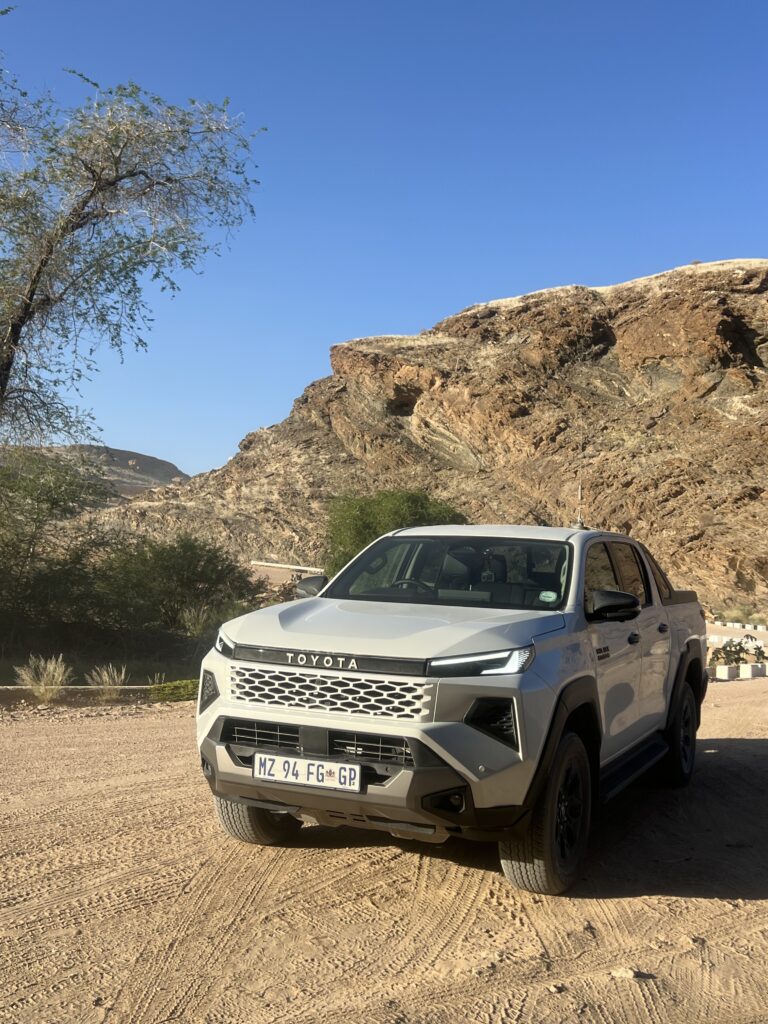
The styling adopts a wider visual stance that gives the Hilux greater road presence. Up front, every model now benefits from standard LED headlight technology. Workhorse grades feature projector-style LED headlights, while higher-specification models receive premium matrix-style LED clusters.

The rear has also been redesigned with practicality in mind. An integrated rear access step has been built into the bumper, while updated Toyota badging gives the vehicle a cleaner appearance.
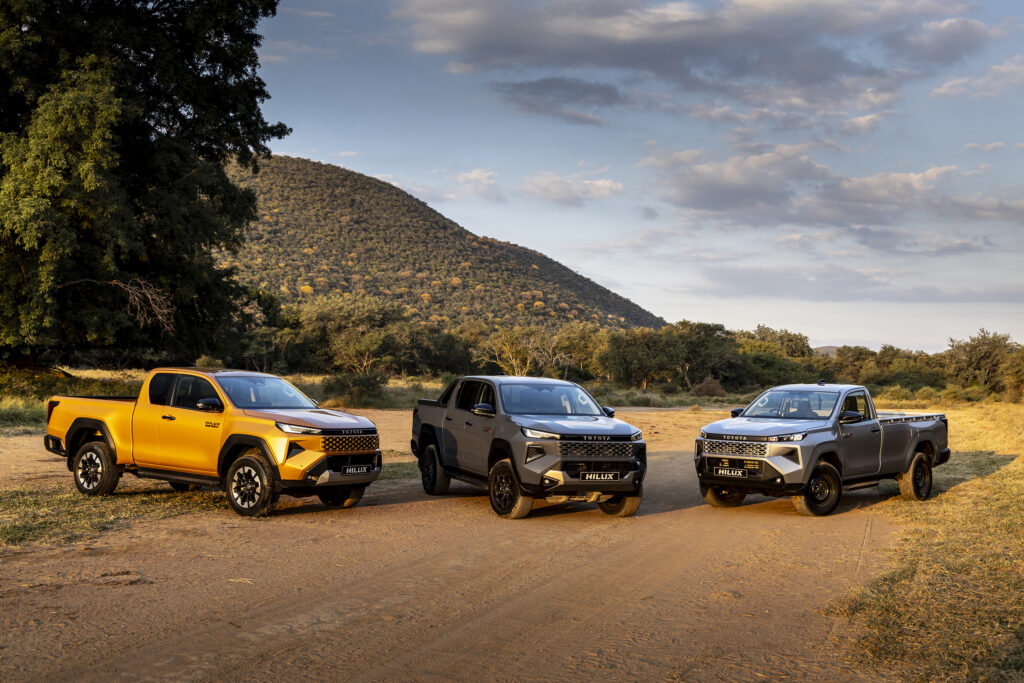
Wheel specifications remain grade-dependent. The SRX rides on 17-inch steel wheels, the Raider receives 17-inch alloy wheels, the Raider X extra cab upgrades to 18-inch alloys, while the flagship Legend features a unique 18-inch alloy wheel design.
The engineering beneath the bodywork
To fully appreciate the new Hilux, it is necessary to examine the engineering changes beneath the bodywork. Customer feedback from the outgoing model consistently highlighted two areas for improvement: ride quality on gravel roads when unladen and the need for greater technological refinement.
Toyota’s response was a comprehensive reworking of both the chassis and suspension mounting points. Selected sections of the frame have been reinforced using high-tensile steel to increase torsional rigidity, reduce high-frequency vibrations and provide a more stable platform for the suspension.
Keeping the suspension cool under pressure
The conventional shock absorbers have been replaced with significantly larger heavy-duty monotube dampers. One of the key engineering improvements lies in thermal efficiency. During sustained high-speed driving on corrugated gravel roads, shock absorbers operate under considerable load. In the previous generation, internal damper temperatures could reportedly reach as high as 600°C, leading to hydraulic aeration (foaming) and reduced damping performance.
The new monotube dampers utilise a newly developed thermally stable oil that Toyota says keeps operating temperatures closer to 200°C under similar conditions.
This substantial reduction allows the dampers to deliver more consistent compression and rebound characteristics, significantly reducing the likelihood of shock fade during prolonged use.
Two suspension setups for two very different jobs
Toyota has adopted two distinct rear suspension strategies depending on the intended application.
- Commercial workhorse models (SR/SRX): Retain a conventional heavy-duty leaf spring arrangement designed to cope with maximum payloads and continuous fleet use.
- Leisure and overlanding models (Raider/Legend): Receive a newly developed comfort-orientated leaf spring design with a more progressive spring rate that helps emulate the ride characteristics of a multi-link coil suspension when unladen, without compromising gross vehicle mass (GVM) ratings.

Refining a proven powertrain
Under the bonnet, Toyota’s familiar 2.8-litre GD-6 turbodiesel engine returns, although it now operates within an upgraded electronic control system. Engineers have focused on recalibrating the electronic throttle response, fuel injection timing and six-speed automatic transmission mapping.
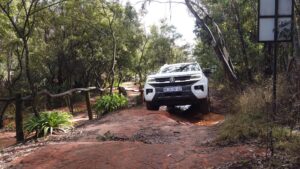
During our 1 000km test route, consisting of approximately 90% gravel roads, the improvements were immediately noticeable. The transmission is considerably smoother than before and showed little tendency to hunt between gears when climbing long inclines, instead making excellent use of the engine’s strong low-down torque.
For most of the test we drove in Four-High (4H), which naturally introduces additional mechanical drag through the transfer case and front differential. Even so, the Hilux returned an average fuel consumption of 11.6 litres/100km. Under normal day-to-day driving in two-wheel drive, that figure should comfortably improve to around the low-10 litres/100km mark.
Where it really matters: On the gravel The introduction of Electronic Power Steering (EPS) replaces the traditional hydraulic steering system and noticeably changes the Hilux’s driving character. It filters out much of the steering kickback encountered when striking rocks or corrugations, helping to reduce driver fatigue during long days behind the wheel.
Gravel performance profile
- Test speed: 110km/h to 120km/h
- Drivetrain mode: Four-High (4H)
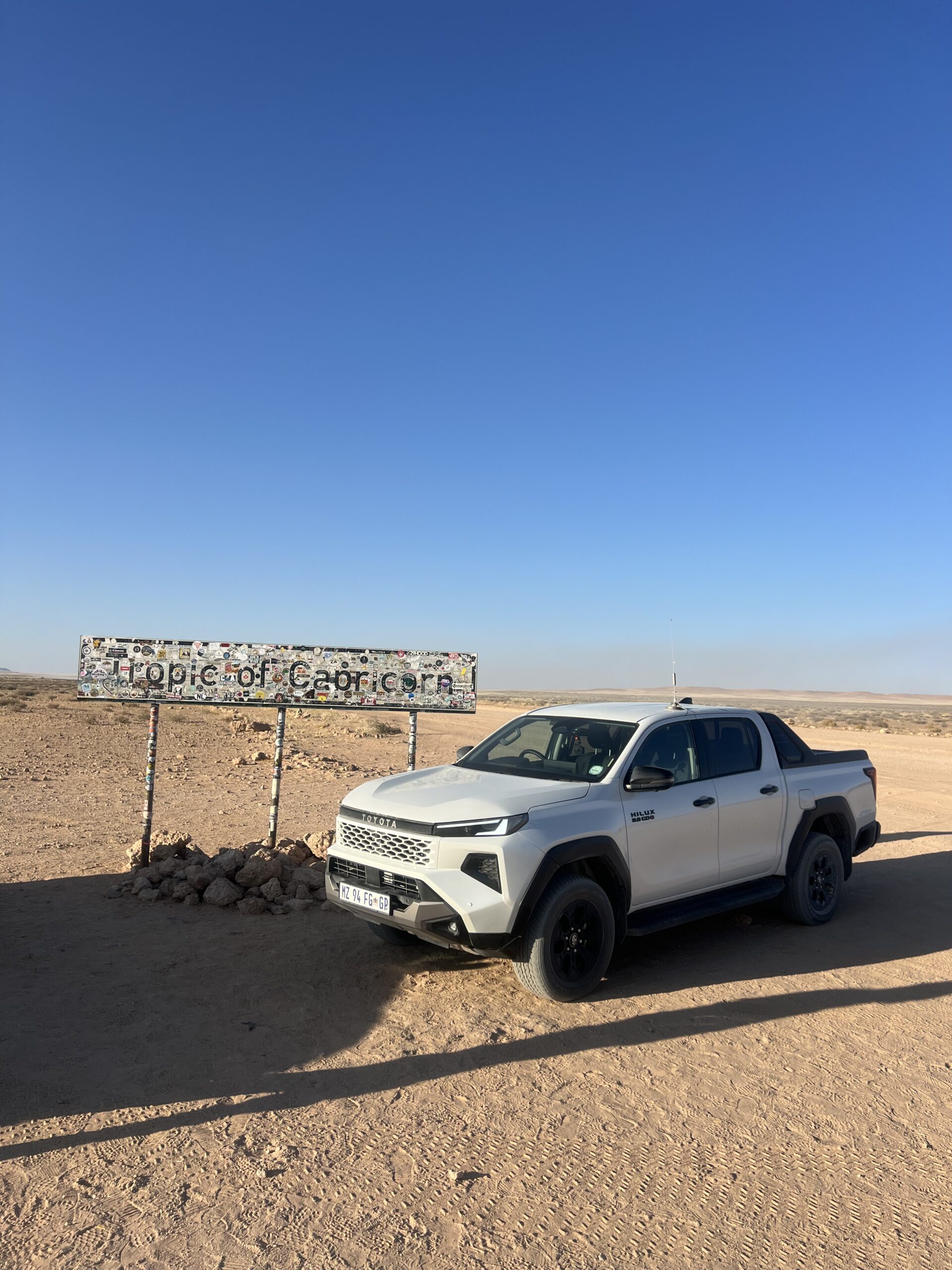
- Surface: Heavily corrugated Namibian gravel
- Lateral stability: Excellent with no noticeable rear-end breakaway
- Axle control: Balanced suspension compression and controlled rebound
Maintaining speeds between 110km/h and 120km/h on demanding gravel roads, the benefits of the revised chassis quickly become apparent. Where the previous generation could occasionally feel unsettled over severe corrugations, the new Hilux remains impressively composed. The suspension compresses and rebounds in a balanced, controlled manner, resulting in a flatter and more confidence-inspiring ride while still retaining the load-carrying ability expected of a Hilux.
A cabin that finally feels premium
The interior has undergone a significant redesign, replacing the more utilitarian dashboard layout of the previous model with a cleaner, more contemporary design inspired by the Land Cruiser family. The dashboard prioritises a strong horizontal layout that maximises forward visibility while keeping frequently used controls within easy reach.
Higher-specification models receive soft-touch materials with contrasting stitching, while lower grades continue to use durable hard plastics that are well suited to demanding working environments.
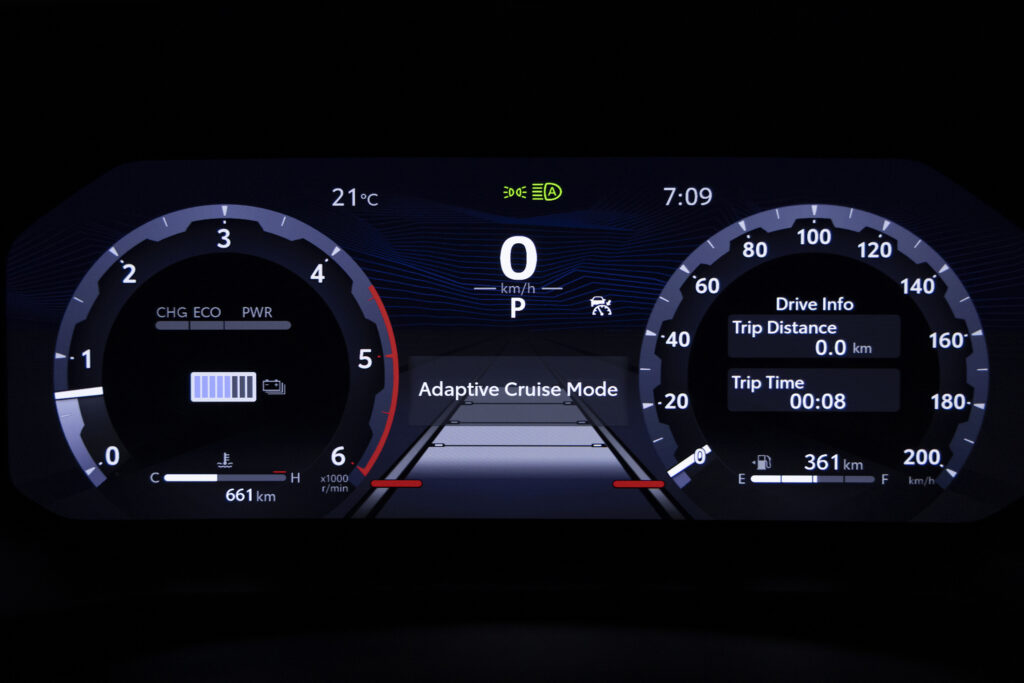
Mid- and high-specification models benefit from dual 12.3-inch high-definition displays, one serving as the driver’s instrument cluster and the other handling multimedia functions. Wireless Apple CarPlay and Android Auto operated without any connectivity issues during our test.
Safety without the fuss
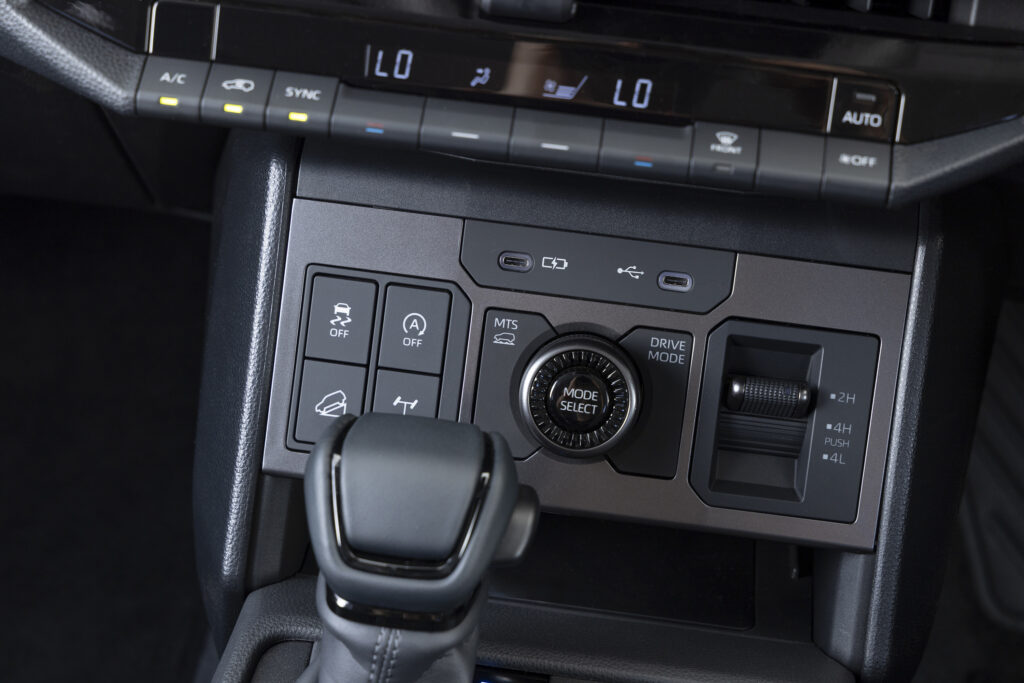
The biggest safety upgrade comes in the form of Toyota Safety Sense 3 (TSS3). Unlike the previous generation, which relied more heavily on passive alerts, the new system actively assists the driver in maintaining lane position. Adaptive cruise control operates smoothly and is complemented by Blind Spot Monitoring and the Multi-Terrain Monitor camera system, which integrates with the Terrain Select drive modes, including Dirt, Sand, Rock and Deep Snow.
- Toyota Safety Sense 3 (TSS3) fitted as standard
- Monocular camera and millimetre-wave radar
- Active steering-assisted lane-keeping system
- Blind Spot Monitor (BSM) with Safe Exit Assist
- Multi-Terrain Monitor (MTM) camera system
- Global NCAP five-star safety rating across the range
- Ultra-Wideband (UWB) encryption to help prevent signal cloning

Which Hilux is right for you?
Toyota’s launch strategy initially focuses on the high-output 2.8 GD-6 models, while the high-volume 2.4-litre manual derivatives are expected to arrive during the first quarter of next year. The new 2.4 GD-6 engine will be available exclusively with a manual transmission in the ninth-generation Hilux.
Every variant, from the entry-level single cab upwards, complies with Toyota’s Global NCAP five-star safety standard. Ownership is supported by a three-year warranty, a nine-service plan and an eight-year/160 000km warranty covering the 48V battery system fitted to selected higher-specification models.
| Grade | Body style | Key technical specifications | Estimated/actual pricing |
| SRX | Double Cab | 2.8 GD-6, 17-inch steel wheels, 8-inch infotainment screen, analogue instrument cluster | From 658 500 |
| Raider | Double Cab 4×4 | 2.8 GD-6, 17-inch alloy wheels, mid-spec trim | R 892 900 |
| Raider X | Extra Cab | 18-inch alloy wheels, Toyota Safety Sense 3 | From R751 800 |
| Legend | Double Cab | Dual 12.3-inch displays, leather interior, unique 18-inch alloy wheels | From R945 500 |
Final thoughts
The ninth-generation Toyota Hilux represents a significant step forward. By addressing the biggest criticisms of its predecessor without compromising its proven durability, Toyota has produced a bakkie that feels noticeably more refined on the road while remaining every bit as capable when the tar ends.
If our first drive is anything to go by, the new Hilux appears well equipped to continue its remarkable success story, not only as South Africa’s favourite bakkie, but as one of the continent’s most accomplished overlanding platforms.