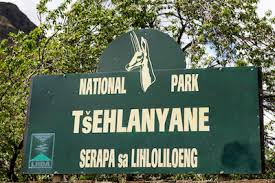
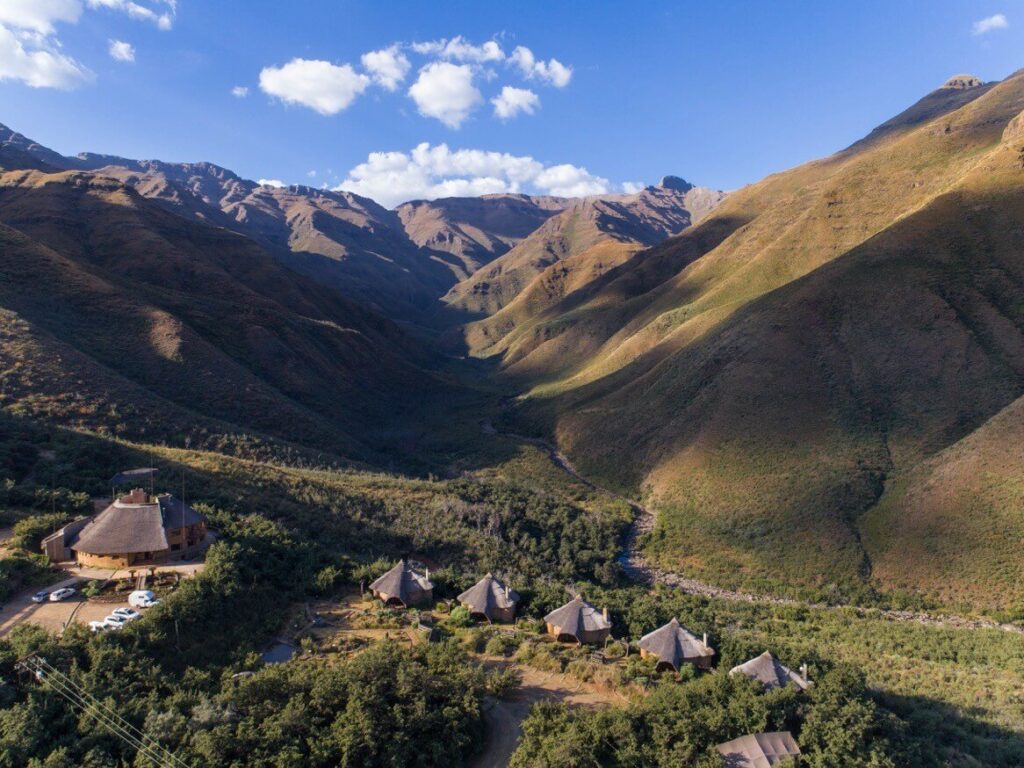
Deep within the front range of the Maloti Mountains lies Ts’ehlanyane National Park, Lesotho’s largest and arguably most pristine wilderness area. Unlike the arid, high-altitude plateaus found elsewhere in the “Kingdom in the Sky,” Ts’ehlanyane is a lush, emerald sanctuary defined by deep river valleys, ancient indigenous forests, and towering mountain peaks that reach over 3,000 meters.
For the overlanding community and 4×4 enthusiasts, Ts’ehlanyane offers a different kind of challenge. While the access road from Hlotse is largely high-quality tar, the rugged interior and the surrounding mountain passes demand respect, high clearance, and a keen eye for weather patterns that can shift in minutes.
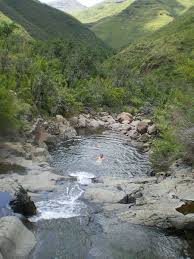
The Landscape: A Botanical Stronghold
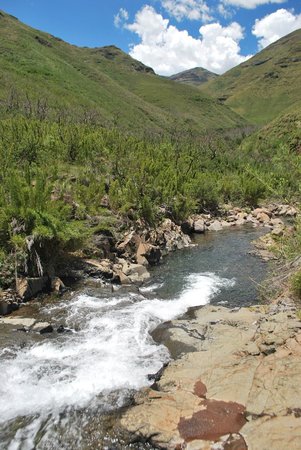
The park owes its name to the Ts’ehlanyane (Berg Bamboo), which blankets the mountainsides and provides a critical habitat for a variety of endemic species. This is one of the few places in Lesotho where you can walk through a true forest—the indigenous Ouhout (Leucosidea sericea) woodland—while hearing the rush of the Hlotse River nearby.

The geography here is dramatic. Glacial-carved valleys give way to sheer basalt cliffs. In the winter (June to August), these peaks are frequently dusted in snow, turning the park into a silent, white cathedral. In the summer, the rains transform the landscape into a vibrant green, feeding the numerous waterfalls and crystal-clear rock pools that dot the hiking trails.
What to Do: The Hiker’s Paradise
Ts’ehlanyane is designed for those who want to leave the vehicle behind for a few hours—or days.
- The Matsa-mararo Falls: A moderate hike leads you to these stunning triple-tier waterfalls. The pools at the base are ice-cold but incredibly refreshing during the mid-summer heat.
- Horse Trekking: True to Basotho culture, the best way to see the high ridges is on the back of a sturdy Basotho pony. Local guides can take you on routes that offer panoramic views of the entire Maloti range.
- Birding: This is a prime location for spotting the Gurney’s Sugarbird and the Drakensberg Rockjumper. The sheer cliffs also provide nesting sites for various raptors.
Logistical Reality Check
The park is home to the luxurious Maliba Mountain Lodge, but for the self-sufficient traveler, the lower-altitude campsites and staff-run chalets provide a more authentic experience. Since the park is situated at the end of a blind valley, there is no “through-traffic,” ensuring a level of peace and quiet rarely found in more accessible parks. Even in 2026, the park maintains its “off-the-grid” feel. Visitors should stock up on fuel and specialized groceries in Hlotse (Leribe) before making the final ascent to the park gates.
2026 Pricing Guide (Estimates in ZAR)
Note: The Lesotho Loti (LSL) and South African Rand (ZAR) are used interchangeably at a 1:1 ratio. Rands are accepted everywhere in the park.
| Item | Estimated Price (ZAR) | Notes |
| Entrance Fee (Adult) | R60 – R120 | Per person per day |
| Vehicle Entry Fee | R40 – R70 | Per standard 4×4/SUV |
| Community Chalets | R750 – R1,100 | Per unit/night (Self-catering) |
| Camping Fee | R180 – R280 | Per person per night |
| Pony Trekking | R300 – R500 | 2–3 hour excursion |
| Guided Hiking | R350 – R600 | Full day (per group/guide) |
| Firewood Bundle | R50 | Subject to availability |
| Border Toll/Levy | R100 | Payable at Maseru/Maputsoe Bridge |
Frequently Asked Questions (FAQ)
1. Is a 4×4 required to reach Ts’ehlanyane?
While the main access road is tarred, a high-clearance vehicle is highly recommended. If you plan to explore the gravel tracks around the park boundaries or navigate during the snowy winter months, a 4×4 is essential.
2. Is there power at the campsites?
The main campsites are designed for “wild” camping. While there are ablution blocks with hot water (usually gas or wood-fired), there are no electrical hookups at the individual sites.
3. Can I buy food inside the park?
Beyond the restaurant at Maliba Lodge, there are no grocery stores. You must bring all your own provisions, including drinking water, from Hlotse or South Africa.
4. Is the park open year-round?
Yes, though winter visits require heavy-duty cold-weather gear. Heavy snow can occasionally close the access road for short periods.
5. Do I need to book in advance?
For the chalets and Maliba Lodge, booking is essential. For camping, it is recommended during South African school holidays and long weekends.
6. Are there dangerous predators?
No. You might see jackals, baboons, or small antelope, but there are no large cats or elephants in the park.
7. Is the water in the rivers drinkable?
High up in the mountains, the water is generally pure, but it is always safer to boil it or use a filtration system to avoid water-borne bacteria.
8. Is there cell reception?
Expect very limited to no signal once you enter the park gates. Some signal may be found at higher elevations on the hiking trails.
9. What should I pack for a summer visit?
Lightweight hiking clothes, a waterproof rain jacket (for afternoon storms), sunblock, and insect repellent.
10. Can I transit through the park to the rest of Lesotho?
No. Ts’ehlanyane is situated in a “dead-end” valley. You enter and exit through the same gate, making it a dedicated destination rather than a transit route.