Everything South African overlanders need to know before buying, renting and travelling with Starlink.
There was a time when losing mobile phone signal was simply part of the overlanding experience. Once you ventured beyond the nearest town, staying connected with family, downloading weather forecasts or even checking maps became almost impossible. Today, that’s beginning to change thanks to Starlink.
Using a constellation of thousands of low-Earth orbit (LEO) satellites, Starlink provides high-speed internet virtually anywhere with an unobstructed view of the sky. Whether you’re camping in Botswana’s Okavango Delta, exploring Zambia’s remote national parks or travelling Mozambique’s coastline, reliable internet is now a genuine option.
For South Africans, however, buying and using Starlink isn’t quite as simple as ordering one online. Different countries have different regulations, there are several subscription options to consider, and understanding where you can legally use the service is essential before setting off.

Here’s everything you need to know before investing in Starlink for your next Southern African adventure.
Why Starlink is a game changer
Unlike traditional satellite internet, Starlink uses a constellation of low-Earth orbit satellites positioned much closer to Earth. This dramatically reduces latency while providing download speeds of well over 300Mbps under ideal conditions.
For overlanders, that means you can:
- Stay in contact with family from remote campsites.
- Download weather forecasts before tackling difficult terrain.
- Work remotely while travelling.
- Upload photographs and videos from virtually anywhere.
- Access emergency communications when mobile networks are unavailable.
For many travellers, Starlink has become another essential piece of expedition equipment alongside a recovery kit, compressor and fridge.
Which Starlink should you buy?
For the vast majority of overlanders, the Starlink Mini is the clear winner.
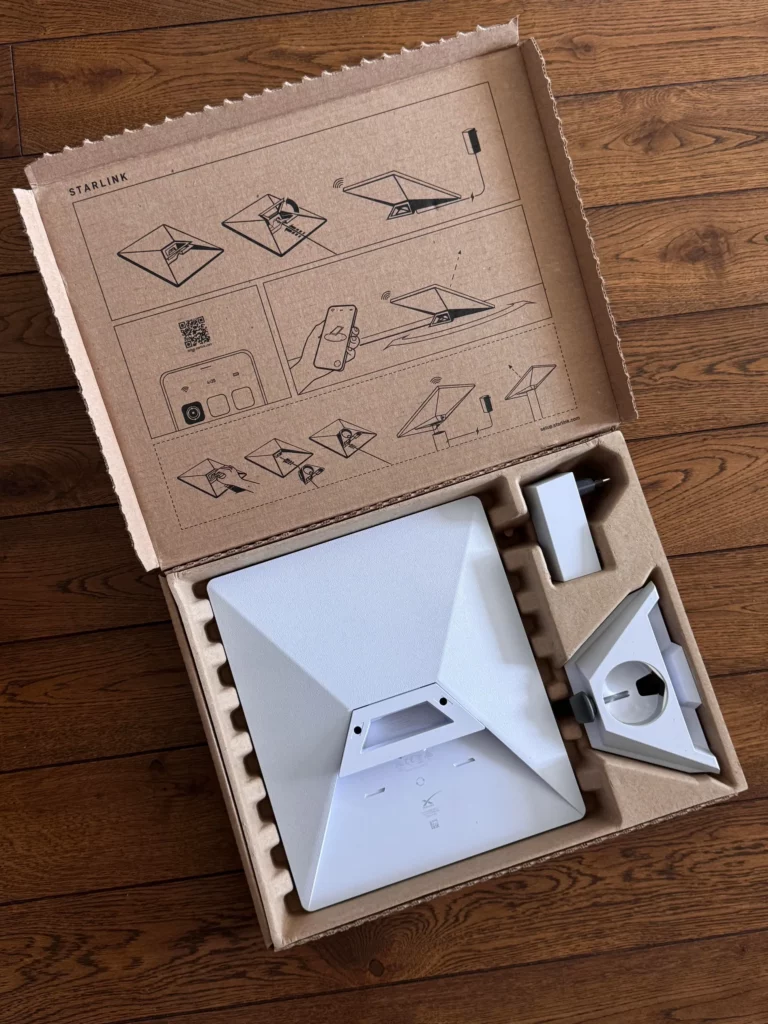
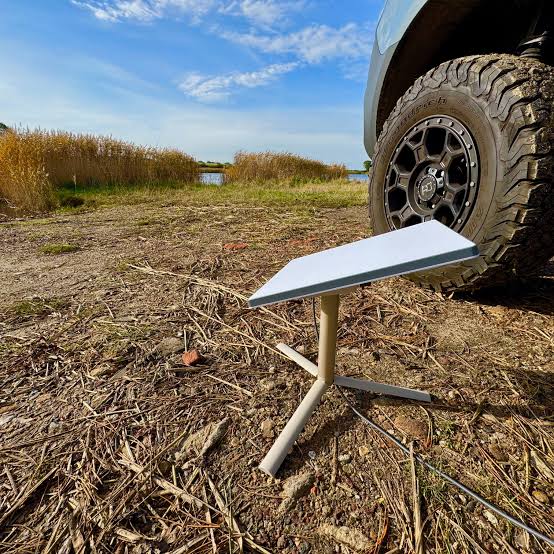
Its compact design combines the antenna and Wi-Fi router into a single lightweight unit, making it easy to pack inside a drawer system or recovery box. More importantly, it consumes significantly less power than the Standard Kit, making it ideal for vehicles equipped with dual batteries, lithium systems or portable power stations.
The Standard Kit still offers excellent performance and may suit travellers who spend extended periods in one location or travel with larger caravans or expedition trailers. However, its larger dish, separate router and higher power consumption make it less convenient for vehicle-based adventures.
Adventure Afrika recommendation: If your travels involve moving camp regularly, the Starlink Mini offers the best combination of portability, simplicity and efficiency.
Where can South Africans buy Starlink?
Because Starlink has not yet officially launched in South Africa, most South African overlanders purchase their equipment in neighbouring Botswana.
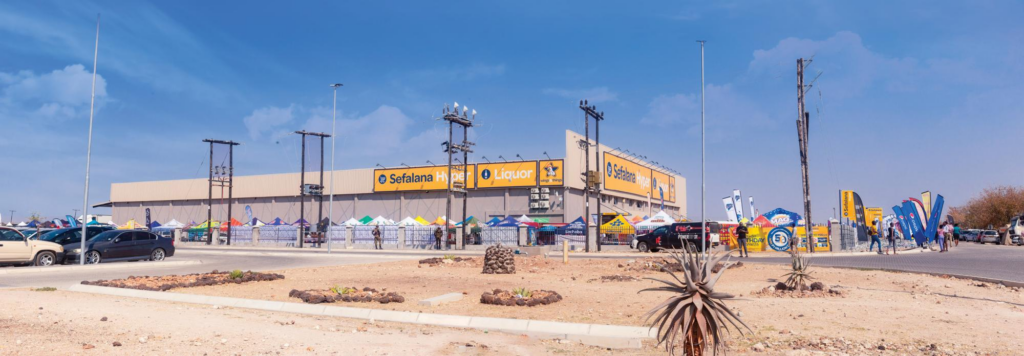
One of the easiest and most reliable options is Sefalana, where the Starlink Mini typically retails for approximately P2 500, while the Standard Kit costs around P5 000.
Another popular option is purchasing directly from Henry at Kalahari Signal Safaris in Botswana. Besides selling Starlink equipment, Henry also offers a convenient rental service designed for overlanders.
If you’re only planning a once-off trip, Henry can courier a Starlink Mini directly to your home before departure. Once your adventure is over, simply courier it back. It’s an excellent solution for travellers who don’t want to purchase their own hardware.
Buying versus renting
Whether buying or renting makes more financial sense depends entirely on how often you travel.
If you only take one major overlanding trip each year, renting is often the smarter option. It eliminates the upfront hardware cost while still providing reliable internet throughout your journey.
However, if you regularly explore Botswana, Zambia, Zimbabwe, Mozambique or other neighbouring countries, owning your own Starlink quickly becomes worthwhile. The hardware is a once-off purchase and you simply activate a monthly subscription whenever you need it.
Frequent overlanders will usually recover the purchase cost within a few extended trips.
Subscription costs
Starlink’s flexible Roam packages are ideal for travellers.
| Package | Monthly cost |
| Roam 100GB | US$55 |
| Roam 300GB | US$80 |
| Roam Unlimited | US$175 |
*Regions may differ!
Regional Monthly Costs
- Botswana – 50Gb P690.00 (R835.00) pm Top up options available through App
- Eswatini – 100Gb E900.00 (R900.00) Top up options available through App
- Lesotho – 100Gb R950.00 Top up options available through App
- Mozambique – 50Gb 3200MZN (R8920.00) Top up options available through App
- Zimbabwe -100Gb US$55.00 (R900.00) Top up options available through App
- Zambia – 50Gb ZMW 1700.00(R1535.00) Top up options available through App
Billing takes place in one-month increments, allowing travellers to activate the service only when required.
One of Starlink’s biggest advantages is its flexibility.
If you’re not travelling, you can pause your subscription at no cost. While paused, your account remains inactive and no monthly subscription is charged. Once you’re ready for your next trip, simply reactivate your subscription through the Starlink app.
For occasional travellers, this feature can save hundreds of dollars each year.
Where can you use Starlink?
This is one of the most important considerations for South African travellers.
Although the hardware may work across borders, Starlink can only be legally used in countries where it has received regulatory approval.

Southern African Starlink status
| Country | Status |
| Botswana | ✅ Officially available and fully supported. One of the easiest countries for South Africans to purchase hardware. |
| Zimbabwe | ✅ Officially available and widely used by travellers. |
| Zambia | ✅ Fully licensed and operational. Excellent coverage for remote travel. |
| Malawi | ✅ Officially available with strong rural coverage. |
| Mozambique | ✅ Fully supported and particularly valuable away from larger towns. |
| Lesotho | ✅ Officially licensed and operational. |
| Eswatini | ✅ Officially available and licensed, making it another excellent destination for overlanders requiring reliable satellite internet. |
| South Africa | ❌ Not yet officially licensed. Although many users previously accessed Starlink through roaming services, these workarounds have largely been restricted. |
| Namibia | ❌ Not officially available. Travellers should not expect Starlink to operate legally until regulatory approval has been granted. |
As regulations continue to evolve, always confirm the latest position before crossing international borders.
Renting
Kalahari Signal Safaris
1-7 Days P350 per day (R420)
8-14 Days P300 per day (R360)
15-29 Days P250 per day (300)
30+ Days P200 per day (R240)
Henry from Kalahari Signal Safaris will ship the Starlink to you before you leave for your trip.
There is a P4 500 (R5 415) deposit required and you will be limited to 5Gb per day.
Contact him on :
Cell SA: +27 82 731 3646
Cell Bots: +267 74 185 349
henrydmaree@gmail.com
Power requirements
Power consumption is another reason why the Mini has become so popular with overlanders.
The Mini typically draws between 20W and 40W, depending on usage and environmental conditions, making it easy to power from a modern dual-battery system or portable lithium power station.
The Standard Kit consumes considerably more power and generally requires a larger battery bank if used for extended periods.
If you’re already running a fridge, lights and charging cameras from your auxiliary battery, the Mini will integrate into your setup with minimal additional demand.
Setting up Starlink at camp
One of the biggest advantages of the Starlink Mini is how quickly it can be deployed. Simply remove it from its case, connect it to a suitable power source and position it where it has an unobstructed view of the sky.
Within a few minutes the dish automatically aligns itself with the satellite network and establishes a connection. The Starlink app can also help identify potential obstructions before you settle in for the evening, ensuring you get the best possible signal.
Can you use Starlink while driving?
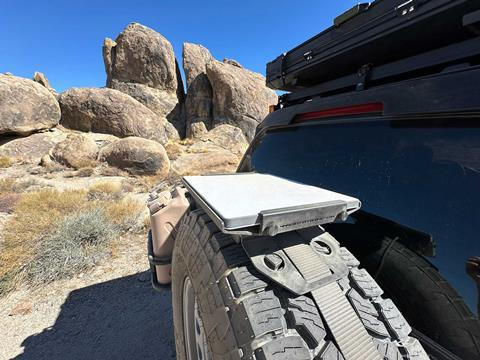
Although Starlink can operate while moving, the standard Roam packages are designed primarily for stationary use.
For most overlanders, the best approach is simple: Arrive at camp, position the dish where it has a clear view of the sky, connect your devices and enjoy reliable internet throughout your stay. Avoid placing the antenna beneath dense tree cover or next to steep cliffs, as obstructions will reduce performance.
Do’s and don’ts
Do
- Buy from an authorised retailer.
- Choose the Starlink Mini for most vehicle-based travel.
- Pause your subscription when you’re not travelling.
- Keep the firmware updated through the Starlink app.
- Carry the dish in a protective case during transport.
- Position the antenna with an unobstructed view of the sky.
Don’t
- Assume Starlink is legal in every country you visit.
- Mount the dish where branches or debris may damage it.
- Expect optimal performance beneath heavy tree cover.
- Forget to budget for your monthly subscription.
- Leave your Starlink unattended in public campsites.
Adventure Afrika verdict
For Southern African overlanders, Starlink is arguably one of the most significant travel accessories to arrive on the market in recent years.
The ability to work remotely from the Kalahari, upload wildlife photographs from Zambia, monitor weather conditions in Mozambique or simply reassure family while camping hundreds of kilometres from the nearest town has fundamentally changed how many people travel.
For South Africans, purchasing a Starlink Mini in Botswana remains one of the simplest options, while Henry at Kalahari Signal Safaris provides an excellent alternative through both hardware sales and rental services.
If you only travel occasionally, renting can save a substantial upfront investment. However, if overlanding is a regular part of your lifestyle, owning a Starlink Mini and taking advantage of the flexible pause-and-resume subscription model quickly becomes the more economical choice.
Starlink is now officially available across much of Southern Africa, including Botswana, Zimbabwe, Zambia, Malawi, Mozambique, Lesotho and Eswatini. South Africa and Namibia remain the notable exceptions, making it essential to check the latest regulations before crossing these borders.
If your adventures regularly take you beyond the reach of conventional mobile networks, the Starlink Mini is one of the most worthwhile investments you can make. In a region where connectivity often disappears within minutes of leaving civilisation, reliable satellite internet provides more than convenience. It offers peace of mind, improved safety and the freedom to remain connected almost anywhere your journey takes you.
Quick buyer’s checklist
- Best hardware: Starlink Mini
- Best place to buy: Botswana (Sefalana) or through Henry at Kalahari Signal Safaris
- Best for occasional travellers: Rent a unit – Henry at Kalahari Signal Safaris
- Best for frequent overlanders: Buy your own Starlink Mini
- Monthly plans: Roam From 50GB (R835.00), Roam Unlimited (US$175) (*Depending on Region)
- Pause service: Yes. Activate only when you travel.
- Best countries for use: Botswana, Zimbabwe, Zambia, Malawi, Mozambique, Lesotho and Eswatini
- Not officially available: South Africa and Namibia (at the time of writing)