Crossing the Groblersbrug border into Botswana is more than a change of country; it is a shift in frequency. Leaving the frantic pace of South African bitumen behind, we traded the digital hum for the ancient rhythm of the bush. Guided by George van Deventer of Trans Africa Adventures, we swapped textbooks for “Learning Wild” – a visceral curriculum dictated by mopane campfires and the distant cough of leopards. From the technical “black cotton” mud of Hunters Road to the towering presence of elephants, this was an expedition into the heart of a nation.
Some trips are about ticking destinations off a list. Ours, through the heart of Botswana, was about stories, dust-covered roads, and a kind of learning that unfolded naturally – often around the crackle of a mopane campfire.
In the world of overlanding, there is a distinct difference between “travelling” and “expeditioning”. When you cross the border at Groblersbrug, leaving the frantic pace of South African bitumen behind, you aren’t just changing countries; you’re changing frequencies. For our family, this journey was a deliberate attempt to disconnect from the digital hum of the city and reconnect with the ancient rhythm of the African bush.
Guided by George van Deventer of Trans Africa Adventures, we weren’t merely tourists. We were a convoy. And as any seasoned overlander will tell you, the success of a journey through Botswana’s unpredictable terrain often depends on the person leading the line. George doesn’t just navigate tracks; he narrates the landscape.

The gateway – Tantebane and the art of going nowhere slowly
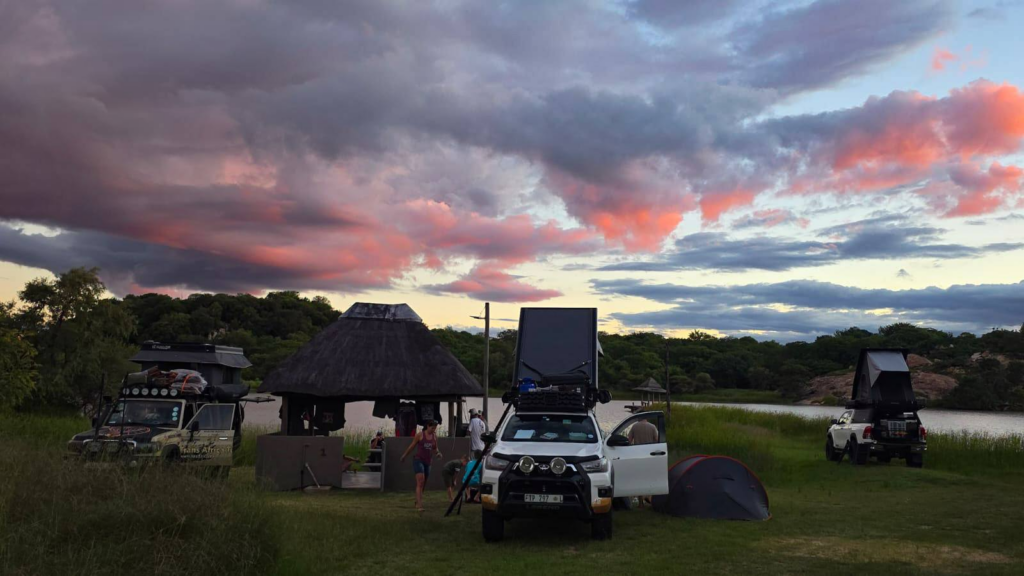
Our first night was spent at Tantebane Lodge, tucked beside a quiet dam just outside
Francistown. For the uninitiated, the first day of a Botswana trip can feel like a rush to “get to the good stuff”. George’s philosophy – going nowhere slowly – immediately took hold.
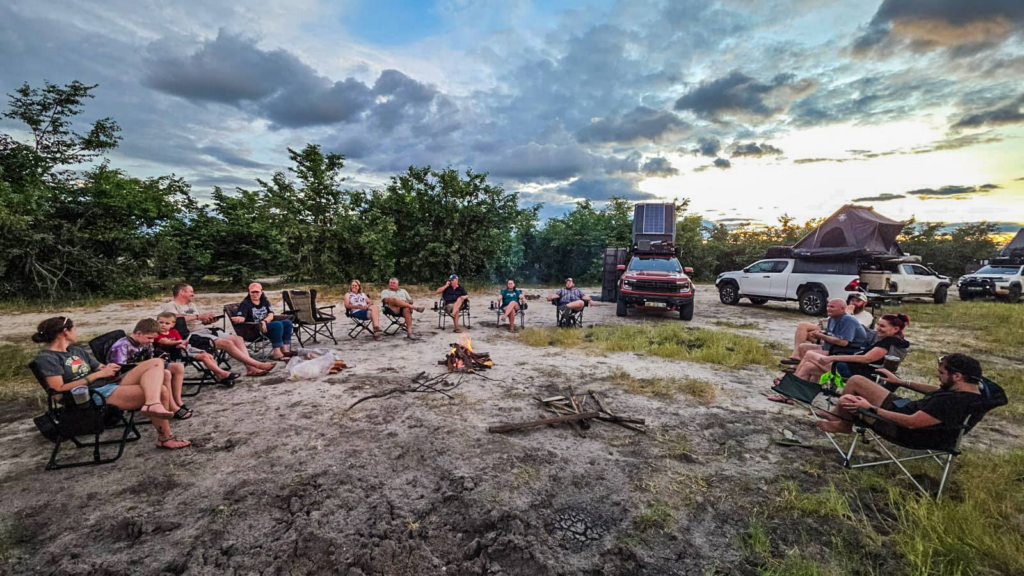
As the sun dipped below the horizon, painting the sky in bruised purples and burnt oranges, the bush began its evening chorus. We sat around the fire, the children’s faces illuminated by dancing flames, listening as George spoke. He didn’t lecture; he shared. He talked about the “Seven Wonders of Africa” found in small things – the architectural genius of a termite mound, the survival strategy of a leadwood tree, and the complex social hierarchies of the birds calling from the canopy above us.
For the kids, this was education at its best: unstructured, engaging and visceral. No textbook can replicate the experience of hearing a fish eagle cry while learning about its hunting patterns. This was learning wild, where the curriculum is dictated by whatever happens to wander past your campsite.
Hunters Road – the wild frontier
The following day, the real dirt work began. We turned north towards Hunters Road, a legendary track that runs along the unfenced border
between Botswana and Zimbabwe. This isn’t a road in the conventional sense. It’s a historic corridor of cathedral mopane forests and vast grasslands, and a vital migratory route for wildlife.
Wild camping here borders on the spiritual. There are no fences, no power lines and no ambient glow from distant towns. Before camp was set up, George initiated a few Trans Africa traditions. First came the “sanitisation” ritual – a round of pomegranate shooters to toast the road and the vehicles that carried us there.
As night fell, the sheer scale of the Kalahari sky revealed itself. Out on Hunters Road, you quickly realise that luxury isn’t about Egyptian cotton. It’s about silence. It’s the ability to hear a leopard cough in the distance or the snap of a branch as an elephant moves through the thicket. Around the fire, laughter grew louder, stories taller, and the bond within our family tightened. We were learning that the most important things we own aren’t kept in a house but packed into the back of a 4×4.
Elephant Sands – where giants rule
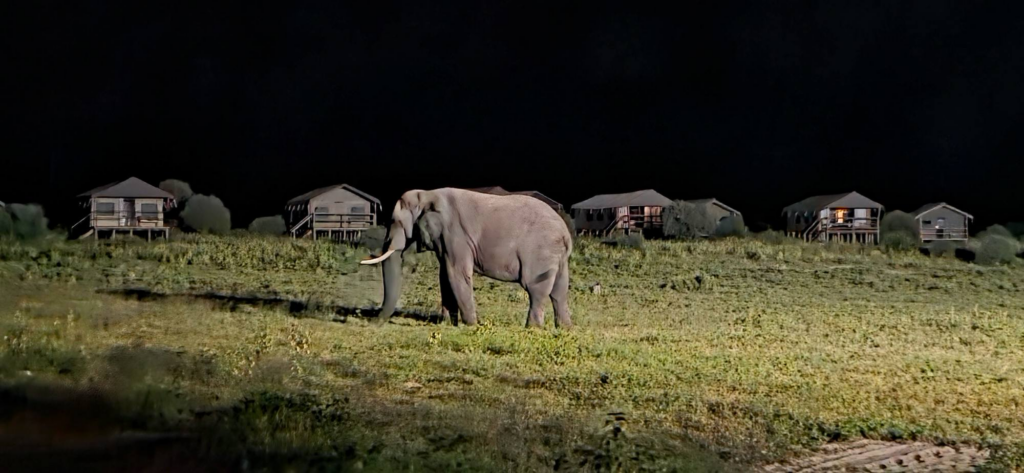
From the raw isolation of the border tracks, we transitioned to Elephant Sands. The lodge’s mantra, “Where elephants rule”, is no exaggeration. The campsite is built around a central waterhole that draws herds from kilometres away.
In the heat of the afternoon, we retreated to the pool. Floating in cool water while a five-tonne bull elephant stands just metres away, trunk siphoning water with rhythmic precision, is a surreal experience. The children watched in hushed awe, studying frayed ears and weathered tusks – living proof of animals that have survived decades in harsh terrain.
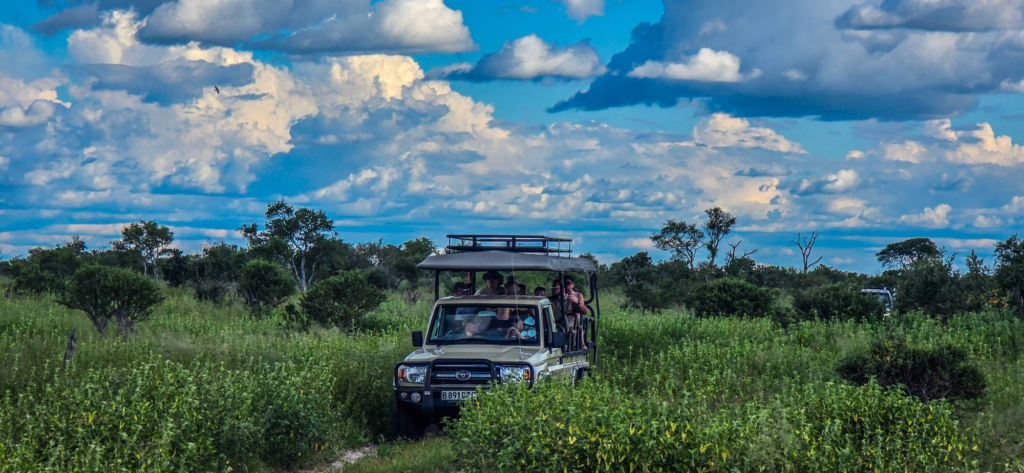
Botswana has a way of shattering preconceived ideas of wildlife viewing. Here, you don’t observe nature from a distance; you live inside it. On a game drive through the surrounding conservancy, George introduced us to a massive, ancient leadwood tree. It took eight of us linking arms to encircle its trunk – a living monument to resilience that stood long before the first explorers mapped this land.
Evenings at Elephant Sands were a culinary surprise. From the well-known “bread and jam” starters to superb Botswana beef, George ensured that while we were roughing it, our palates certainly weren’t.
Mud, guts, and glory: the black cotton test
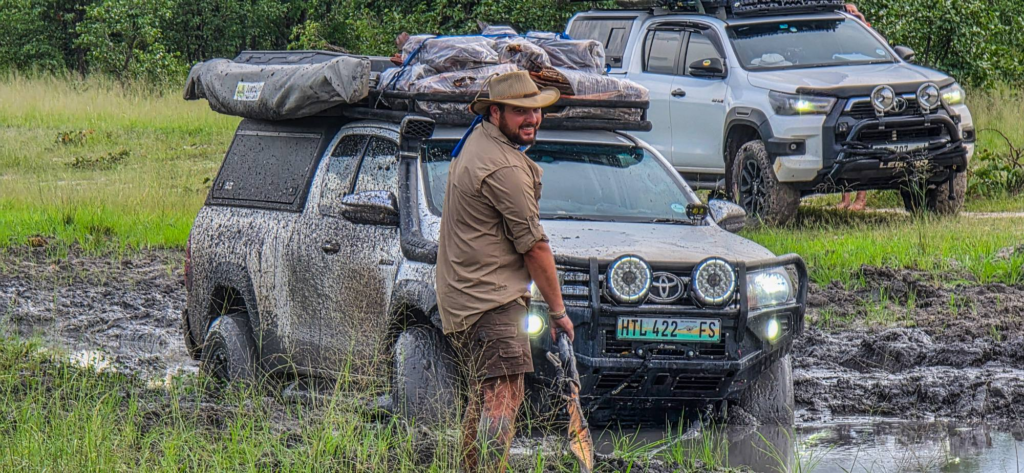
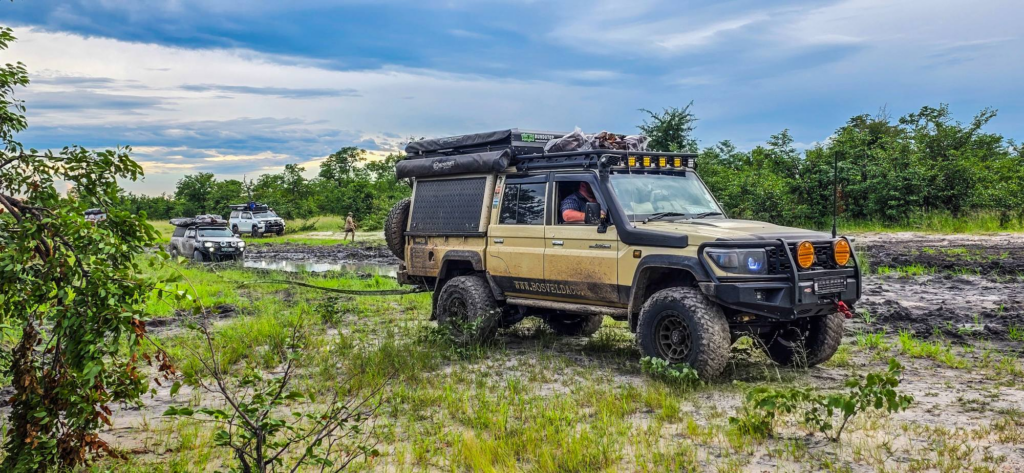
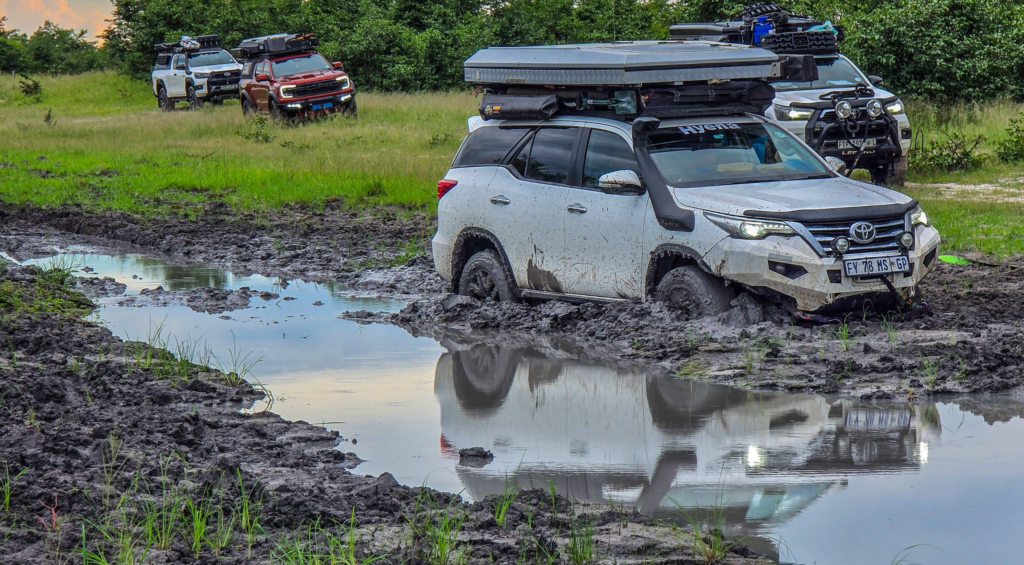
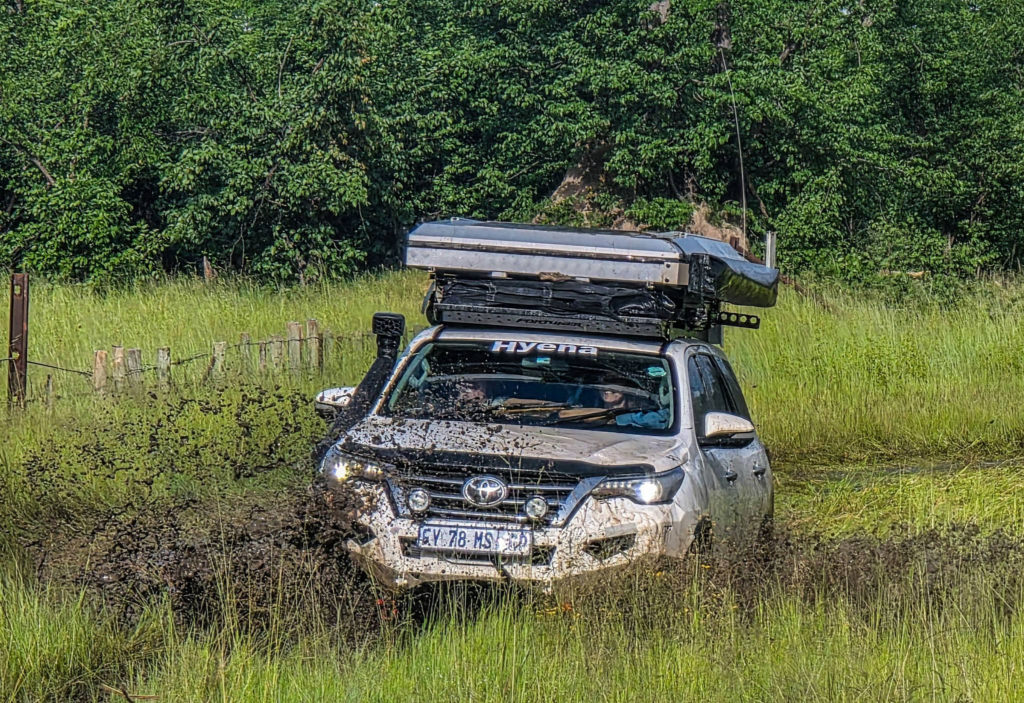
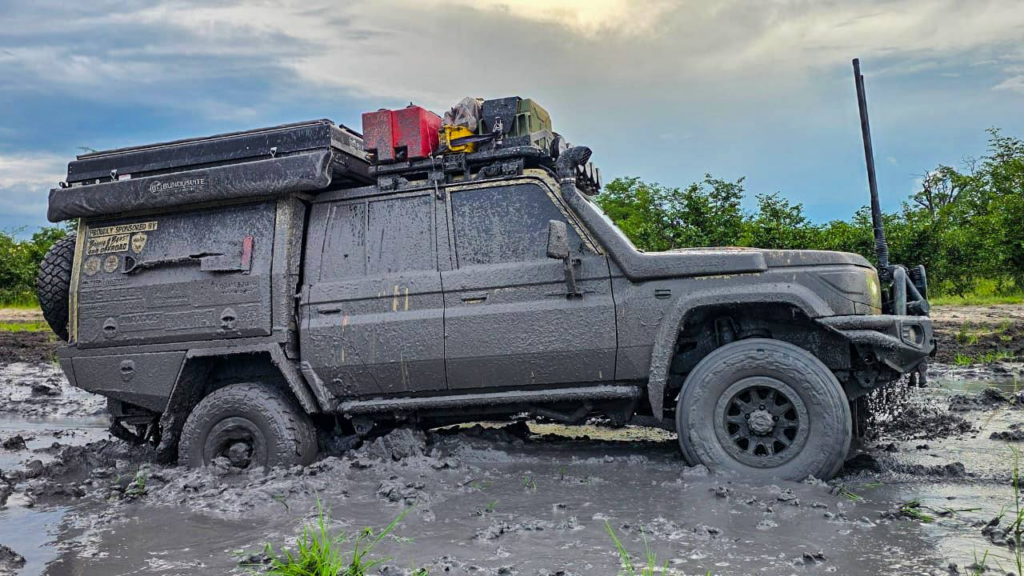
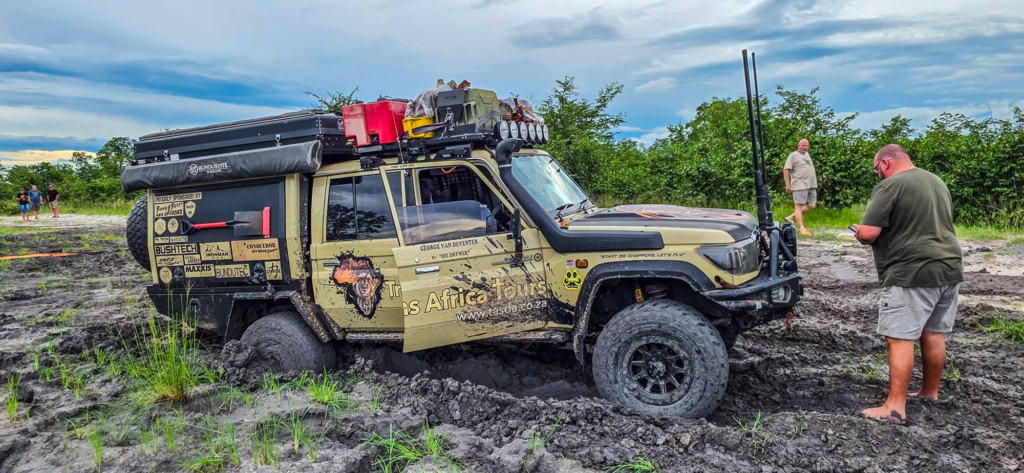
The true test of our technical driving skills – and our collective sense of humour – came when we returned to the lower sections of Hunters Road. Recent rains had transformed the track into a treacherous ribbon of black cotton soil. For the unweighted, this mud is a nightmare. For an overlander, it’s a playground.
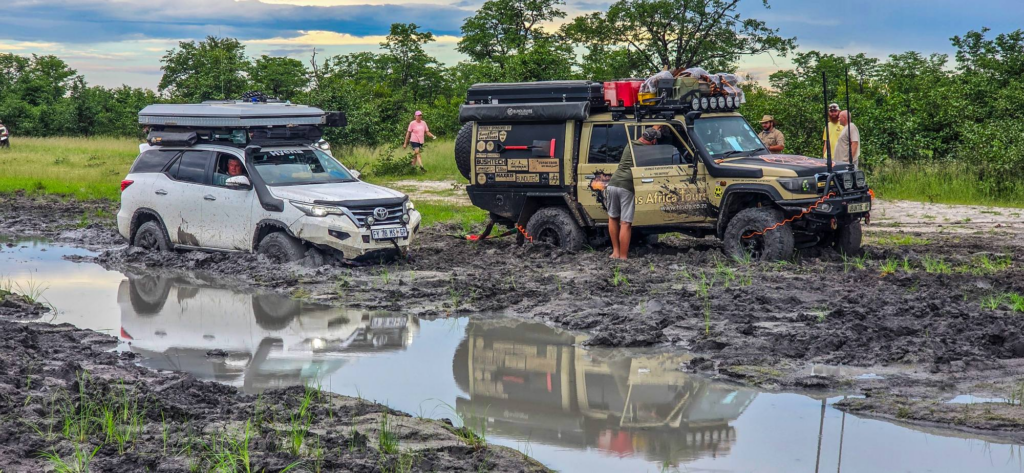
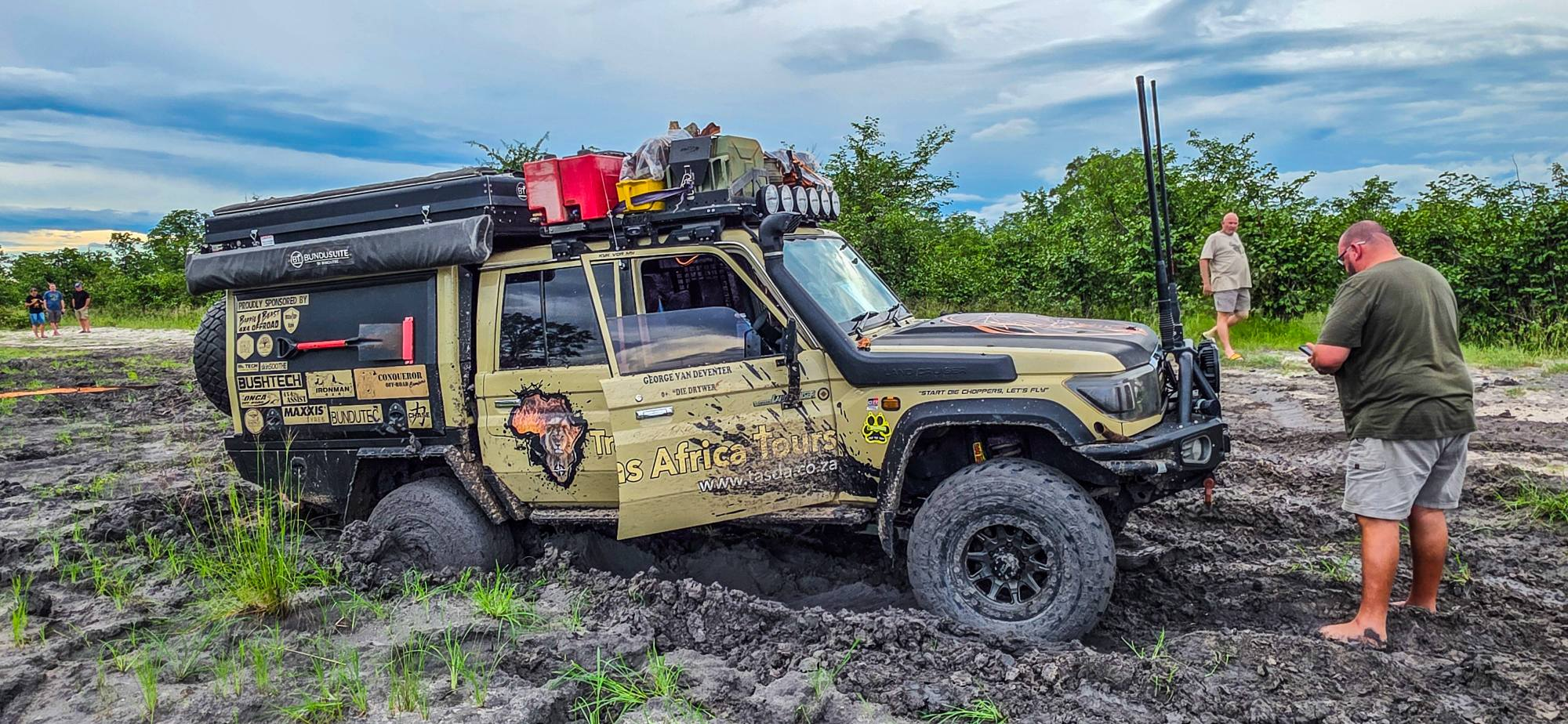
George’s vehicle, the legendary Ubuntu, led the way. “Heeltyd speeltyd” began in earnest as we tackled deep water crossings and deceptive mud holes. One by one, we discovered the limits of our traction. In true expedition fashion, only George made it through cleanly on the first attempt. The rest of us became enthusiastic victims of the mud.
But in a Trans Africa convoy, getting stuck isn’t a failure – it’s a highlight. Amid good-natured teasing over the radio, recovery gear came out. George used the moment to demonstrate modern recovery techniques, combining kinetic straps and Bluetooth-controlled winches to extract 2.5-tonne vehicles from the sludge as if they were toys.
It was messy, exhausting and utterly perfect. Most importantly, it taught the kids – and the adults – that challenges aren’t something to fear, but something to solve with the right tools and the right attitude.
Chobe and the thunder of the falls
As we continued north to Kasane, the landscape shifted once more. Dry mopane gave way to the lush, life-giving waters of the Chobe River. Staying at Tilodi Lodge, we swapped steering wheels for a boat deck.
An evening cruise on the Chobe is a bucket-list experience. Hippos battled for territory, buffalo herds grazed on floodplains, and crocodiles lay motionless on the banks like prehistoric statues. As the sky softened into a dusty pink dusk, it became clear that Botswana’s beauty lies in its contrasts – from parched pans to overflowing river systems.
The final lesson came with a border crossing into Zimbabwe to witness Victoria Falls. Standing at the edge of the gorge, feeling the spray of Mosi-oa-Tunya – the Smoke that Thunders – the scale of the continent felt overwhelming. It was a humbling reminder of our place in the world: a small, fortunate group of travellers witnessing the raw power of the Zambezi.
A connection beyond the road
Throughout the journey, George was the thread that bound the experience together. Whether explaining the purpose of the buffalo fence or sharing maginas (chicken gizzards) and runaways (chicken feet) at a roadside stop, he revealed Botswana from the inside out. He didn’t just show us the route; he showed us the soul of the country.
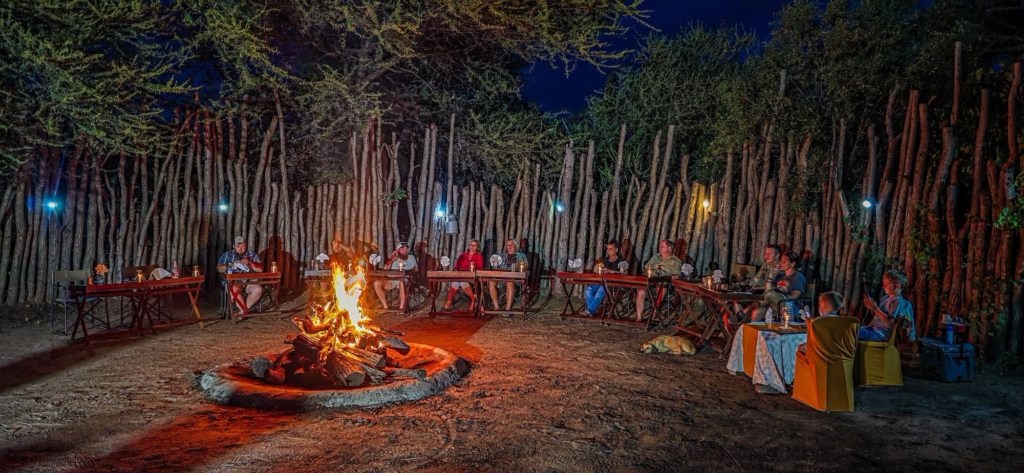
Our final night ended around a glowing fire at a traditional boma braai. Local delicacies were followed by a delicately prepared poached pear dessert – a refined closing chapter to a rugged journey.
As we packed the 4x4s for the last time, the dust coating our vehicles felt like a badge of honour. Botswana didn’t just give us memories or content for a social media feed. It gave us perspective. It reminded us that the best education doesn’t happen behind a desk, but out in the wild – where the road ends and the real stories begin.