There’s a moment in every long-term travel dream where common sense quietly packs its bags and leaves the room. For Magda and Dave Johnson, that moment arrived somewhere between too much red wine around a campfire and the realisation that five-week trips were no longer enough. What followed was not a midlife crisis, but a fully committed leap into the unknown – selling everything, moving into a vehicle, and pointing the nose north with an eight-year plan and a very large dose of optimism.
A travel bug is described by Google AI as a strong, irresistible urge to travel and explore new places – or becoming obsessed with travelling, usually after a positive trip experience that creates a desire to see more of the world. That might be true, but it’s still a bug, and bugs have a habit of turning any normal person’s life into chaos. Like a twenty-four-hour tummy bug after a booze-fuelled late-night curry bought from a man at the traffic light, or a computer bug that hides all your valuable files and sends your holiday snaps from Cap d’Agde to all your work colleagues.
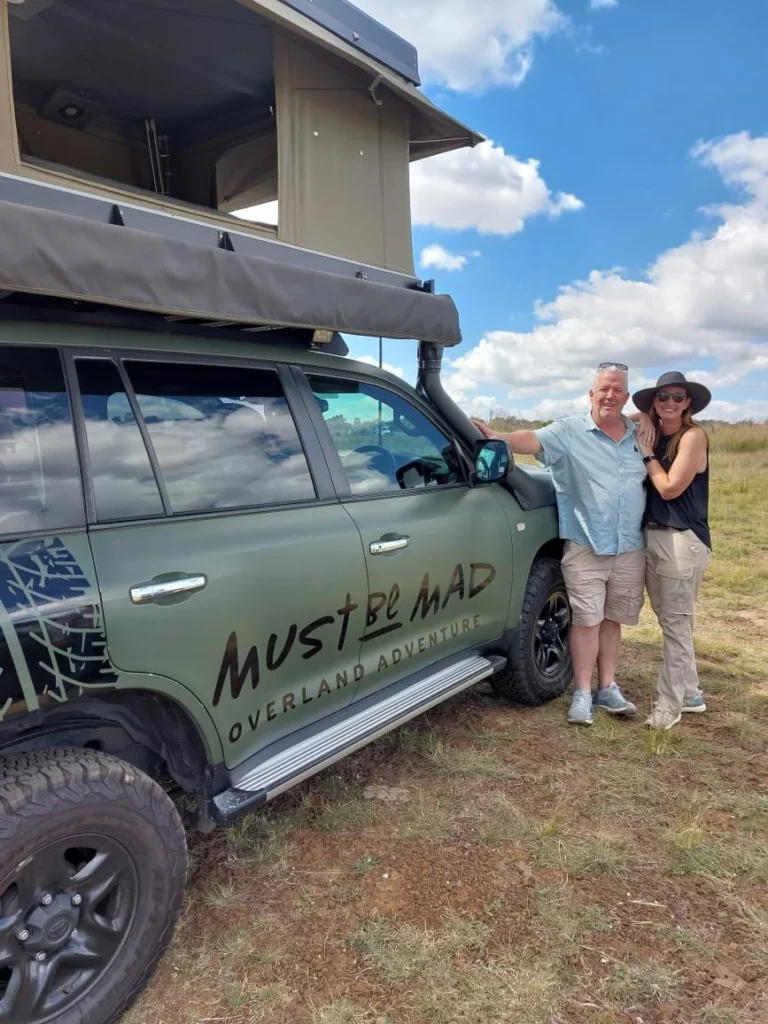
A very similar chaos brought us to MustBeMad. “Us” is Magda and Dave – that’s the M and the D in MaD. Between us, we did just enough travelling in ordinary life to become infected, with an obsession requiring satiation way beyond what we could afford. Self-supported overlanding became the only reasonable option. The next twenty years were spent experimenting with various overlanding vehicles – a Toyota Hilux, Nissan Hardbody, Nissan Navara and a Land Rover Defender – all great vehicles that served us extremely well on trips through South Africa, Namibia, Mozambique, Zimbabwe, Zambia, Botswana, Malawi and Lesotho.
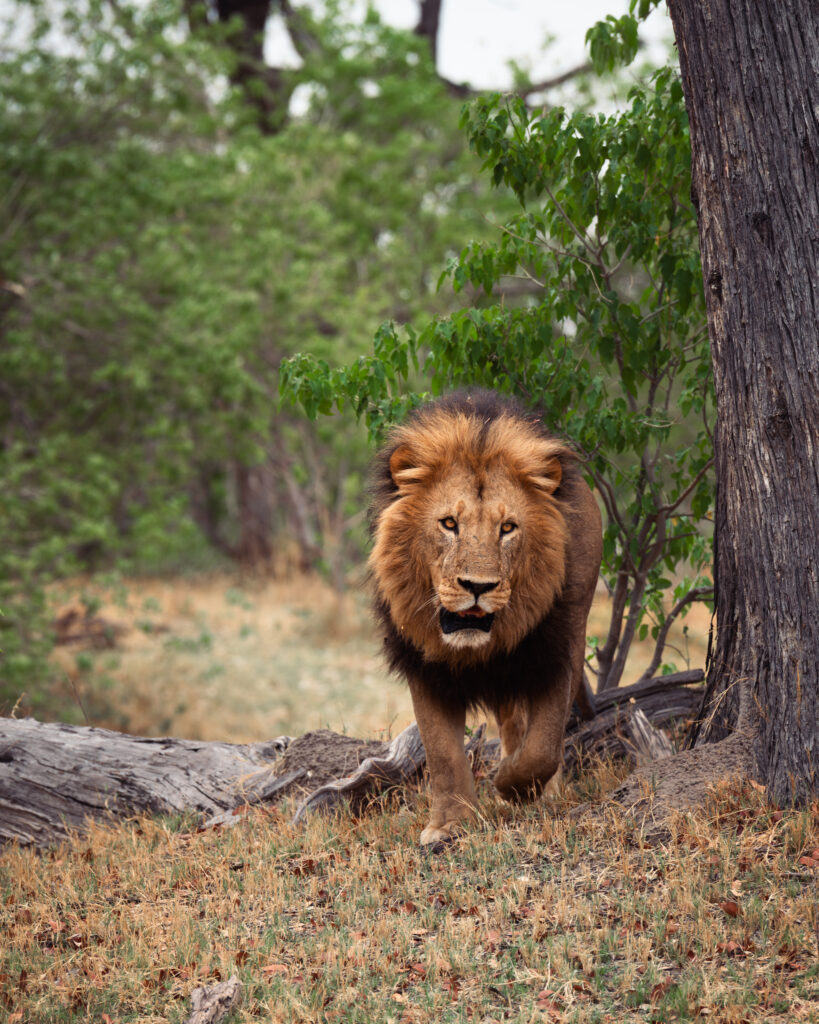
The common denominator on every trip was the fireside discussion, which inevitably started just after midnight. Four or five bottles of red wine under our belts, a Camel cigarette in one hand and a stiff glass of port in the other, staring into the crackling fire while lions roared nearby… How can we do this permanently?

Year after year the alcohol spoke, with unfiltered ideas of buying a lodge, buying land next to a lodge, or buying a campsite. Harsh financial realities reduced those dreams to renting a lodge, and later perhaps getting a job at one. By the cold light of day, the realisation was always the same: we lacked the requisite qualifications that banks like to see when funding dreams, and we had no hospitality management, field guiding or lodge operation experience if we expected anyone to employ us.
The only logical solution then was to do this permanently. Instead of our usual five- or six-week trip, let’s do an eight-year trip. A rough plan was sketched in the Kalahari sand – travel north through Africa, then on to Europe, ship to Canada, travel south through North and South America, and end in Chile at the southern tip of the continent. Perfect.
Great idea. But how would it be funded?
We moved in with family and sold everything – the house contents, the caravan, the cars, and the house itself. We unbundled completely, which not only brought in the required cash but also stopped the monthly drain on the bank account. No mortgage, no car payments, no insurance, no utilities, cleaners, gardeners, pool maintenance or the endless list of costs that come with owning a house. We would work when we could, set up our laptops when we needed to, and fly from wherever we found ourselves if short-term work demanded it.
That should be easy. How hard could it be?
As it turns out, a lot harder than you might imagine. Timing is everything. Try not to sell the beds before you have to move out. Whatever amount you think your furniture will fetch second-hand, divide it by two. If it’s not sold in the first week, divide by two again. And all those friends who say, “Just let us know when you need help and we’ll come over”? They won’t.
You’re also going to need a few waste skips – yes, the big ones – for all the stuff nobody wants. It’s very different from moving house, where you throw things into forty extra cardboard boxes at the last minute, store them at the new place for two years, and promise yourself you’ll sort them out one day.
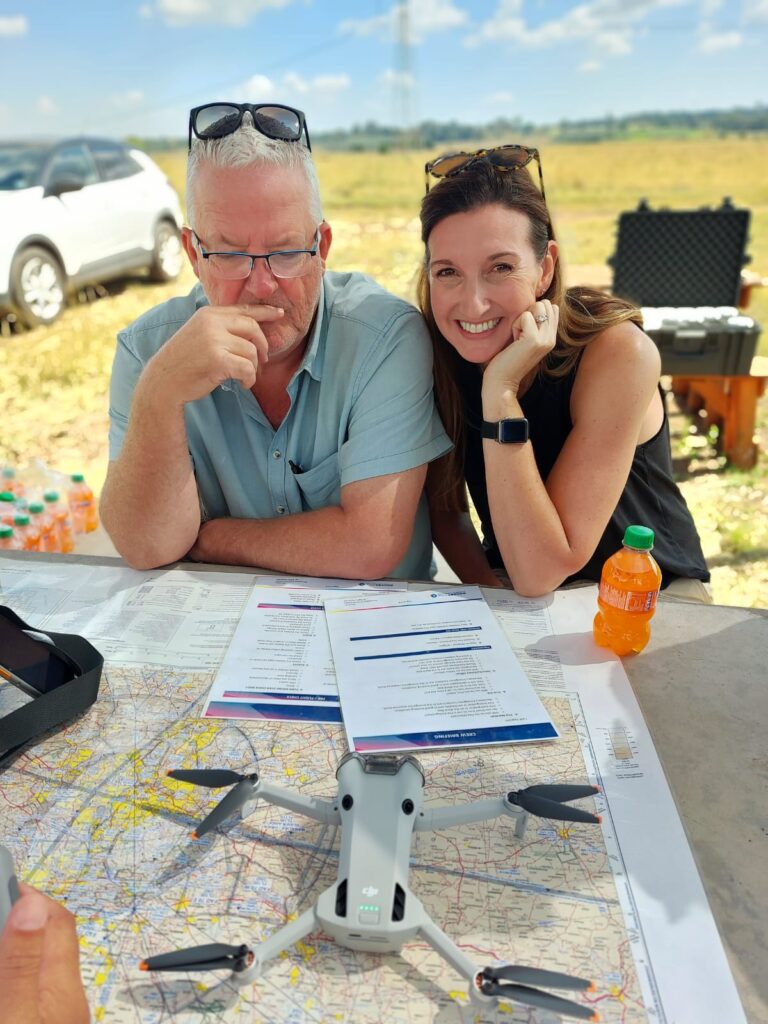
Then came the next bright idea. What if we could supplement our income by making YouTube videos of the trip? That sounded easy enough. We’d shot some videos a hundred years ago on a Sony Handycam. So, with no proper thought and an already very blown budget, we set about buying the best cameras we could afford.
What a ride that turned out to be. This wasn’t Betamax versus VHS – this was HD, 4K or 8K. Video or photographs? Vlogging or cinematic? Resolution, low-light performance, portability. DSLR or mirrorless? What the $#&@ is DSLR? And why on earth would you name something after something it doesn’t have?
After months of talking about talks and leaning on every professional we knew in photography and film, we made our choices. We ended up with thirteen cameras and six lenses after spending just short of a trillion dollars. And because most of this was well beyond our skill set, we hired a full-time editor to help polish the turds. Fortunately, he’s a first-rate polisher, and we’re very lucky to have him.
At the same time, we needed to decide on a vehicle – one that would potentially take us 500 000km. Our requirements were clear. Space, reliability and a global brand with servicing options along the route. It had to handle bad roads, and no roads at all. Comfort mattered too, with long tar stretches and many twelve-hour days behind the wheel. Fuel consumption was a factor, which ruled out the large overlanding trucks favoured by many Europeans.
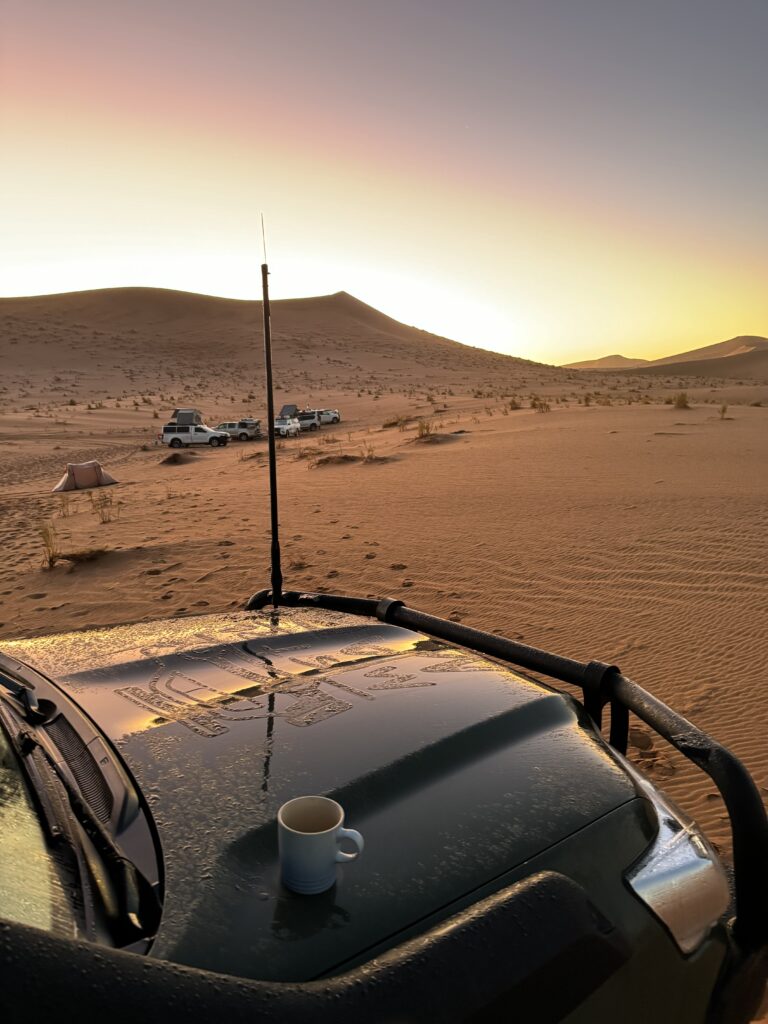
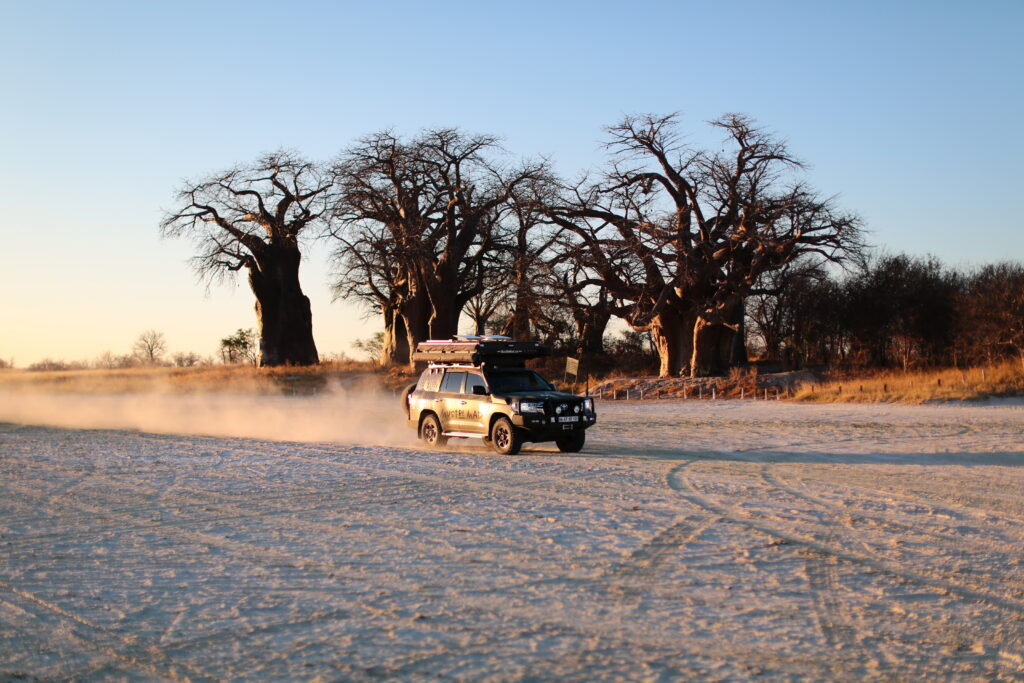
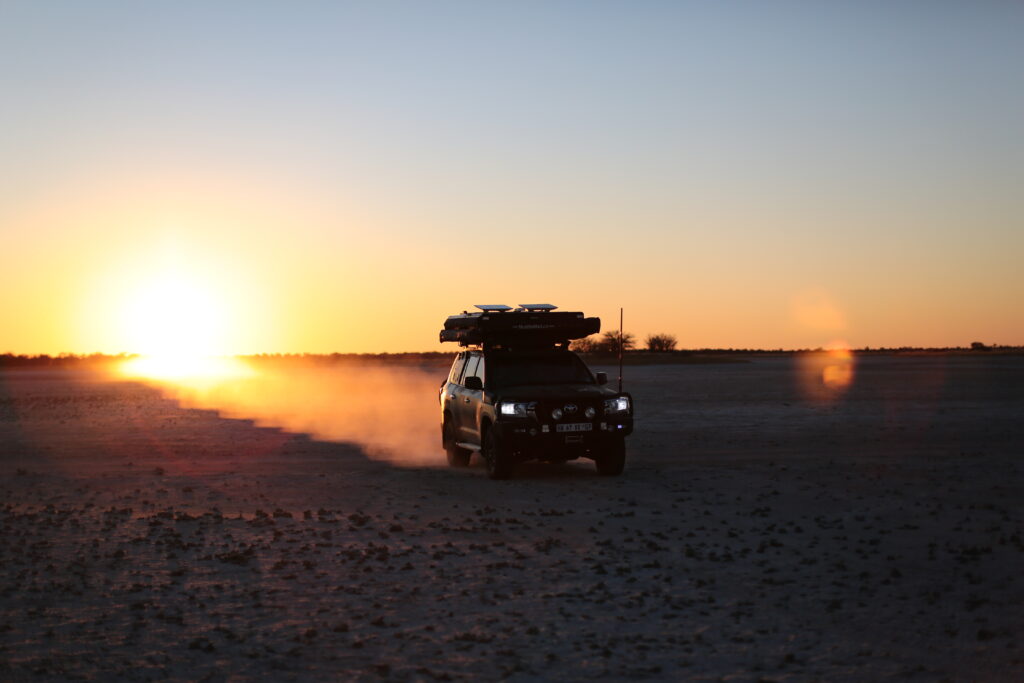
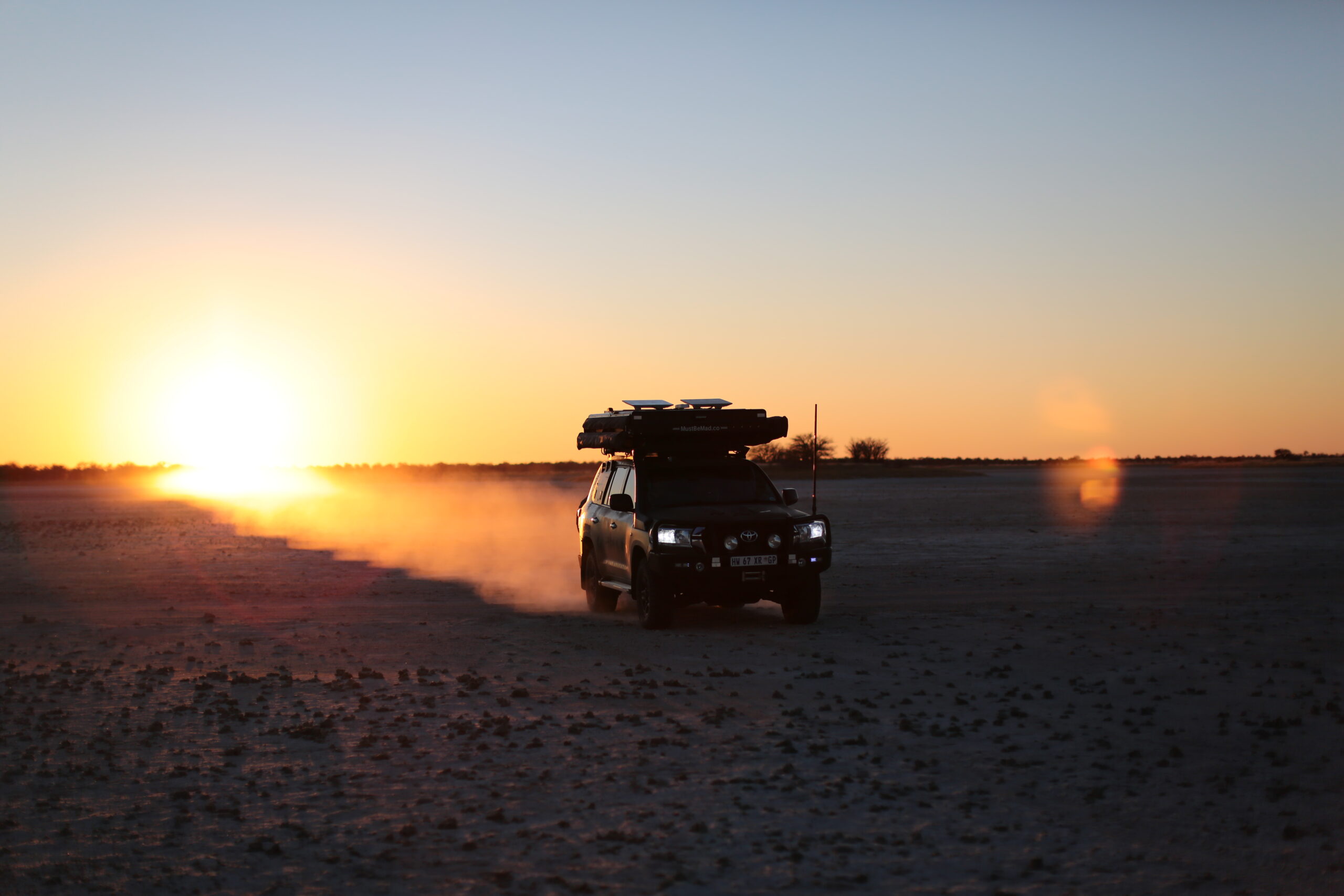
We went around in circles, but one vehicle kept ticking all the boxes. That’s how we ended up in a Toyota Land Cruiser 200 GX-R with a 4.5-litre twin-turbo diesel engine. It’s a beautiful vehicle with loads of space and power, and with many, many modifications added, it seems completely unfazed. It absorbs the extra weight like it was born for the job and just keeps going.
Many changes later – and some changes to the changes – we were almost ready. Almost, because we never actually seemed to get ready. There was always something else to do. Wait for this delivery. Finish that job. After this birthday. All the while, the gravity of the decision sank in day by day.
There was real euphoria when we sold it all and uncluttered our lives, but the adrenaline rush wore off. It was time to go. The reality of leaving everything familiar behind and committing to life in a vehicle for the next eight years hit hard. What had we been thinking?
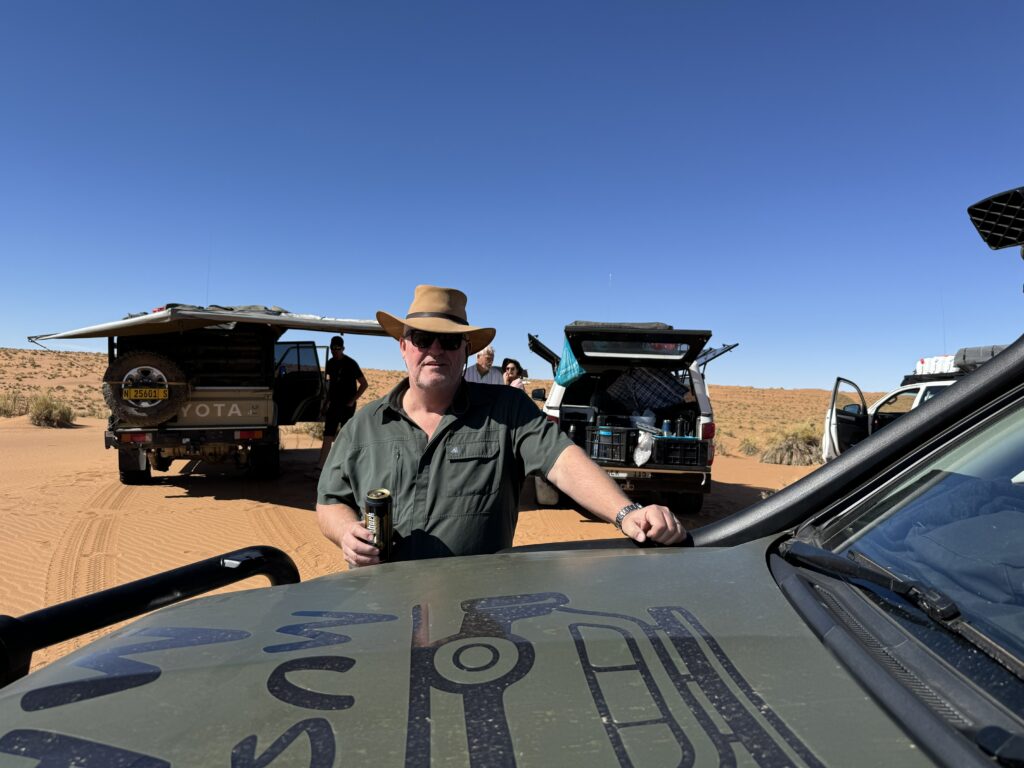
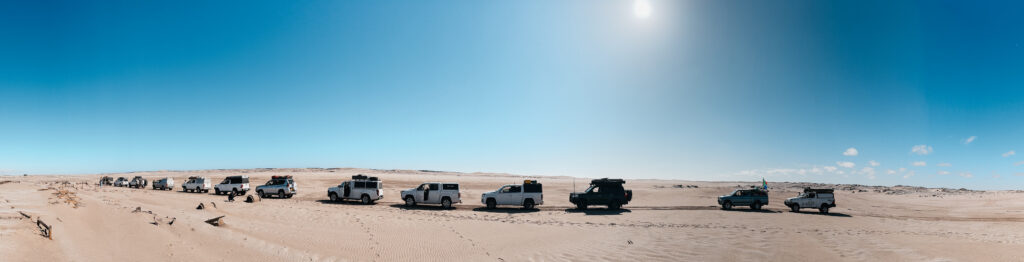
Our solution was to book a guided trip in Namibia. We’d always wanted to travel through the dunes and into the Sperrgebiet, which you can only access with an approved guide. It was a fixed departure date from Aus in Namibia, and once booked, there was no backing out. No more procrastination. As the classics say, “All that remains is the leaving of it all.”
Our departure from Pretoria was low-key. No crowds, no speeches, no ticker-tape parade. Just two family members, the neighbour’s cat, and the chairman of the homeowners’ association – who I suspect was mostly there to make sure the big green car was finally moved after being illegally parked for six months.
We were finally off, travelling via Cape Town to Namibia. Since then, we’ve covered Namibia, Botswana, Zimbabwe and Zambia, and have been on the road for just over a year. Documenting it all on video has been a very steep learning curve.
If you have a similar dream, pick a date and make it happen. Follow us on YouTube, send us a message or an email – we’re always happy to share our mistakes.
YouTube: @MustBeMad_Overland_Adventure
Instagram: @mustbemad.co
Email: mad@mustbemad.co