A 63 000-kilometre reality check on what truly works in African overlanding
Africa has a way of stripping away bravado, replacing keyboard opinions with the honest truth of experience. Our 25-day expedition saw nine Suzuki Jimnys cover 63,000 combined kilometres to Lake Tanganyika. With zero mechanical failures or punctures, the Jimny proved that real overlanding is about balance, discipline, and mechanical honesty over expensive excess.
By the time a journey through Africa is finished, very little of the noise survives. The hashtags fade. The bravado dissolves. And the carefully constructed opinions formed behind keyboards are quietly replaced by something far more honest: experience.
At Suzuki Safari, our goal has always been simple – to show Jimny owners the wonders of Africa, and to firmly cement the fact that you don’t need to spend well over a million rand to have an “Africa-ready” overland vehicle.
Africa has an unforgiving way of revealing truth. It does not negotiate. It does not compromise. It simply applies distance, time, heat, dust, rain, bureaucracy, fatigue and mechanical stress – day after day – until only what truly works remains.

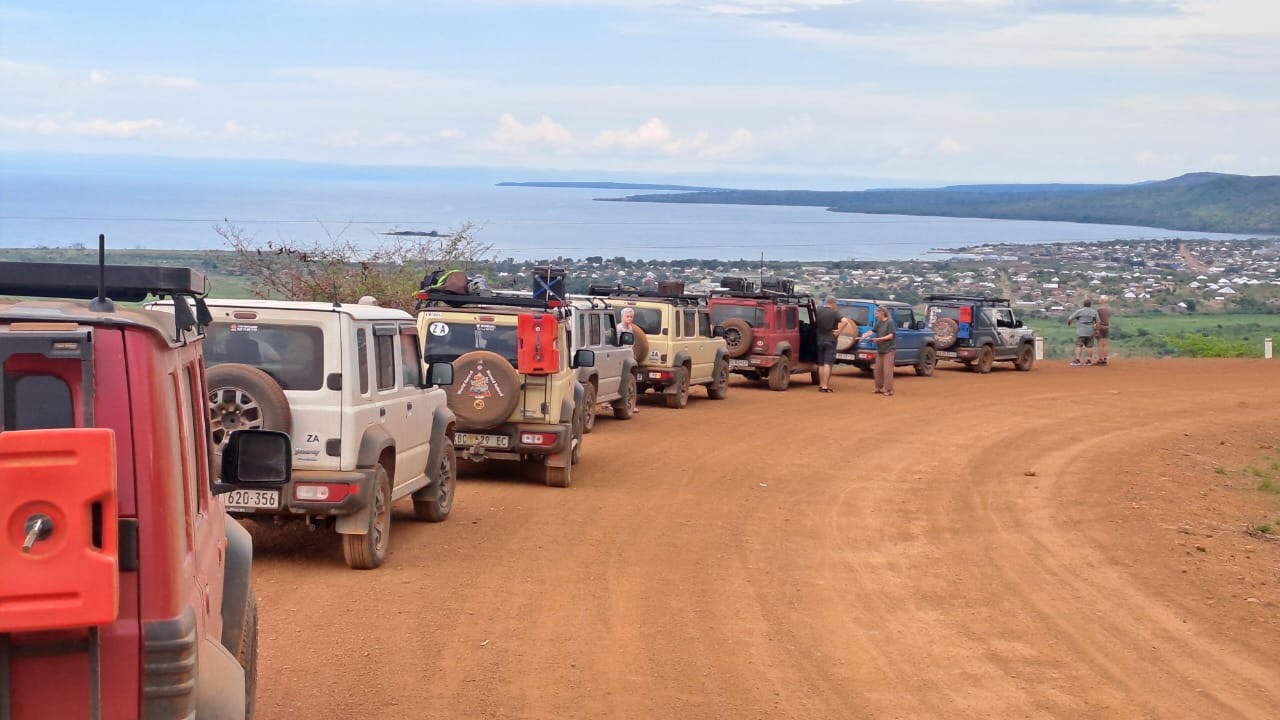
It was under these conditions that our Zambia’s Scenic Wonders Suzuki Safari unfolded: a 25-day, full-blooded overland expedition from South Africa to the far northern reaches of Zambia at Lake Tanganyika – and back. Nine Suzuki Jimnys set out north. Nine Suzuki Jimnys returned, dusty, muddy and grinning with happiness.
And in between, a great many assumptions about “what you need for Africa” were quietly dismantled.
The journey
Setting off from South Africa with our Jimnys pointed north, we had a single goal in mind: reaching the northernmost tip of Zambia on the banks of the ancient Lake Tanganyika. But we were careful not to be blinded by the destination, because it’s the journey that makes it worthwhile. What follows is a brief overview of this epic adventure.
Water, silence and the long way around
Somewhere between the sound of tyres humming on gravel and the distant roar of unseen water, Zambia has a way of sinking itself into your soul.
I remember the smell first – damp earth after afternoon heat, woodsmoke clinging to clothes, the faint mineral tang that always seems to hang in the air near big rivers. Days blurred into each other, not because they were the same, but because time itself began to loosen its grip. Zambia does that to you. It slows you down until you stop measuring progress in kilometres and start measuring it in light, temperature and silence.
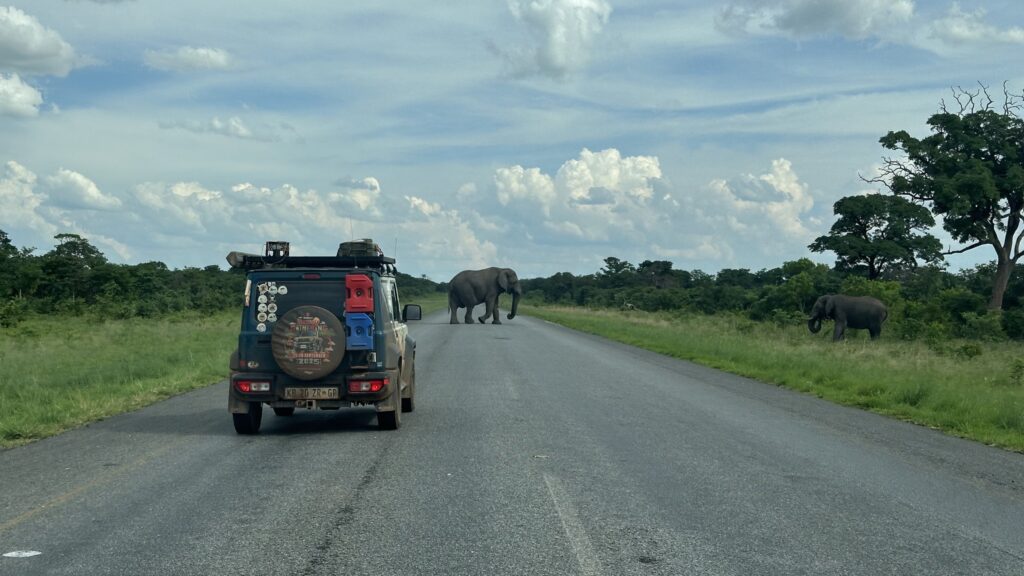
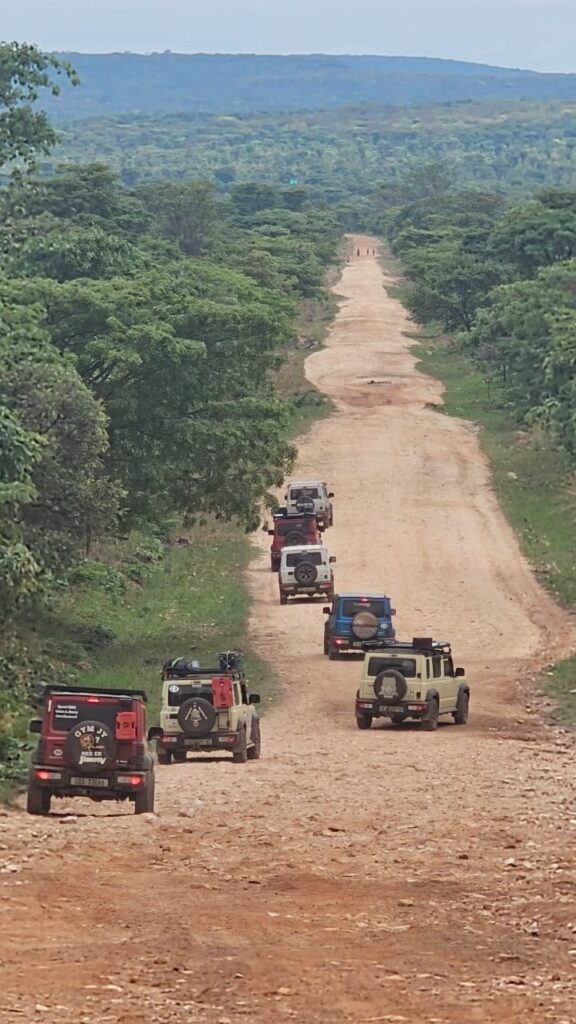
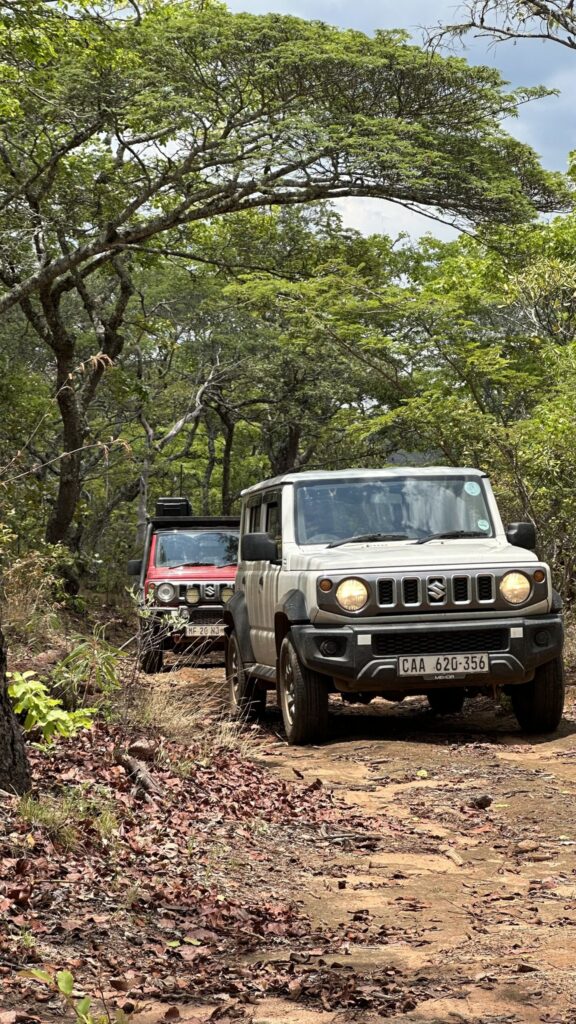
We travelled without urgency. Sometimes the road was little more than two pale lines through grass and forest. Sometimes it dissolved completely. The Jimnys moved steadily and uncomplainingly, but it was our senses that did the real work – eyes scanning tree lines, ears tuning in to changes: the pitch of cicadas, the deep, constant bass note that hinted at waterfalls long before they were visible.
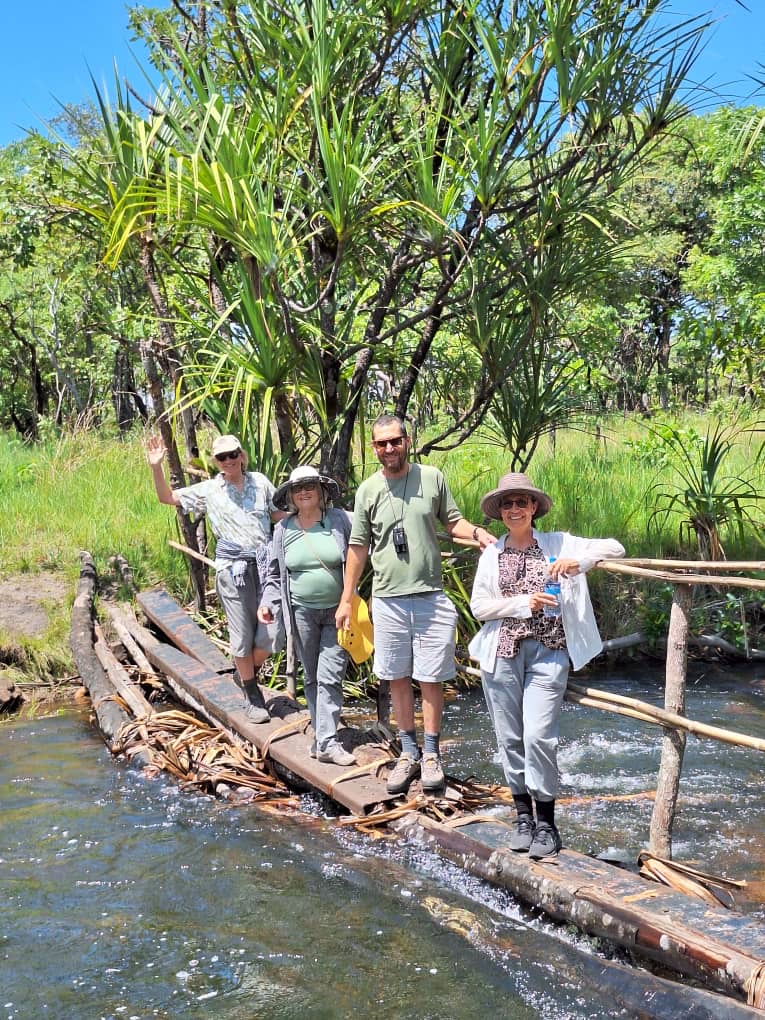
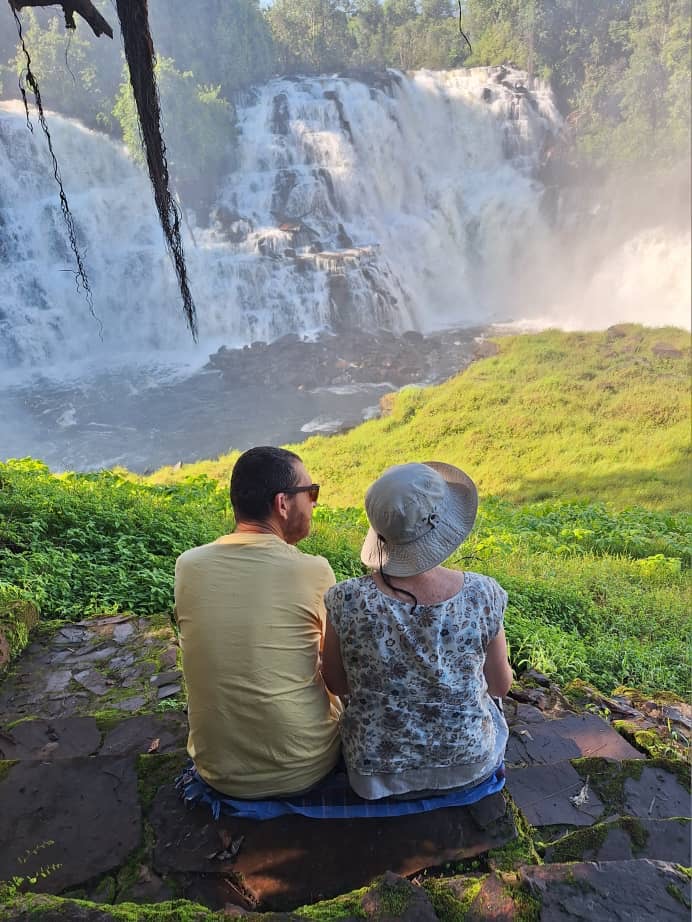
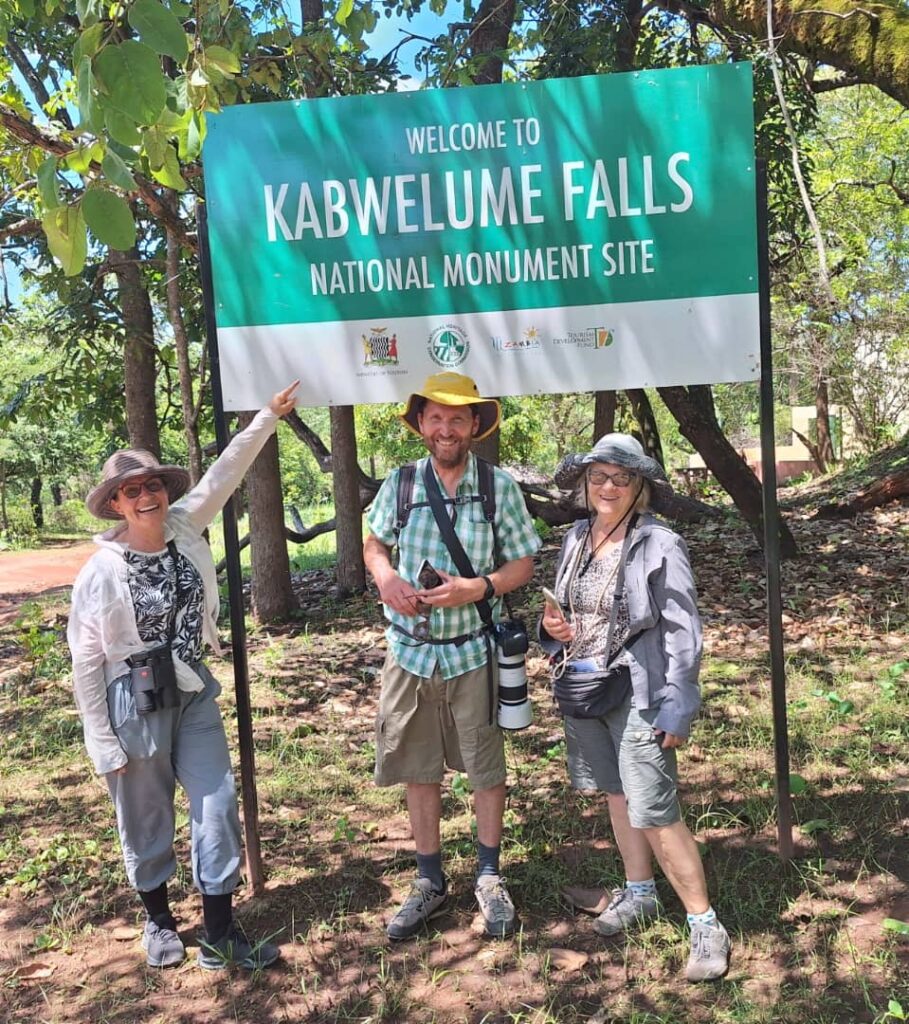
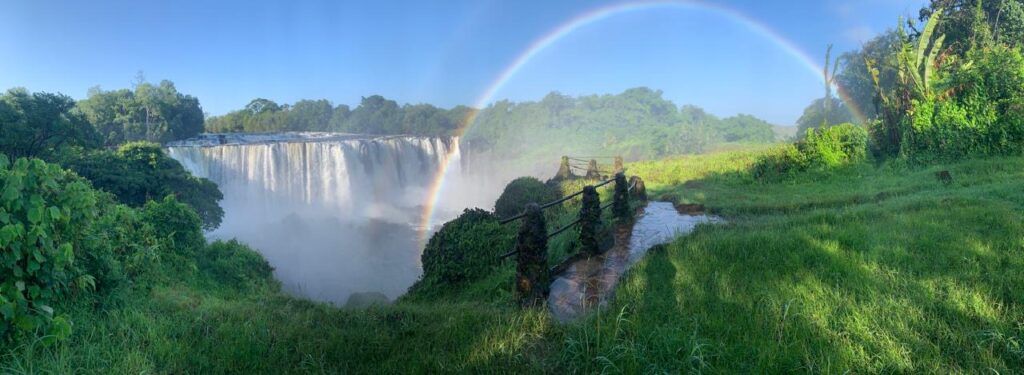
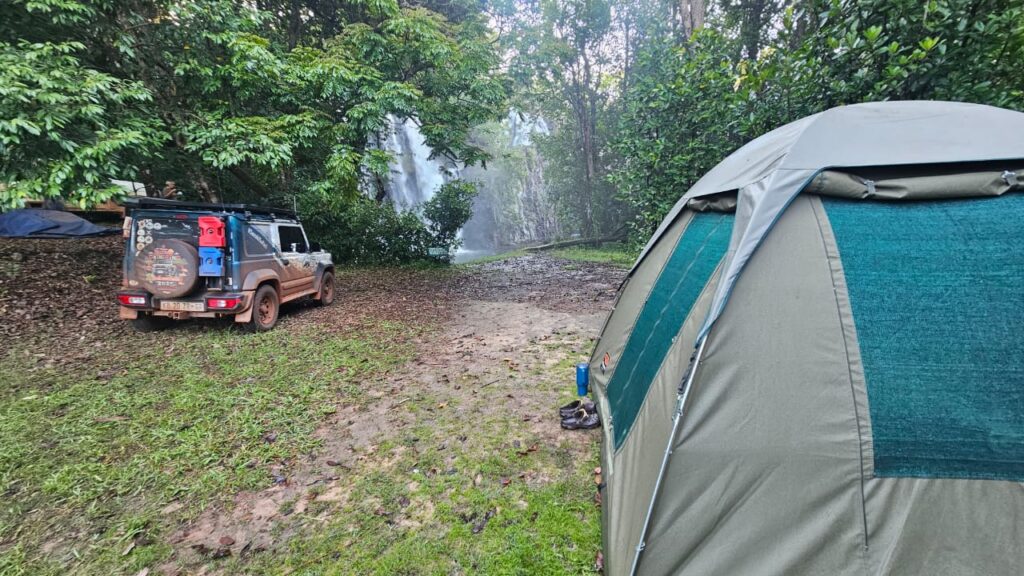
Water was everywhere, often hidden until the last moment. You’d walk through forest, the air thick and still, and then suddenly the sound would rise – first a whisper, then a pulse, then a full-bodied roar. Standing at the edge of one of Zambia’s many waterfalls, spray cooling sunburnt skin, it was impossible not to feel small. Not insignificant – just properly scaled.
Swimming became ritual. Cold water shocking the system awake after dusty drives. Floating on your back, staring up through leaves, the sound of falling water blurring into something almost meditative. Laughter echoed off rock walls. Conversations drifted and dissolved. No one checked the time.
At night, camp settled into its own rhythm. The clink of enamel mugs. A fire crackling low. Food tasted better for having been earned – simple meals, shared slowly, hands still smelling faintly of dust. Somewhere in the dark, something always moved. You learned to listen without needing to identify every sound.
History surfaced when it chose to. A quiet clearing. A marker beneath trees. No grand explanations were needed. Africa has a way of humbling you like that – placing centuries under your boots without ceremony.
One morning, we crossed a vast floodplain as the sun burned off the last of the mist. Water stretched to the horizon, broken only by grass islands and distant birds lifting into the air. It felt less like driving and more like floating. The bridge beneath us seemed impossibly thin against the scale of it all.
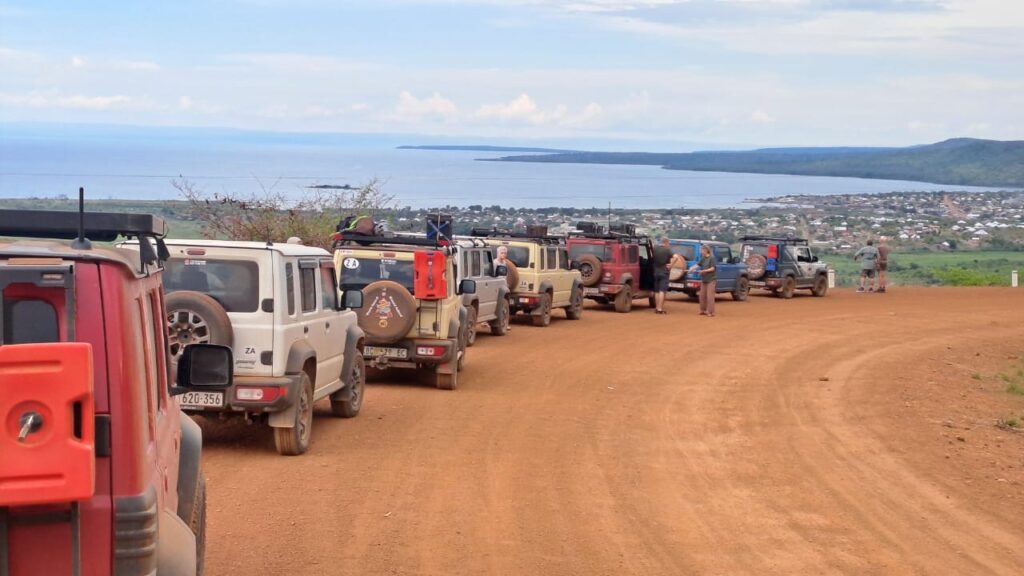
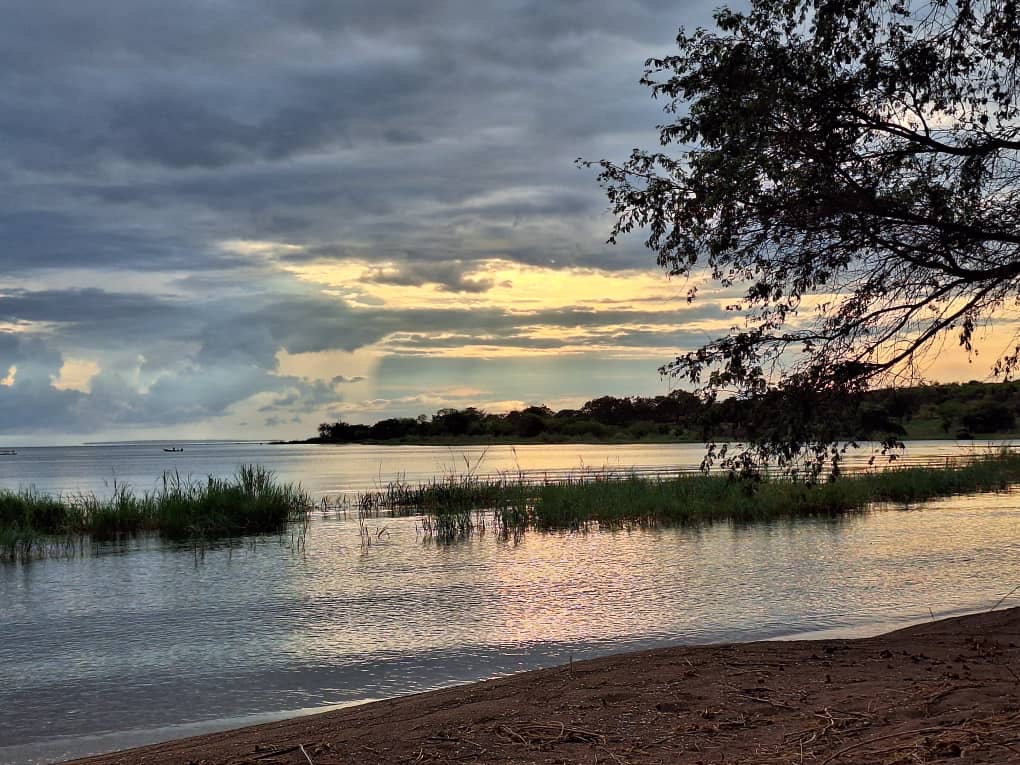
Further north, the landscape shifted again. The air grew heavier, the light softer. At Lake Tanganyika, the water lay impossibly still, like polished stone.
Days slipped past almost unnoticed – snorkelling in clarity so sharp it felt unreal, watching fishermen glide silently across the surface, sunsets bleeding slowly from gold to violet. At night, the silence was complete, broken only by the faint lap of water against the shore.
There was fatigue too – honest, satisfying tiredness. The kind that makes you sleep deeply and wake early. Dust in your hair. Sunburnt noses. Muscles reminding you that adventure isn’t passive.
And then there was the moment that still defies description. We stood quietly as dusk fell. The forest held its breath. And then the sky began to move. At first it was a trick of the light. Then sound – millions of wings, building from a whisper to a rushing roar. The air filled, darkened, pulsed. For twenty minutes, the world belonged to motion, to scale beyond comprehension.
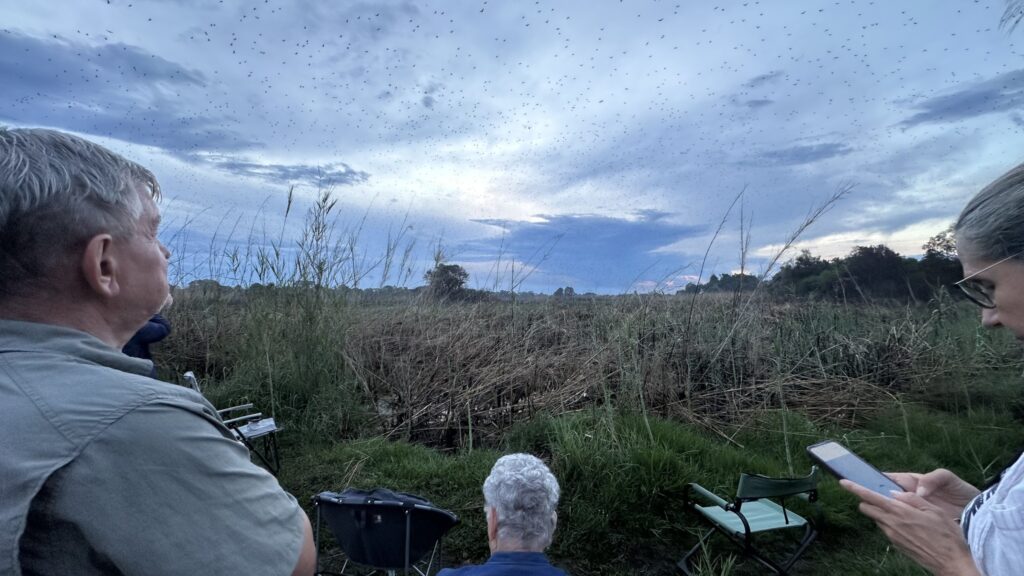
No one spoke. No one needed to. This is the miraculous spectacle of the fruit bat migration at Kasanka National Park.
On the long drive south, familiar roads felt different. Or maybe we did. Zambia had stripped something away – haste, noise, expectation – and replaced it with something harder to name. Perspective, perhaps. Or respect.
This wasn’t a journey designed to impress. It didn’t need to be. It was a journey that asked only one thing of us: to slow down enough to notice. And in doing so, Zambia gave us everything.
Distance over drama
This was not an exercise in curated adventure. There were no recovery vehicles shadowing the convoy. No shortcuts. No vehicle swaps when conditions became inconvenient.
A key factor to remember when overlanding with a Jimny is that weight is everything. We do our utmost to keep the load each Jimny carries to a minimum, which is why we have a logistical vehicle travelling independently with our crew, handling all camping and catering requirements.
Over 63 000km combined – roughly 7 000km per Jimny – the convoy navigated everything Africa is famous for, and everything it is .
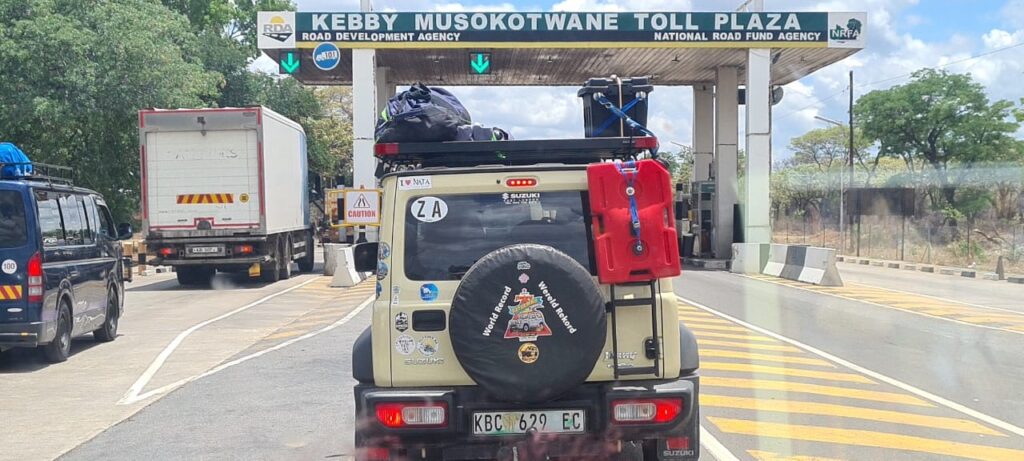
infamous for. Long, empty gravel stretches where the horizon never seems to move. Broken tar that punishes inattentiveness. Mud, standing water, washaways, corrugations that rattle fillings loose, and border posts where time becomes irrelevant.
And that is precisely why this journey matters.
This is the miraculous spectacle of the fruit bat migration at Kasanka National Park.
On the long drive south, familiar roads felt different. Or maybe we did. Zambia had stripped something away – haste, noise, expectation – and replaced it with something harder to name. Perspective, perhaps. Or respect.
This wasn’t a journey designed to impress. It didn’t need to be. It was a journey that asked only one thing of us: to slow down enough to notice. And in doing so, Zambia gave us everything.
The rhythm of real African travel
Overland travel settles into a rhythm. Early mornings. Border formalities. Long days behind the wheel. Quiet evenings around a fire, insects and distant village sounds as the soundtrack.
There are moments of frustration – waiting, paperwork, delays – and moments of absolute stillness, when you realise just how far you are from anything familiar.
In those moments, reliability is everything.
Across Zambia’s vast interior, the Jimny delivered that assurance without fanfare.