Is the Kia Tasman a true bakkie disruptor?
It is not often that a brand-new vehicle launch generates enough heat on social media to power a small town, but the Kia Tasman has done exactly that. Since the first global images surfaced months ago, reactions across South Africa’s 4×4 community have been mixed at best. Some have been genuinely curious about a fresh face in the segment, while others have been far more vocal – and occasionally a little brutal – about its styling. However, standing on the dunes during the official South African launch this week, one thing became abundantly clear: this is a vehicle that grows on you.
The elephant in the room
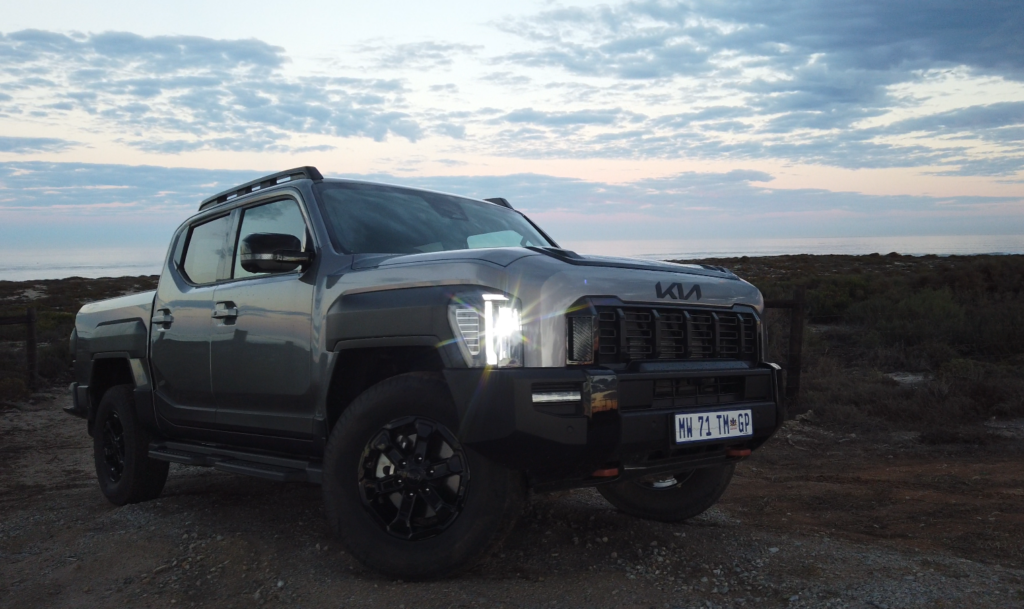
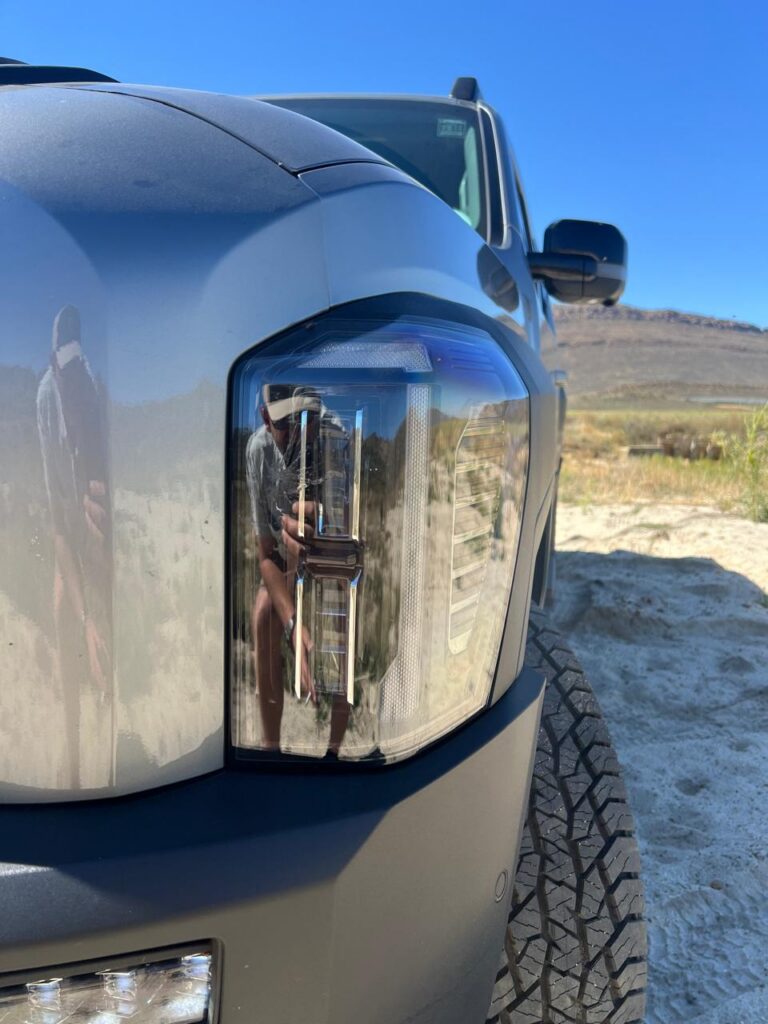
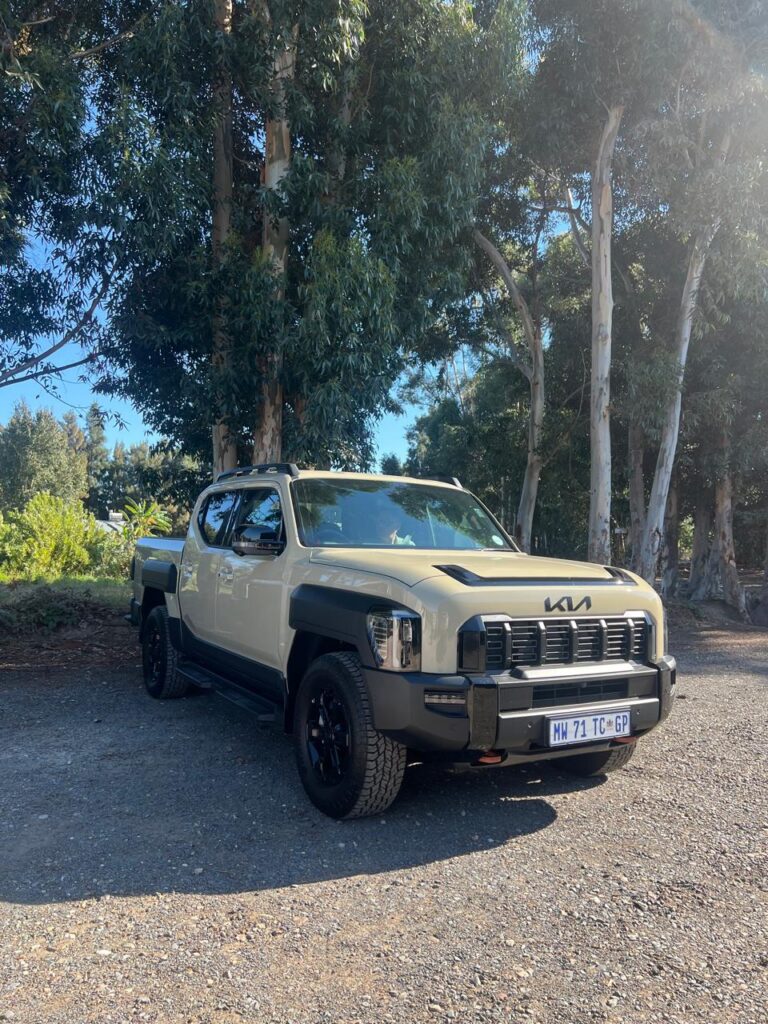
Let’s address the obvious straight away – or perhaps we should say Sid from Ice Age. The vertical headlights and boxy black fender treatments have been the main talking point around campfires and across social media. At first glance, it can look like someone combined a Tonka truck with a Lego set.

But photos do not do it justice. In the metal, the Tasman has a serious presence. It is bold, different and unapologetically so – a clear departure from the safe, somewhat predictable designs we have seen from established players for years.
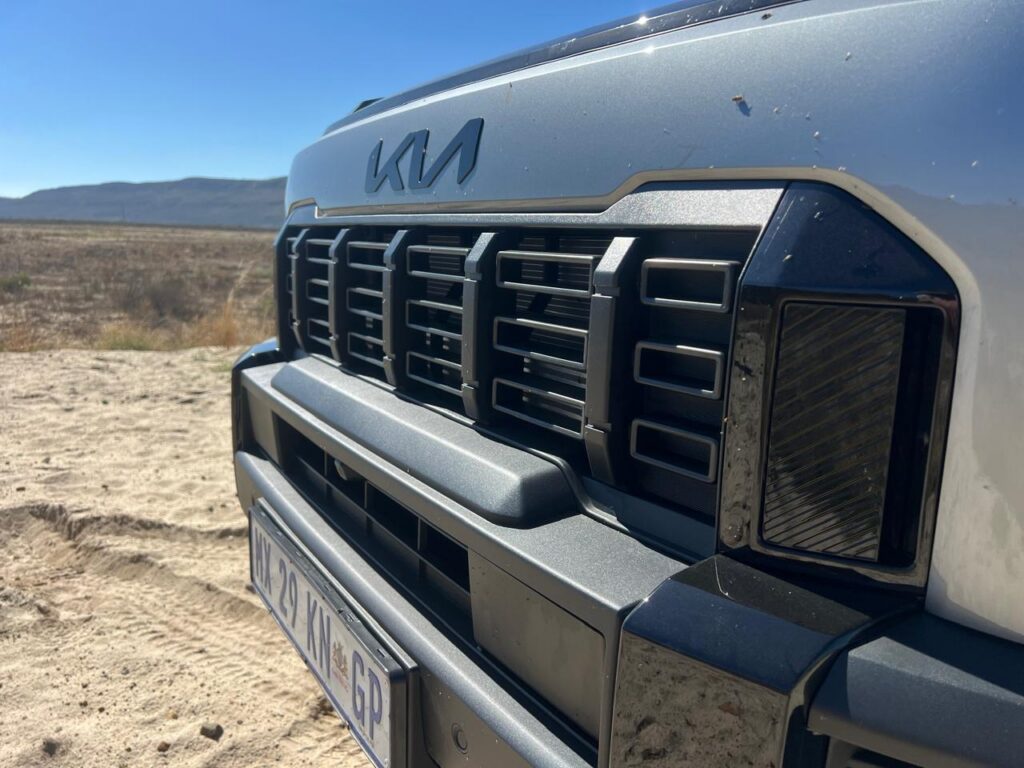
For the overlanding crowd, the potential for customisation is immediately apparent. Fit something like an ARB bull bar and the entire front-end character changes. Suddenly, that quirky newcomer starts to look like a purposeful, go-anywhere explorer.
A masterclass in interior space
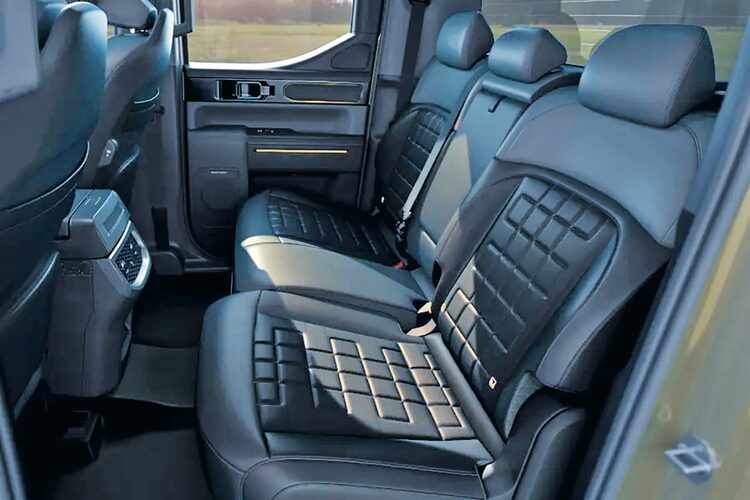
If the exterior starts the conversation, the interior is what seals the deal. The first word that comes to mind is simply: huge.
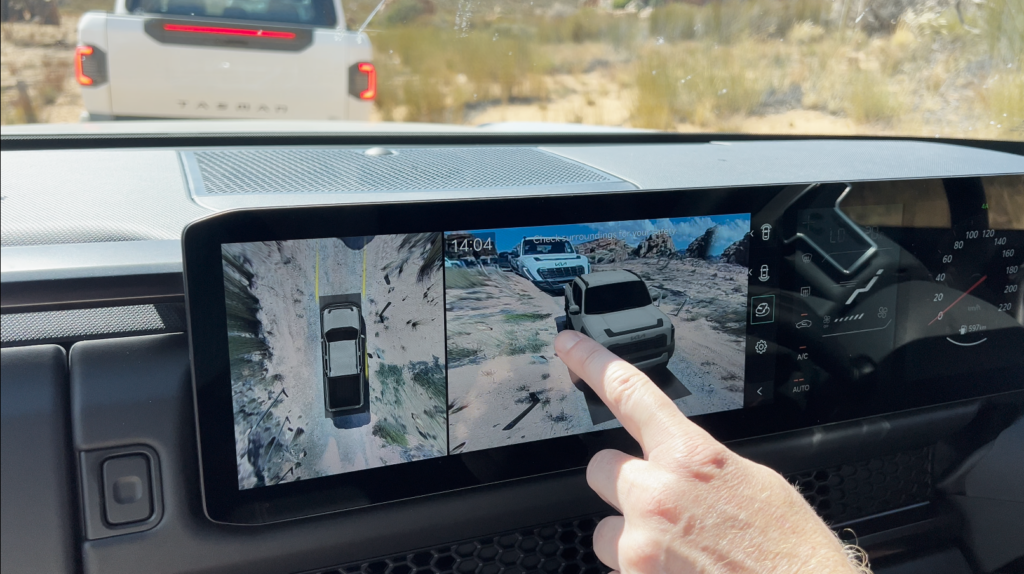
Kia has gone all-in with a panoramic triple-display setup that integrates instrumentation, infotainment and a dedicated five-inch screen for climate control. It is a clever layout that manages to feel high-tech without being overwhelming. The infotainment system is backed up by a Harman Kardon sound system, which delivers one of the better audio experiences currently available in the bakkie segment.
Space is where the Tasman really impresses. There is ample room for two six-foot adults to sit comfortably one behind the other, and both front seats offer full electric adjustment. Practical touches include multiple USB-C ports and wireless charging, catering for the modern, gadget-heavy lifestyle. Sound insulation is another highlight. Even at speed or over rough gravel, the cabin remains impressively quiet, adding to the overall sense of refinement.
Power and the torque debate
Under the bonnet sits a 2.2-litre turbodiesel engine producing 154kW and 440Nm. On paper, that might seem slightly underwhelming compared to some rivals, particularly those boasting 500Nm or more. In reality, it tells a different story.
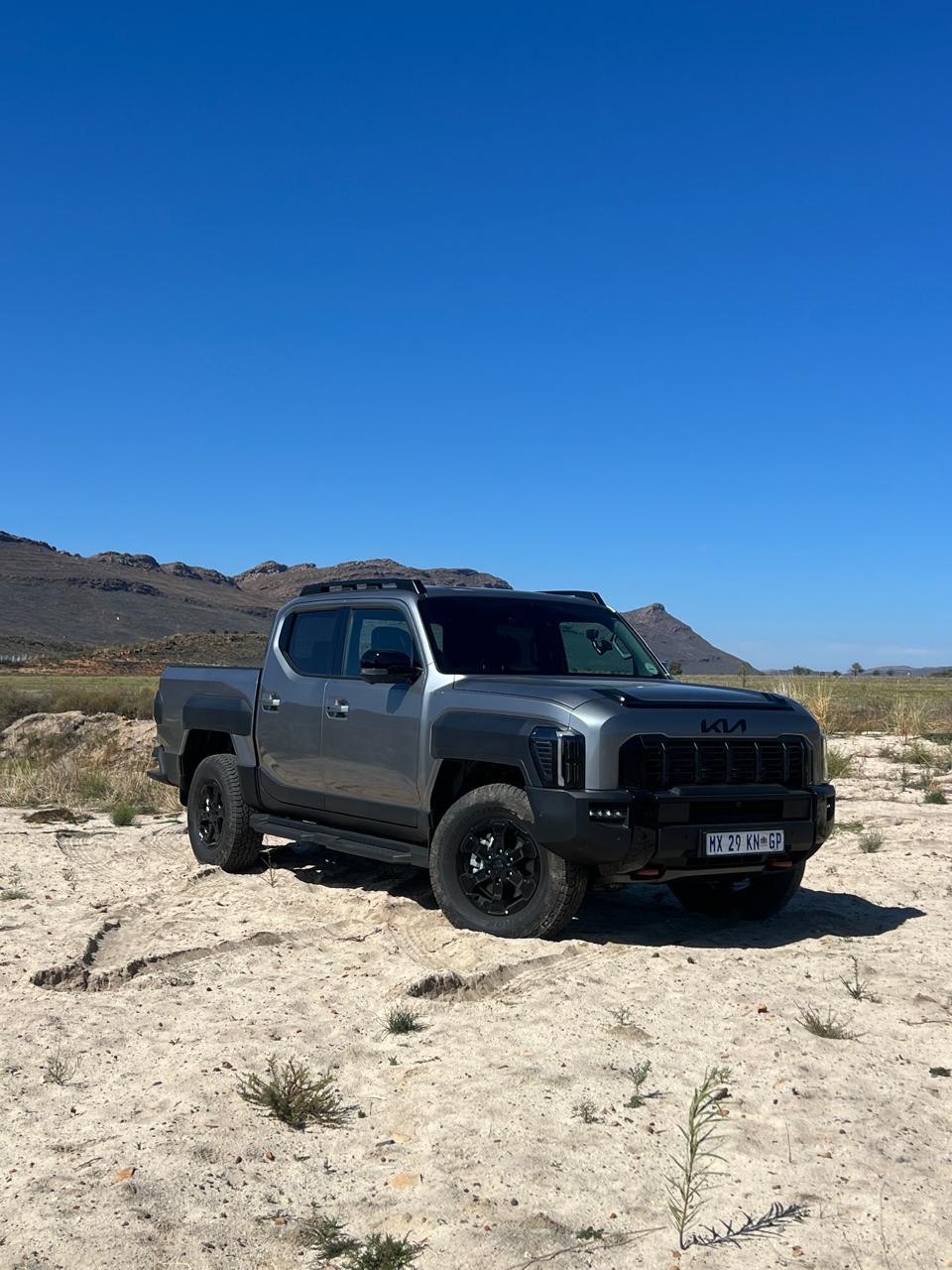
Paired with an eight-speed automatic transmission, the power delivery feels smooth and well managed. It never comes across as strained or lacking. Out in the dunes, where torque really matters, the Tasman proved more than capable. Running in 4H with traction control disabled, it maintained momentum through soft sand without any signs of struggle.
It serves as a reminder that numbers on paper do not always tell the full story – sometimes the driver plays as big a role as the drivetrain.

Gravel manners and the X-Pro edge
Most of our time was spent in the flagship X-Pro 4WD derivative. This model sits slightly higher than the rest of the range, riding on 17-inch alloy wheels wrapped in Hankook all-terrain tyres. On gravel, it felt right at home. The Tasman floated over corrugations and ruts with confidence, delivering a planted and composed ride. It has that reassuring sense of solidity you want when the nearest tar road is a distant memory.
The X-Pro also benefits from a selectable rear differential lock – an essential feature for serious off-road use. While lower-spec models rely on limited-slip systems, the X-Pro offers that extra layer of control when the terrain becomes more technical.
The South African range and pricing Kia has introduced three derivatives locally, each aimed at a slightly different buyer.
The Tasman LX 2WD, priced at R679 995, serves as the entry point. It offers the practicality of a bakkie without the added complexity of four-wheel drive, while still including key features such as LED headlamps, 17-inch alloy wheels, a 12-inch infotainment display and a rear-view camera with front and rear sensors.
Next up is the Tasman SX 4WD at R879 995. This model adds a strong dose of technology, including a 360-degree camera, blind-spot view monitor, reverse parking collision-avoidance assist and dual 12.3-inch panoramic displays.
At the top of the range sits the Tasman X-Pro 4WD, priced at R999 995. Positioned just below the R1 million mark, it builds on the SX specification with increased ground clearance, an X-Trek mode, the Harman Kardon sound system and a selectable electronic differential lock.

Weights and measures
The Tasman is not a lightweight contender. Tipping the scales at around 2 289kg, it is roughly 400kg heavier than a Toyota Hilux. However, it is also physically larger than many of its rivals, with a presence that feels closer to something like a Ranger Raptor or even a Land Cruiser 76.
That extra mass contributes to its planted feel on the road. Despite the size and weight, fuel consumption during our test averaged a respectable 9.8 litres/100km across a mix of urban driving, mountain passes and gravel roads.
The value proposition
One of the more interesting aspects in a South African context is security. In a market where certain bakkies are high on the theft list, the Tasman offers a degree of peace of mind simply by being new and relatively uncommon.
Kia’s target of selling 120 units per month locally might sound ambitious, but given the level of technology and specification on offer at these price points, it is not entirely unrealistic.
You are not buying a badge for bragging rights here. You are buying a well-rounded, purpose-built bakkie that blends workhorse ability with modern comfort.
Final thoughts
The Kia Tasman is a disruptor in every sense. It challenges expectations – from its styling to the level of technology packed into the cabin.
It drives well, feels solidly built and delivers impressive refinement, particularly in terms of noise suppression. While its design will continue to divide opinion, there is no denying that it brings something fresh to a very competitive segment.
Whether it wins over traditional buyers remains to be seen, but one thing is certain – the Tasman has stirred the pot, and the local bakkie market is better for it.