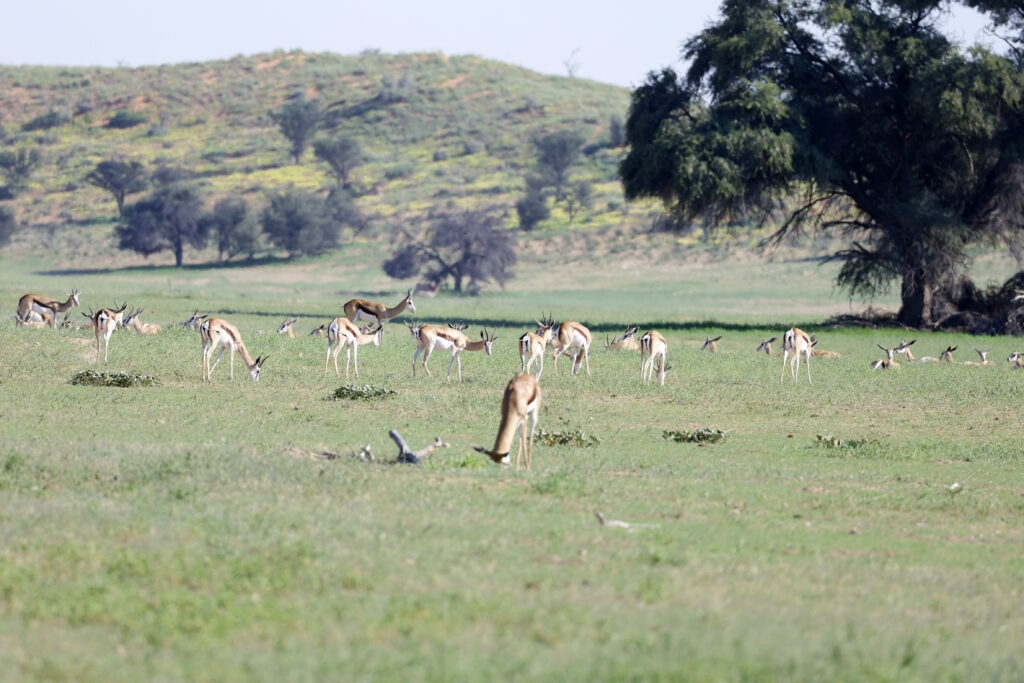
I’m sitting in our rooftop tent, my feet dangling over the edge as daybreak emerges over the Mpayatulwa Pan. The expansive sky morphs from deep blues into vivid oranges, with the morning star signalling new energy and hope. My thoughts drift in the vast magnitude and tranquillity of this place, while great herds of springbok and oryx roam unperturbed in the pan below. The rugged beauty is almost surreal.
My husband, Glen, is already up, pottering around and making coffee, a welcome treat in the wild. We each have our tasks while travelling, and I’m more than happy to receive that first cuppa at dawn. The rising sun nudges me to focus and descend from my comfortable perch to prepare for another adventurous day ahead. From past experience, I know the adventure will not disappoint.
“Kgalagadi” is a Setswana word meaning “land of thirst”, and this vast semi-arid region has been on our bucket list for some time. After meeting our guides, Louwrens and Retha, owners of Ultimate Adventures, and the rest of the group in Kuruman, we crossed into Botswana via McCarthy’s Rest border post. Here, the disinfecting of vehicles and shoes for foot-and-mouth disease was strictly controlled.
A stop for provisions in Tshabong proved interesting. It quickly reminded us just how spoilt we are in South Africa when it comes to the quality and availability of fresh produce.

Anticipation built as our convoy of six vehicles, carrying 14 people, made its way towards the Mabuasehube section of the Kgalagadi. This is not a mainstream tourist route, and that is exactly what makes the wilderness here so appealing. Tar roads soon gave way to rough gravel and undulating sand tracks. Corrugations kept us alert as shards of fading sunlight pierced the looming clouds.
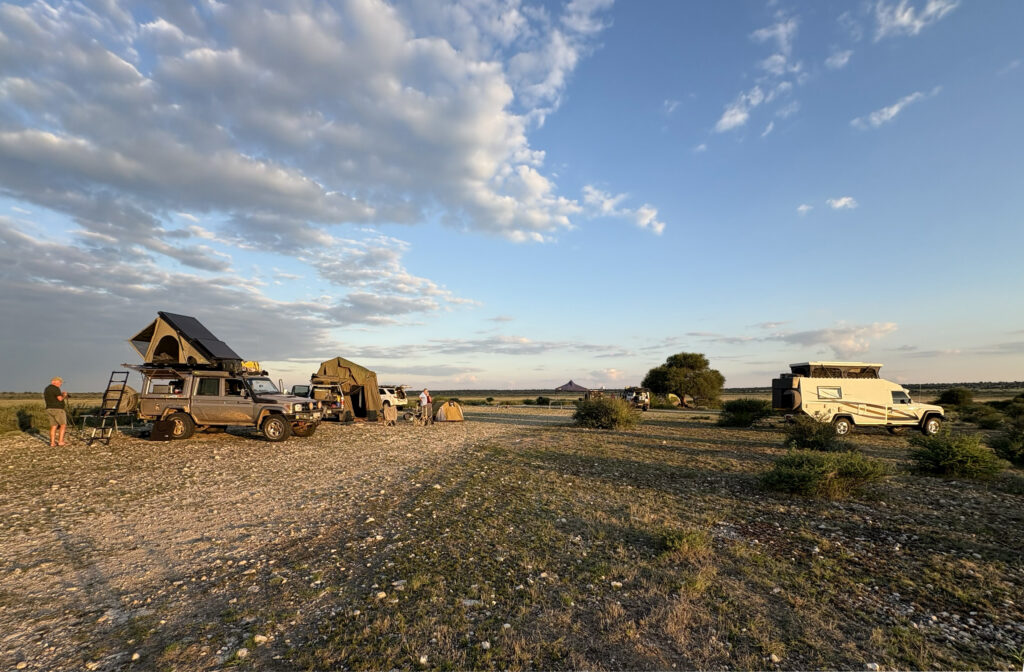
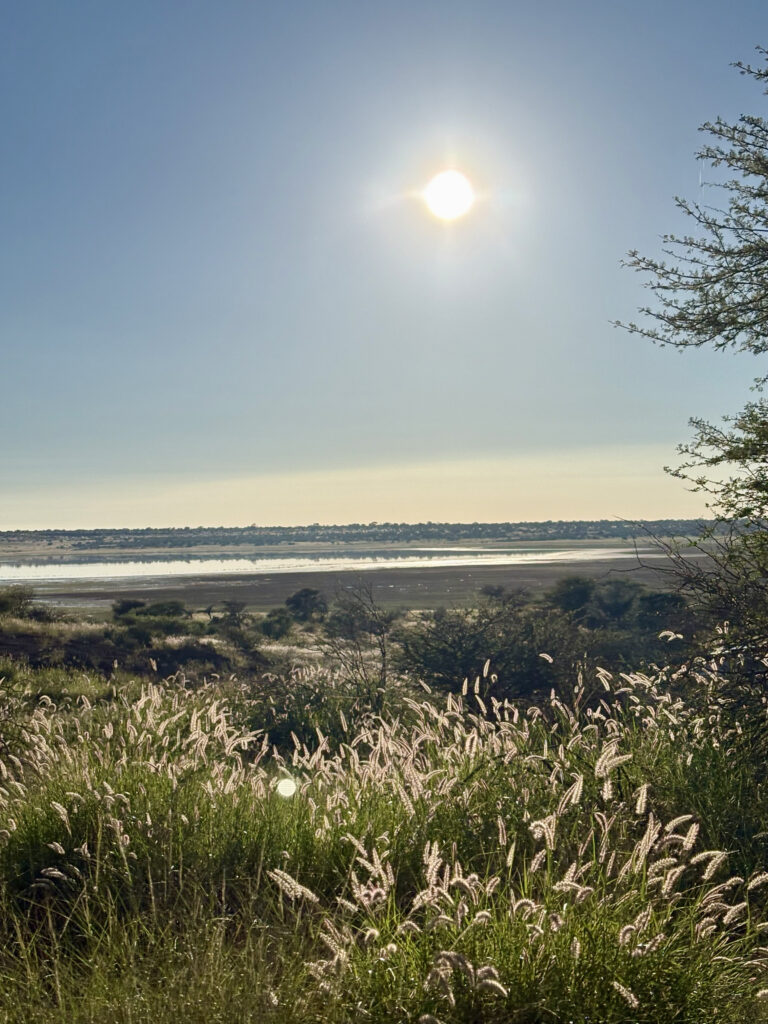
Reaching camp before dark was essential, as we would be setting up for wild camping in extreme remoteness. Fortunately, we made it in time. And wild it was. As the group settled in, the sinking sun closed out a memorable day. We watched as golden light flickered through the grasses before darkness took over and jackals began calling from a distance.
Around the campfire, Louwrens and Retha ensured everyone was comfortable and settled. Their bush chef treated us to a delicious dinner of bobotie prepared over an open fire.
Glen and I prefer travelling on their adventure tours, where dinner is taken care of, leaving us to focus only on breakfast and lunch. We have travelled with Louwrens on numerous occasions, and his knowledge across the board is remarkable. The fact that he can identify most birds and animals in multiple languages still amazes us.

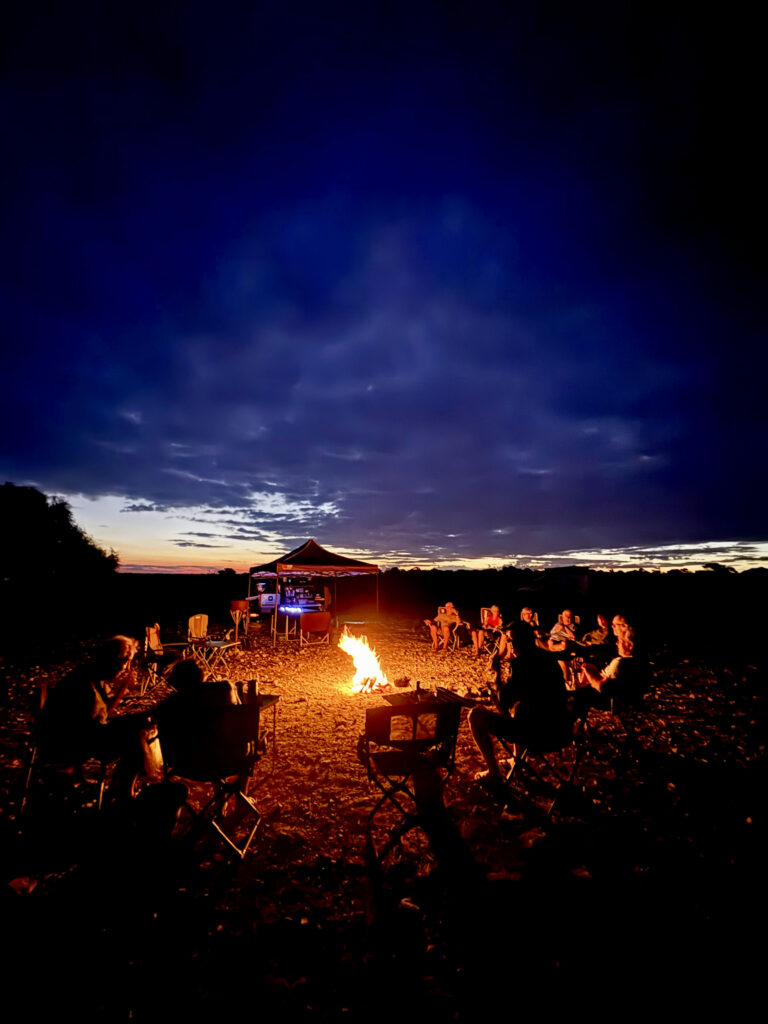
As the embers faded, we turned in for the night, serenaded by the sounds of the wild. Sleep didn’t come easily. Most of us lay awake, gazing at the moonlit landscape, soaking in the atmosphere.
We spent two days exploring the Mabuasehube area, and nothing could have prepared us for its untouched beauty, especially after the abundant summer rains. Tall grasses swayed in shades of silver, red, pale ivory and green, creating a living tapestry. Dead trees stood stark against this colourful backdrop, while ground cover in yellows, mauves, pinks and oranges clung stubbornly to life. Even in the midday heat, the grasses felt moist against our legs. Nature’s resilience was on full display.
Wildlife dominated the pans. Springbok, blue wildebeest, oryx and red hartebeest moved in vast numbers, while skittish steenbok darted through the undergrowth. Ground squirrels scurried about their daily routines, and birds of prey surveyed from above. We could hear lions in the distance, although the thick bush made them difficult to spot.
Our wilderness trail eventually led us back to Nossob for a night. The route between Mabuasehube and Nossob on the Botswana side is a demanding sand track where a proper 4×4 is essential. The purpose is clear – to limit access and preserve the area.
The landscape shifted constantly. Lush green plains gave way to dramatic red dunes, while the long grass in the centre of the tracks made seed covers over the front of our vehicles essential. Over a distance of roughly 170km, seeing even a handful of other vehicles felt like a crowd.
Crossing the Nossob River, which marks the border between Botswana and South Africa, brought a noticeable change. A well-graded road welcomed us, along with vast green plains teeming with wildlife. Herds of oryx, springbok and hartebeest stretched across the horizon, joined by ostriches, giraffe and more. It was nothing short of spectacular.
Lion sightings were more frequent here, many with cubs that seemed blissfully unaware of the attention they were attracting.
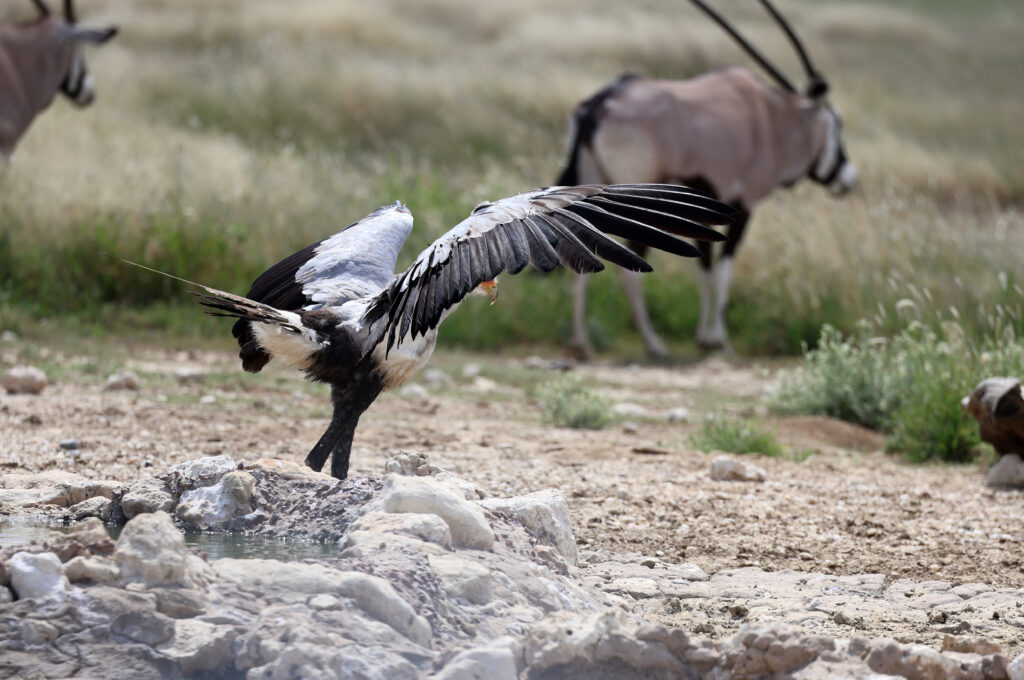
Birdlife was equally impressive. Secretary birds strode across the plains, kori bustards stood tall, and northern black korhaans announced their presence with their unmistakable calls. Raptors were everywhere, from pale chanting goshawks and pygmy falcons to martial eagles and tawny eagles. Sociable weavers transformed trees into bustling colonies, while smaller species added to the constant activity around us.

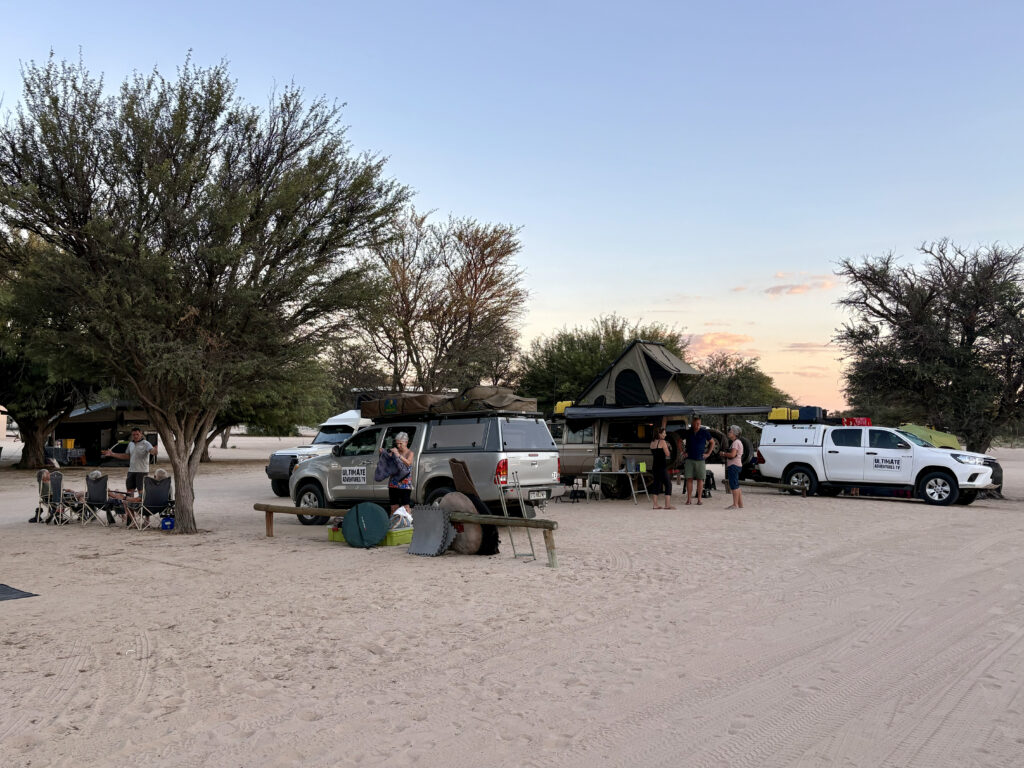
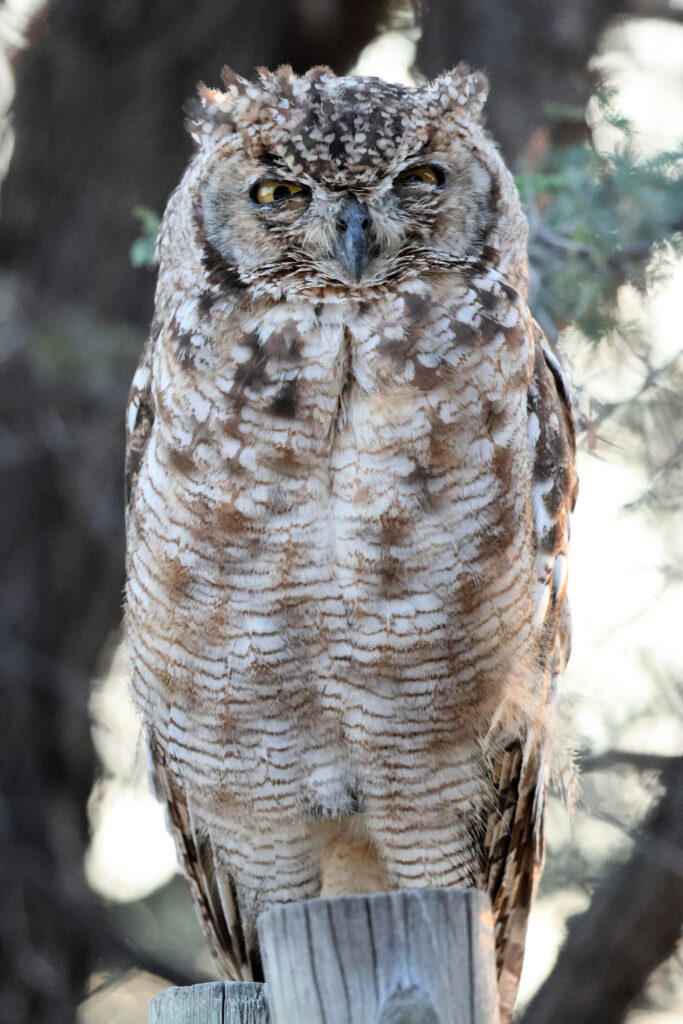
Nossob campsite offered a welcome level of comfort, and the resident spotted eagle owls provided an unforgettable evening display. Dinner around the fire was filled with laughter and storytelling, although it was a short stop before heading north again into Botswana, towards Kaa in the remote northern Kgalagadi.
After a long day in intense heat and soft sand, we reached our campsite, nestled beneath a tree and surrounded by tall grasses. As the sun dipped below the horizon, the sky exploded into colour, bathing the landscape in golden light. Evenings quickly became a highlight, with shared stories, good food and a strong sense of camaraderie among the group.
The following day took us to Sizatswe Wild Camp, just 30km away, yet it felt like another world entirely. This was the most remote and untouched camping we had experienced. With no one else for kilometres, we were reminded just how important it is to be properly equipped and self-sufficient.
Late afternoon sundowners beneath a camel thorn tree created one of those moments that stays with you. Conversations flowed easily, friendships deepened and the experience felt complete. Dinner that evening, prepared by the Ultimate Adventures chef, was bush dining at its finest, proving once again that good food tastes even better in the middle of nowhere.
Leaving this part of the Kgalagadi was difficult, but the journey continued. Travelling back to Nossob along the rugged tracks was just as rewarding as the first time. With radios linking the convoy, sightings and insights were shared throughout the day, adding to the experience.
Daytime temperatures in March climbed to over 38 degrees Celsius, although the dry heat felt more manageable than the humidity we are used to in KwaZulu-Natal. Evenings cooled down to a comfortable 14 degrees, making rooftop sleeping ideal.
From Nossob, we made our way south along the river to Twee Rivieren, where the Nossob and Auob rivers meet. These ancient fossilised riverbeds rarely flow, but they remain vital lifelines for wildlife, supported by underground water and boreholes.
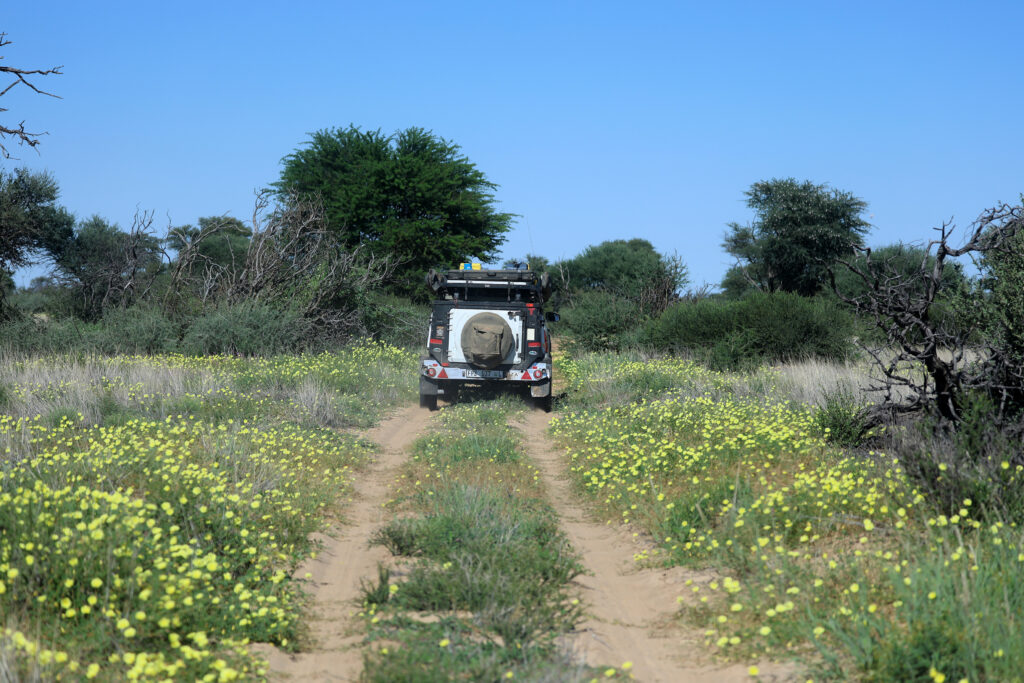
A day trip to Mata-Mata on the Namibian border revealed yet another side of the park. Narrow valleys and rocky terrain created a different environment, but wildlife remained abundant. The landscape, dotted with yellow devil-thorn flowers against a brilliant blue sky, was striking.
Eventually, our journey came to an end. While we may not have seen as many big cats as we had hoped, that is part of the allure. It gives you a reason to return.
Eventually, our journey came to an end. While we may not have seen as many big cats as we had hoped, that is part of the allure. It gives you a reason to return.
It is difficult to put the Kgalagadi into words. The scale, the silence and the sheer beauty create an experience that goes beyond what you can describe. It fills your heart and feeds your soul. It settles deep within you.
Our final evening at Augrabies Falls was bittersweet. The thunder of cascading water provided a dramatic finale, but it also marked the end of an unforgettable journey. Saying goodbye to our fellow travellers was not easy. Two weeks earlier we had been strangers. Now we parted as friends, already discussing where the next adventure might take us.
That, perhaps, is the magic of it all.