


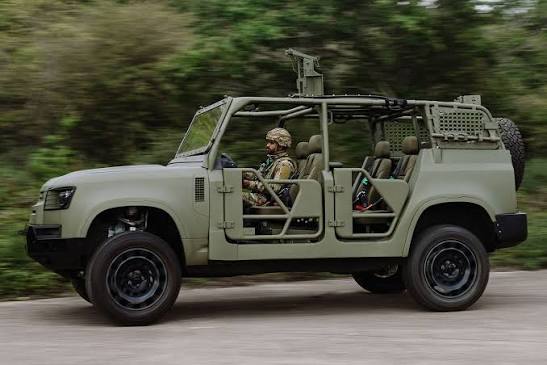

The military vehicle that helped define British expeditionary operations for decades is entering a new era. Defender has unveiled the Wolf Series II, a next-generation military light mobility vehicle designed to combine the off-road capability of the modern Defender with the flexibility required by today’s armed forces.
Developed by Jaguar Land Rover (JLR), the Wolf Series II is intended to compete for the UK Ministry of Defence’s (MOD) Light Mobility Vehicle (LMV) contract. The programme also marks the launch of a dedicated Defender Defence Division, which aims to supply military vehicles to defence organisations around the world.
For JLR, the project carries a strong sense of continuity. The Defender name has been associated with British military service for approximately 70 years, and the company’s stated ambition is to ensure that the vehicle’s successor carries the same name into the future.
Lieutenant Colonel Stephen Webb, a former British Army officer who commanded troops in Iraq and Afghanistan and now leads JLR’s defence operation, says the modern Defender provides the foundation for a vehicle capable of meeting the military’s requirements.

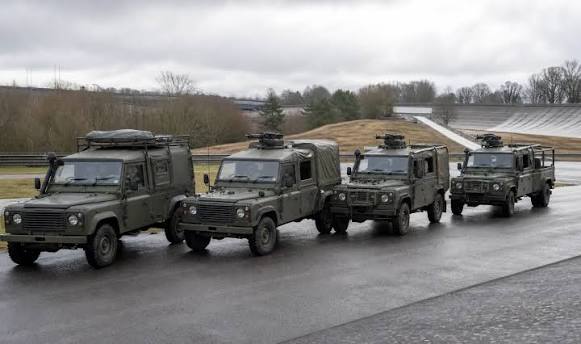
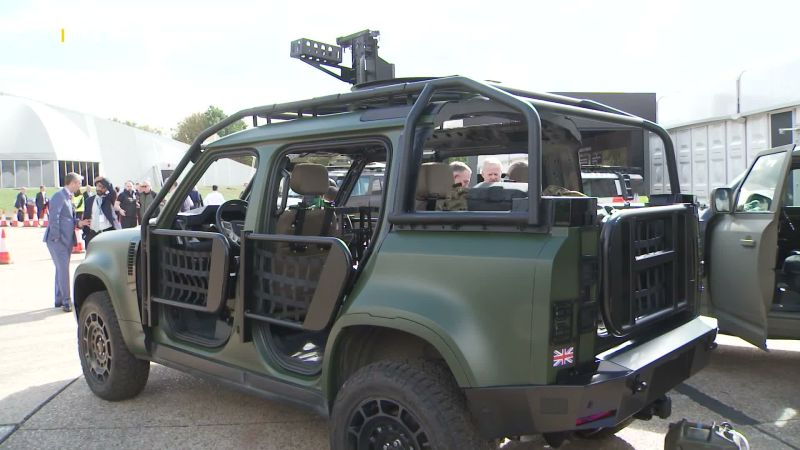
The Wolf Series II was unveiled at the British Army’s Defence Vehicle Dynamics (DVD) event at Millbrook Proving Ground in Bedfordshire. Four variants were presented at the event, while JLR says the wider platform can be developed into numerous additional configurations to meet different operational needs.
D7X MONOCOQUE: A NEW APPROACH TO MILITARY MOBILITY
For enthusiasts familiar with the original Land Rover Wolf, the most significant change is beneath the bodywork.
The original Wolf, introduced during the 1990s, was based on the traditional Defender architecture, featuring a separate chassis and body construction. The Wolf Series II takes a different approach, using the modern Defender’s D7x aluminium-intensive monocoque platform.
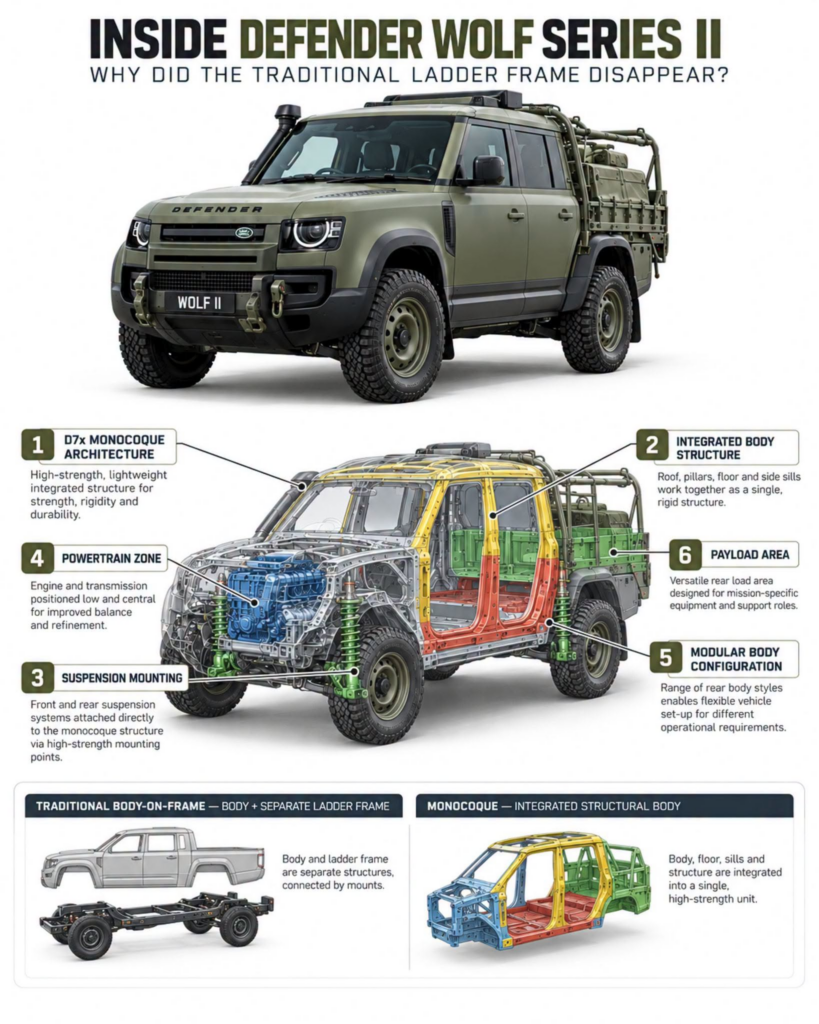
According to JLR, the structure delivers approximately three times the stiffness of a conventional body-on-frame chassis. This increased structural rigidity also allows the platform to accommodate greater payloads, an important consideration for a military vehicle expected to carry personnel, equipment and mission-specific systems.
Rather than developing a completely bespoke vehicle from the ground up, JLR has adapted its existing Defender 110 and 130 models for military use. These vehicles have already undergone extensive development and testing, providing the company with an established engineering foundation on which to build the military variants.
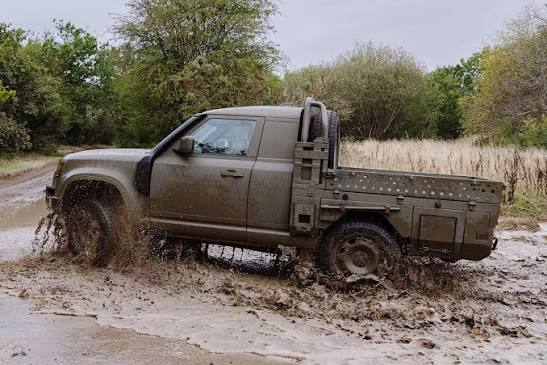
JLR says the Defender underwent 62,000 different tests during its development. The company also reports that its vehicle was the only contender to negotiate every obstacle at the MOD’s independent testing ground.
These claims form part of JLR’s argument that the Wolf Series II offers the combination of off-road capability, structural strength and adaptability required by modern military forces.
However, the vehicle is still competing for the MOD contract. The testing and demonstrations described by JLR should not be confused with a confirmed procurement decision.
SIX-CYLINDER POWER AND BRITISH ENGINEERING
Although the modern Defender is assembled in Slovakia, JLR says the Wolf Series II has been designed and engineered in the UK, with the integration work required to create its military versions also taking place in Britain.
Its six-cylinder engine produces a stated 250 horsepower and is manufactured in Wolverhampton, England.
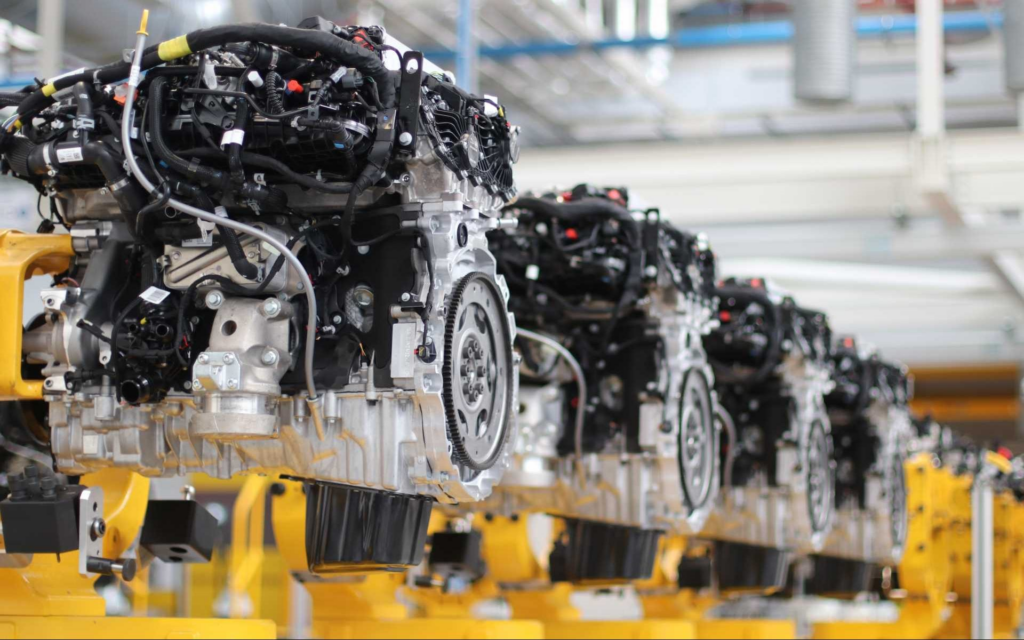
JLR’s approach is to use the established civilian Defender as the starting point, then modify it to meet the military’s requirements. This includes the potential integration of 24-volt electrical systems and other equipment needed for specific military applications.
The company believes this approach offers an advantage over developing an entirely new vehicle architecture. The underlying Defender platform has already been subjected to extensive testing and is produced in substantial numbers, giving JLR an existing engineering and production base.
For the military, the benefit could be a vehicle that combines proven underlying technology with the flexibility to accommodate specialised equipment and changing operational requirements.
ONE PLATFORM, MULTIPLE MILITARY ROLES

Modern armed forces need more than a single-purpose light vehicle. The same underlying platform may need to transport troops, carry equipment, support communications, perform utility duties or serve as the basis for a specialist operational vehicle.
This is central to JLR’s strategy for the Wolf Series II.
Four variants were unveiled at the DVD event, while JLR’s representative explained that the platform offers five additional core variants or body shapes, with a further 26 variants potentially developed from the wider range of configurations.
The MOD’s requirement calls for a common base platform that can be adapted into nine different variants. The winning vehicle must also be capable of being modified as technology evolves and new equipment becomes available.
This modular approach is particularly important in a military environment, where vehicles may need to accommodate new communications equipment, electrical systems or mission-specific hardware during their service lives.
JLR says the Wolf Series II has been designed with this flexibility in mind. Its existing vehicle architecture provides the foundation, while military-specific integration allows the vehicle to be configured for different operational requirements.
The final specification would depend on the MOD’s requirements and the outcome of the procurement process.
32 SENSORS: IS THE NEW WOLF TOO COMPLEX?
One of the biggest differences between the original military Land Rover and the Wolf Series II is the amount of technology involved.
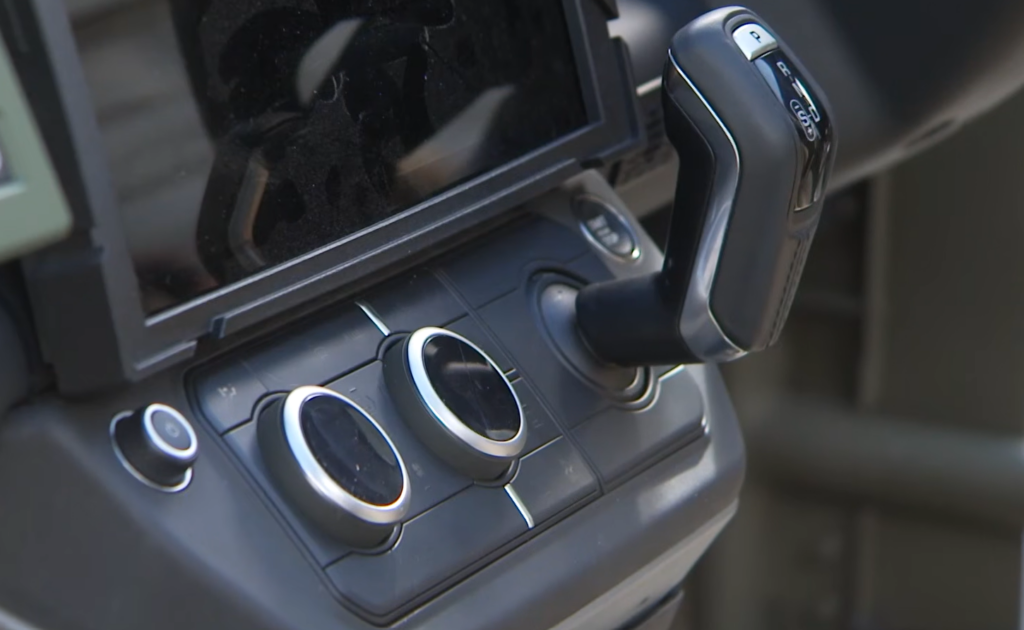
The new vehicle has 32 sensors, and JLR openly describes it as a digital vehicle. For some military users, this raises an important question: does the additional technology make the vehicle more capable, or does it introduce unnecessary complexity into an environment where reliability and ease of repair are critical?
It is a legitimate concern. A vehicle operating far from a conventional workshop must be supported by suitable diagnostic equipment, trained technicians and access to replacement parts. Electronic systems can improve vehicle performance and fault detection, but they also introduce additional components that must be understood and maintained.
JLR’s answer is that the Wolf Series II benefits from the extensive development of the civilian Defender, combined with the company’s existing diagnostic capabilities.
According to Webb, the vehicle has undergone substantial testing, and JLR is confident in its reliability, dependability and robustness. He also points to the company’s worldwide dealership network and the diagnostic tools available to identify problems quickly.

The company says it conducts testing for water sealing, dust ingress, vibration and temperature extremes. Its stated testing programme includes conditions of 50°C and -40°C, as well as tens of thousands of miles over demanding terrain.
These tests are intended to establish the vehicle’s ability to withstand harsh operating environments. They are particularly relevant for military applications, where exposure to dust, water, vibration and extreme temperatures can place significant demands on vehicle systems.
Importantly, JLR does not intend to insist that every sensor and electronic control used in the civilian Defender must remain in the military version.
Webb says that, if JLR wins the contract, the company will work with the MOD to determine which sensors and electronic controls are genuinely required and remove those that are not.
This is a significant part of the proposed military adaptation. Rather than simply placing a civilian Defender into military service unchanged, JLR intends to work with the customer to tailor the vehicle’s systems to its operational needs.
The approach could help balance the advantages of modern vehicle technology against the military’s need for a practical, reliable platform.
HOW WILL THE WOLF SERIES II BE REPAIRED IN THE FIELD?
The original Land Rover Wolf earned its reputation in part through its relatively straightforward mechanical architecture and the ability of trained mechanics to maintain it in demanding conditions.
The Wolf Series II represents a different engineering philosophy. Its modern engine management, electronic systems and 32 sensors mean that fault diagnosis is an important part of maintaining the vehicle.
JLR’s position is that its existing diagnostic tools and global dealership experience provide a foundation for identifying and resolving faults. The company says the military will be able to use diagnostic equipment of the type available through its dealership network to find problems quickly.
However, diagnosing a fault and repairing a vehicle in the field are two different challenges.
A diagnostic system may help identify a faulty sensor or electronic component, but the ability to return a vehicle to service will also depend on the availability of replacement parts, the training of military mechanics and the repair procedures developed for the vehicle.
JLR’s planned collaboration with the MOD will therefore be important. The final military specification, including which electronic systems are retained or removed, will influence how the vehicle is maintained throughout its service life.
The company has not publicly detailed every field-repair procedure or the complete diagnostic and maintenance package that would accompany the Wolf Series II. It would therefore be premature to assume that all repairs can be completed quickly in remote locations.
For operators working far from established infrastructure, the real test will be whether the vehicle’s modern technology can be supported by a practical military maintenance system.
SAFETY AND EASE OF DRIVING
JLR is also placing considerable emphasis on safety and ease of use.
The company argues that the modern Defender’s driving systems can reduce the workload on the driver, allowing soldiers to concentrate on their mission rather than the mechanics of negotiating difficult terrain.
One example is the vehicle’s Terrain Response system, including its automatic terrain mode. JLR explains that the system can assess the ground and adapt the vehicle’s settings to suit the conditions.
In a military environment, where drivers may need to navigate unfamiliar terrain under pressure, this type of assistance could help reduce fatigue and make the vehicle easier to operate.
Safety is another part of JLR’s pitch. The company highlights the Defender’s modern safety systems and says airbags, including front and side airbags, can be configured to meet the MOD’s requirements.
The final military specification would determine which systems are retained and how they are configured. The objective is to combine the benefits of modern vehicle safety with the practical requirements of military service.
HOW BRITISH IS THE NEW WOLF?
Despite its British engineering heritage, the Wolf Series II also reflects the international nature of the modern automotive industry.
Jaguar Land Rover is owned by India’s Tata Motors, while civilian Defender models are assembled at JLR’s factory in Nitra, Slovakia.
JLR says the Wolf Series II has been designed and engineered in the UK, with its six-cylinder, 250-horsepower engines manufactured in Wolverhampton. The military integration work is also planned to take place in Britain.
This distinction is important. The vehicle draws on a global company’s existing manufacturing and engineering resources while retaining a UK-based development and integration programme for its military application.
For the UK defence sector, the programme also raises questions about industrial capability, supply-chain support and the long-term provision of vehicles and parts. The outcome of the procurement process will determine whether JLR secures the opportunity to supply the MOD’s new light mobility vehicle.
WILL THE DEFENDER WOLF SERIES II EVER BE SOLD TO THE PUBLIC?

Whenever a new military 4×4 appears, the question for civilian enthusiasts is inevitable: could a version eventually become available to private buyers?
For overlanders, conservation organisations and adventure travellers, a purpose-built vehicle combining Defender heritage with modern engineering is an intriguing prospect.
At present, however, JLR has not announced a civilian version of the Wolf Series II. The vehicle is being developed for defence applications, and its immediate future depends on the military procurement process.
A civilian model inspired by the Wolf Series II is conceivable, but there is no confirmation that JLR intends to produce one.
One possibility would be a special-edition Defender designed around expedition travel, with practical equipment, underbody protection, recovery points and a durable interior. Such a vehicle could appeal to buyers looking for a factory-supported platform for remote travel.
JLR already offers commercial vehicles through its Defender Expert fleet programme, but this should not be confused with the military Wolf Series II. There has been no announcement of a dedicated civilian Wolf edition.

Another possibility is that military vehicles could eventually enter private ownership through surplus disposal. Original Wolf vehicles have reached civilian buyers through military disposal channels, but there is no confirmed timetable or guarantee that the new generation will follow the same route.
For now, the Wolf Series II remains a military vehicle rather than an announced civilian overlanding product.
THE VERDICT
The Defender Wolf Series II marks a significant step in Jaguar Land Rover’s effort to return to the military vehicle market.
Its combination of the modern Defender platform, D7x monocoque construction, a six-cylinder engine and extensive development testing gives JLR a foundation from which to compete for the UK’s Light Mobility Vehicle requirement.
The vehicle’s digital architecture is both an advantage and a challenge. Modern sensors and driver-assistance systems can improve capability and reduce driver workload, but military operators will need confidence that the vehicle can be maintained and repaired in the environments where it is expected to serve.
JLR’s stated intention to work with the MOD to remove unnecessary electronic systems is therefore an important part of its proposition. The final configuration, rather than the civilian vehicle’s technology alone, will determine how well the platform meets military requirements.
The procurement decision will be the next major milestone. Until a contract is awarded, the Wolf Series II remains a contender for the British Army’s future light mobility vehicle fleet.
For Southern African 4×4 enthusiasts, the project offers an interesting look at how military off-road vehicles are evolving. Whether the new Wolf 11 eventually influences a civilian expedition-focused Defender remains an open question, but the underlying challenge is familiar to anyone who travels far from the beaten track: combining capability and technology with reliability, serviceability and the confidence to keep moving when conditions become difficult.


