When the drums of war echoed across Europe in the autumn of 1939, the industrial powers were thrust into a brutal new era of mechanised warfare. Factories scrambled to mass produce radar arrays, long range bombers, and armoured combat tanks. Yet behind the scenes, military planners in Washington were quietly wrestling with a glaring, archaic vulnerability on the frontlines: the cavalry horse.
During the First World War, combatant armies deployed millions of equines, with an estimated eight million pack animals dying in the conflict, while the US military alone mobilised hundreds of thousands of horses and mules to haul heavy artillery, conduct reconnaissance, and keep supply lines moving through knee deep muck. Even though Henry Ford’s Model T had revolutionised civilian transport decades earlier and tractors had largely conquered farming, thousands of pack animals were still saddled for service in 1939. But horses carried crippling liabilities in modern warfare. They panicked under artillery bombardments, required mountains of fodder, succumbed to illness, and were sitting ducks against modern automatic fire.

The US War Department arrived at an undeniable conclusion: the era of the horse was finished. To survive the coming battlefields, the armed forces needed a mechanical cavalry. They needed a rugged, compact, lightweight four wheel drive machine that could venture wherever hooves had trod, ford rivers, traverse deep mud, and carry men and guns at speed.
The resulting scramble produced one of the most frantic engineering sagas in motoring history. It involved a forgotten underdog, an engineering wizard working against the clock, an Ohio factory fighting liquidation, and Detroit’s biggest automotive empire.

The Impossible Challenge
In July 1940, the US Quartermaster Corps issued an urgent invitation to roughly 135 American motor vehicle manufacturers. The War Department laid out a list of mechanical requirements so severe that most engineers viewed them as a practical joke.
The military brief required:
- A payload capacity of a quarter ton (roughly 227 kg).
- A selectable four wheel drive system paired with a two speed transfer case.
- A rectangular body with a fold down windscreen and low cut side entries.
- An engine capable of delivering at least 40 horsepower (30 kW) and 115 Nm of torque.
- An initial weight ceiling set at a ridiculous 1,275 pounds (578 kg), later revised to 2,160 pounds (980 kg).
- A running, fully functional prototype delivered for brutal military field trials in just 49 days.
- An additional test batch of 70 test units delivered within 75 days.
To grasp just how punishing that weight target was, standard civilian passenger cars of the era typically weighed around 3,000 pounds (1,360 kg), with heavy luxury models exceeding 4,000 pounds. The military was asking builders to engineer a machine capable of carrying troops, mounting machine guns, surviving aerial drops from transport aircraft, and crashing over rocky trails at speed, all while weighing less than half of an ordinary family sedan.

The deadline was so ruthless and the weight limitation so uncompromising that almost the entire American automotive establishment balked. Heavyweights like General Motors and Chrysler declined to submit a bid, deeming the project a mechanical impossibility within the allotted timeframe.
Only two manufacturers officially stepped forward: the Willys Overland Company of Toledo, Ohio, and a tiny, struggling outfit from Butler, Pennsylvania, named the American Bantam Car Company.
The Forgotten Pioneer from Butler
Popular folklore often attributes the original creation of the military 4×4 exclusively to Willys or Ford. In reality, neither company designed the initial layout. That credit belongs to American Bantam and a gifted Detroit freelance engineer named Karl Probst.
American Bantam was on the brink of financial collapse, kept afloat by a handful of dedicated staff and a tiny assembly line building miniature economy cars. Yet, unlike the Detroit giants, Bantam had nothing to lose and understood lightweight chassis design. Lacking a full time engineering department, Bantam hired Probst, who agreed to work without an upfront salary on the promise of payment if the military accepted the proposal.
Probst began drawing on 17 July 1940. Working virtually without sleep for five straight days, he laid out the complete blueprints for the prototype Bantam Reconnaissance Car (the BRC). He calculated component loads, selected an off the shelf four cylinder engine from Continental Motors, incorporated heavy duty driven axles and a transfer case sourced from Spicer, and sketched the basic open tub bodywork.
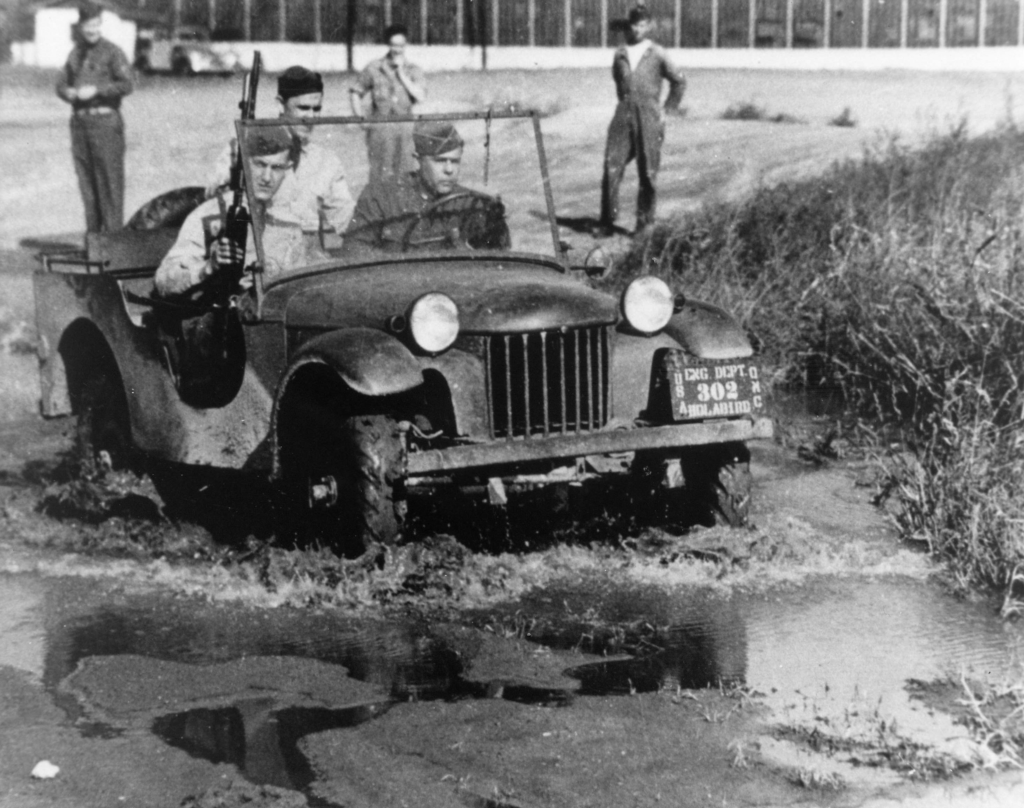
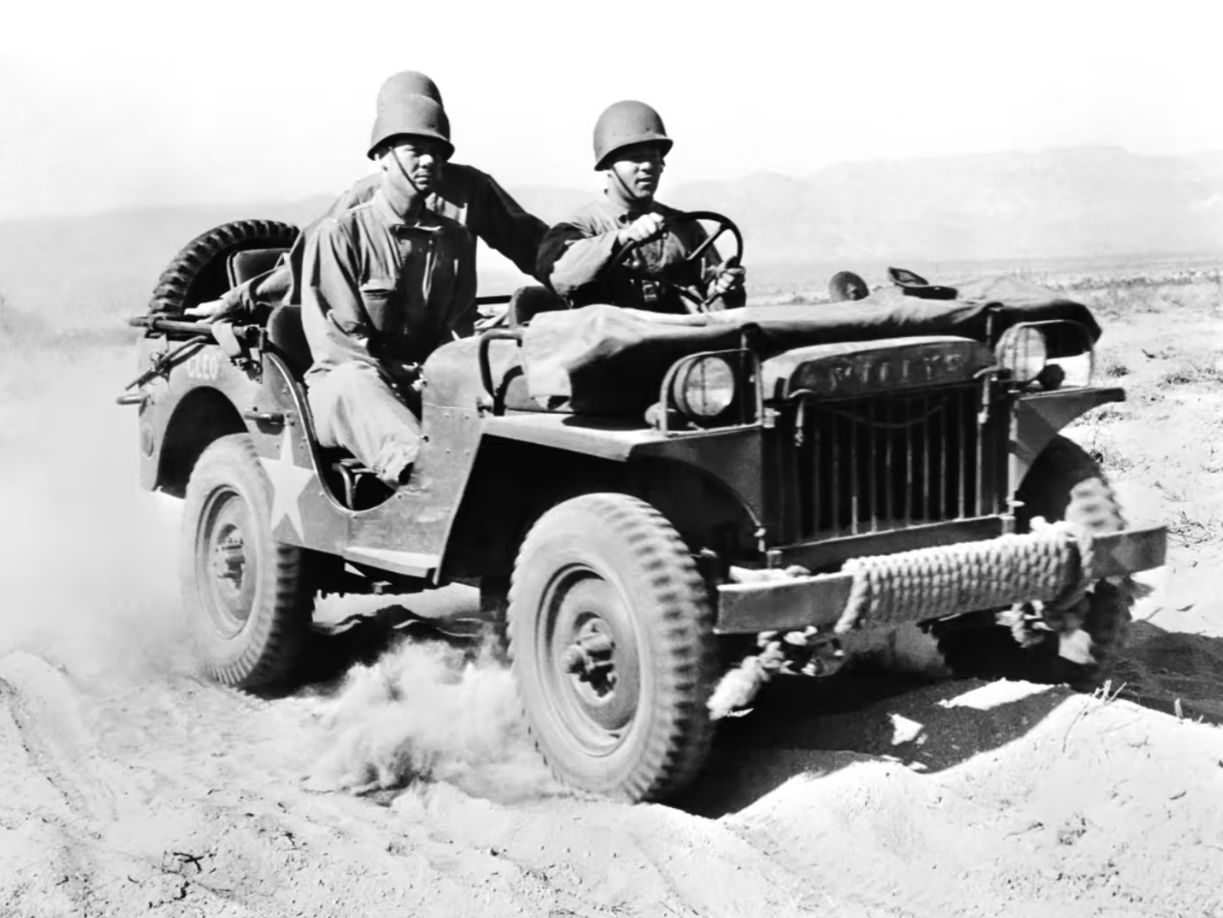
Bantam met the deadline with minutes to spare. On 23 September 1940, Probst himself drove the completed BRC prototype roughly 500 kilometres from the Pennsylvania workshop to the Army testing grounds at Camp Holabird in Maryland. The vehicle was beaten mercilessly over military obstacle courses, through deep sand pits, and through swamp water. The BRC astonished the Army brass; it was nimble, virtually unstoppable off road, and proved that the mechanical cavalry concept worked.
Willys Overland Battles for Survival
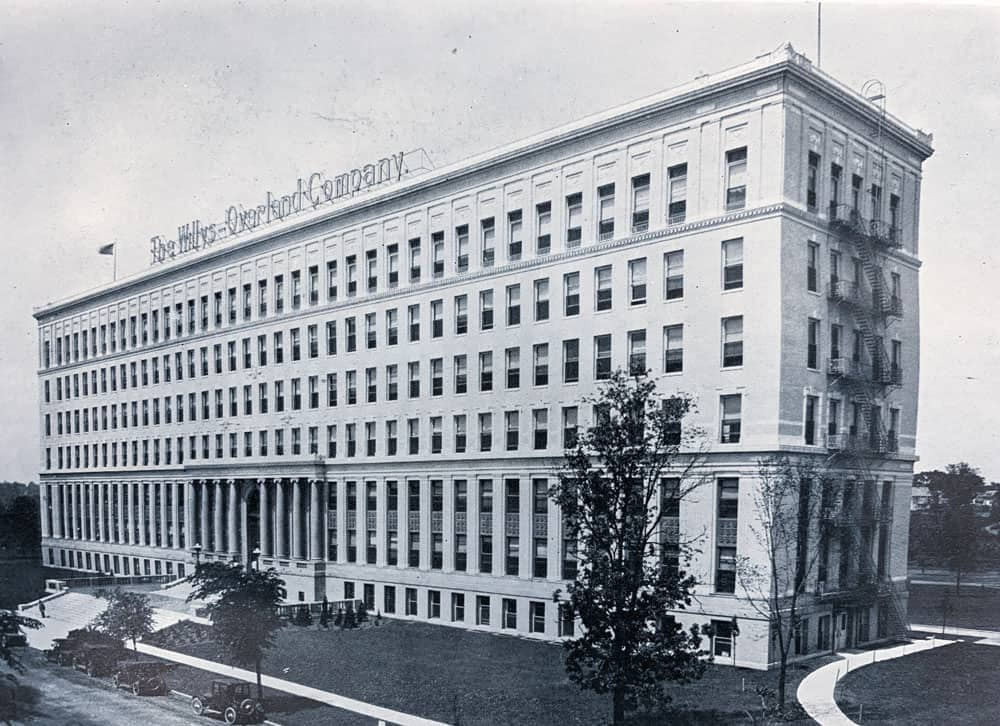
Back in Toledo, Ohio, Willys Overland was watching the clock run out. Willys was also bleeding cash, having emerged from bankruptcy reorganisations during the Great Depression.
Company chairman Ward Canaday understood the reality: securing a lucrative military manufacturing contract was the only way to save the company from permanent closure. Willys had missed the initial 49 day prototype deadline, but the War Department, intrigued by Willys’ initial proposal, granted them an extension to deliver a competing vehicle.
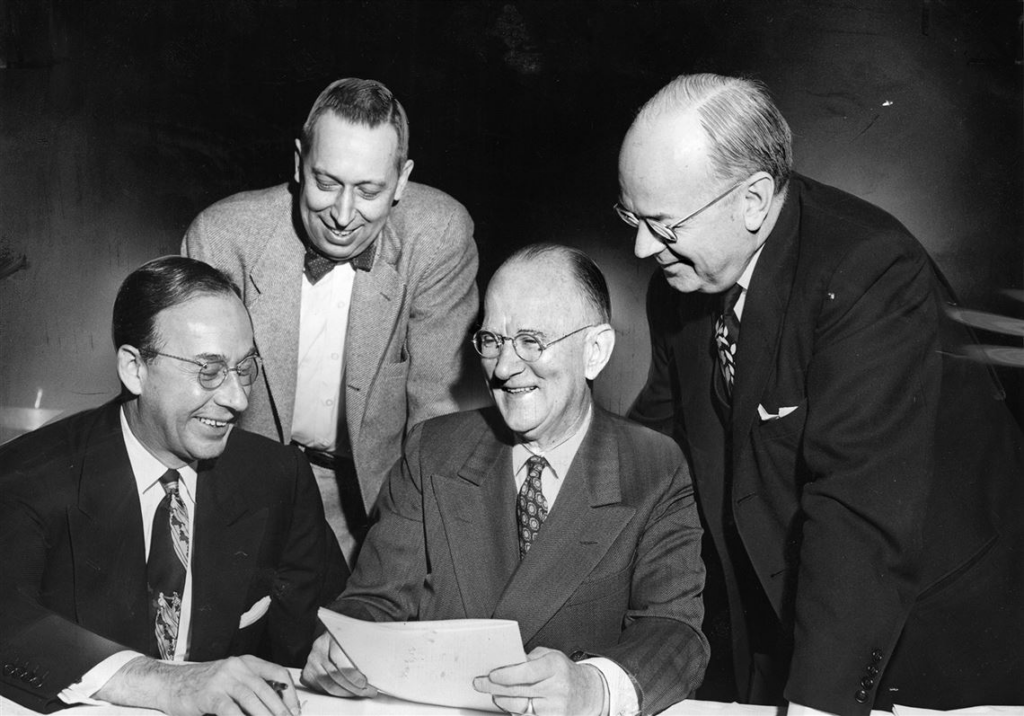
Canaday placed his bets on his chief engineer, Delmar “Barney” Roos. Roos had developed a potent, highly dependable 134 cubic inch (2.2 litre) four cylinder engine, known as the “Go Devil”. The Go Devil was a masterpiece of cast iron engineering, delivering 60 horsepower (45 kW) and 142 Nm of torque. It blew past the Army’s 40 horsepower requirement and outmuscled every competing engine design by a wide margin.
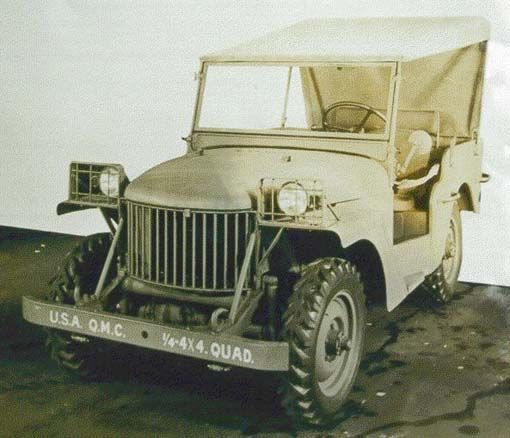
Roos maintained that off road durability in brutal combat zones demanded raw low down pulling power and structural stamina. He flatly refused to downsize or compromise his engine. But the Go Devil was heavy, and it presented Roos with a near fatal crisis: his prototype, the Willys Quad, severely breached the revised 2,160 pound military weight limit.
The Battle of the Scales
With government inspectors demanding that Willys bring their machine under the 2,160 pound limit or face disqualification, Roos unleashed his engineering team on a relentless weight reduction campaign.
The Quad was disassembled down to its bare frame rails. The team weighed every single component on laboratory scales. Roos cut down brackets, reduced metal gauge thickness where stress was low, shaved down washers, and ordered mechanics to trim the excess thread off every chassis bolt. Doors and standard trim had already been tossed aside in favour of low cut body sills.
The obsession went so far that Willys applied only a single, ultra thin coat of olive drab paint to the entire body to shave off the final grams.
When the lightened prototype returned to the military scales at Camp Holabird, the dial swung and settled at 2,159 pounds and 9 ounces. Willys had beaten the military ceiling by an extraordinary seven ounces.
Though the Army eventually realised the 2,160 pound limit was too fragile for combat and raised the official production ceiling to 2,450 pounds (1,111 kg) for mass manufacturing, the fanatical diet engineered by Roos kept Willys in the race at the critical moment.
Ford Enters and the Blueprints are Shared

The War Department now faced a dilemma. Bantam had the pioneering design, but its small Pennsylvania factory simply lacked the physical floor space, machinery, and labour force to stamp out hundreds of thousands of vehicles. Willys had the winning engine, but was still financially fragile.
To protect the supply chain, the government invited Ford Motor Company into the competition, keen to harness Ford’s immense River Rouge manufacturing complex. Crucially, the Army made Bantam’s blueprints and trial data available to both Willys and Ford to build their own evaluation batches of 1,500 units each (the Bantam BRC 40, Willys MA, and Ford GP).
At Ford, production executive Charles “Cast Iron Charlie” Sorensen faced his own engine dilemma. Ford’s celebrated flathead V8 was far too heavy. In a bid to save time, Sorensen took a 120 cubic inch four cylinder engine directly from Ford’s 9N farm tractor. While lightweight, the tractor motor produced only about 45 horsepower. Ford engineers worked feverishly, altering carburettors and valve timing to extract enough power to satisfy the Army, but the tractor unit never matched the stamina of the Willys Go Devil.
Where Ford excelled was in functional packaging, ergonomics, and production design:
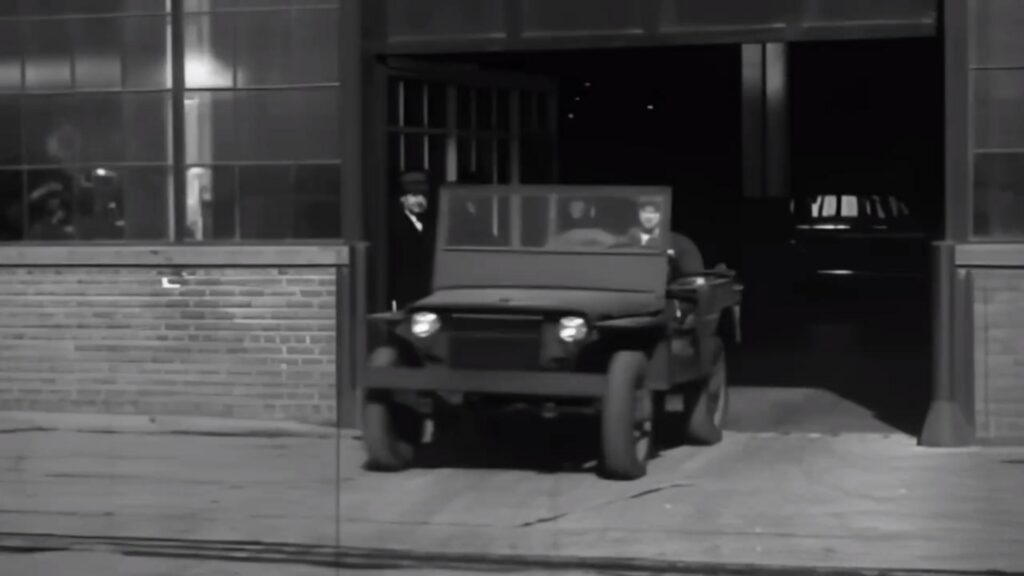
- The Flat Bonnet: Ford replaced rounded automotive styling with a wide, dead flat bonnet that doubled as an outdoor drafting table for commanders to roll out regional maps.
- Flat Wings: The front mudguards were squared off so two soldiers could sit directly on the wings during short distance redeployments.
- The Stamped Grille: Early Willys and Bantam models featured delicate, hand welded wire slat grilles. Ford styling director Bob Gregorie created a single sheet of stamped steel featuring vertical cooling slots and recessed, inboard headlights. This shielded the glass lights from tree branches, flying gravel, and river debris, while dramatically cutting down stamping time on the assembly line.
Standardisation and the Unholy Alliance
In mid 1941, the Army conducted comprehensive head to head tests of all three competitors: the Bantam BRC 40, the Ford GP, and the Willys MA.
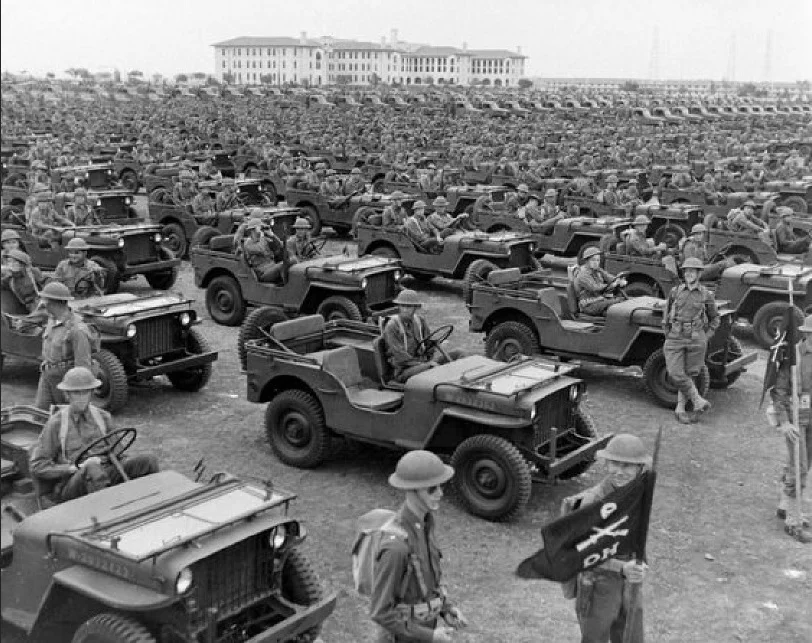
The Willys emerged as the clear mechanical victor. Its 60 horsepower Go Devil motor pulled through mud, climbed steep testing grades, and endured torture tests that fried the competitor drivetrains. Willys Overland was officially awarded the master production contract for what became the standardised Willys MB.
Yet, with the threat of global warfare looming, the War Department could not gamble on a single plant in Ohio. If that factory were sabotaged or crippled, Allied logistics would grind to a halt.
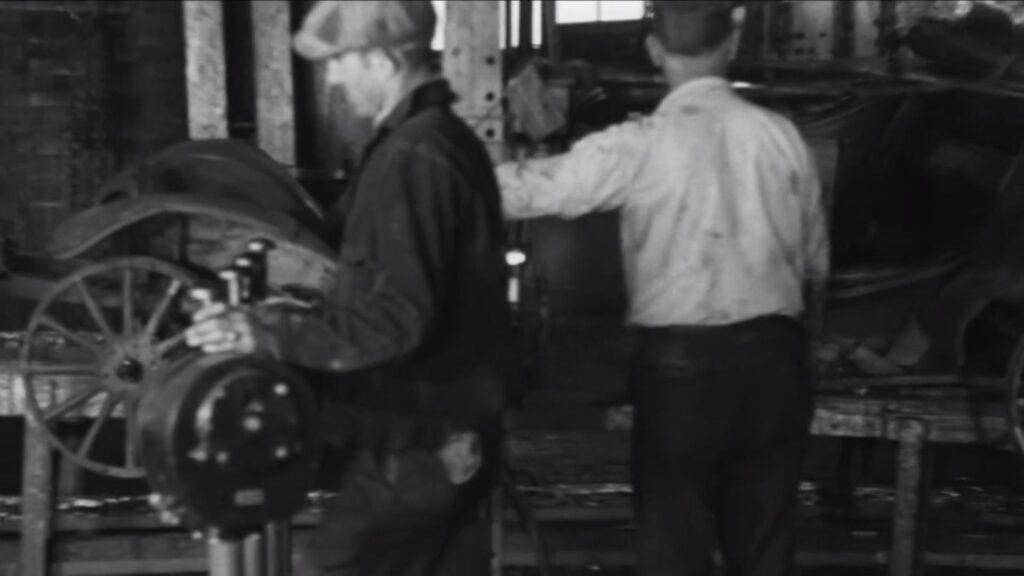
The military approached Ford with an ultimatum: build the Willys vehicle under licence. Ford agreed, building the machine to Willys’ engineering blueprints and using the Go Devil motor design. The version built by Ford was designated the Ford GPW, with the letter W denoting the Willys designed powertrain.
In return, Willys adopted the brilliant one piece stamped front grille from Ford. Ford had the heavy stamping presses that Willys lacked, and Ford actually stamped the front grilles for both companies during the early months of standard production.
Bantam, the small firm that had designed the original concept, was tragically squeezed out of primary vehicle production. Bantam was compensated with contracts to manufacture military trailers and aircraft torpedo components, alongside producing roughly 2,675 BRC 40 units that were shipped abroad to British and Soviet forces.
The True Origin of the Name
For decades, popular motoring history suggested that the name “Jeep” was simply a fast, lazy slurring of the model designation used by Ford, “GP”.
However, in the internal coding system at Ford, G stood for Government contract, and P was the internal code for an 80 inch wheelbase reconnaissance passenger vehicle; it was never military shorthand for General Purpose.
The word “jeep” was already well established American military slang dating back to the First World War. Mechanics and infantrymen used the term to describe any unproven recruit, awkward gadget, or experimental combat vehicle.
The name gained widespread cultural momentum in 1936 with the introduction of Eugene the Jeep, a character in E.C. Segar’s popular Popeye comic strips. Eugene was a small, dog like magical creature that walked through walls, climbed trees, and resolved problems where ordinary mortals failed. To soldiers and test crews, the little go anywhere prototype seemed to possess those very same traits.
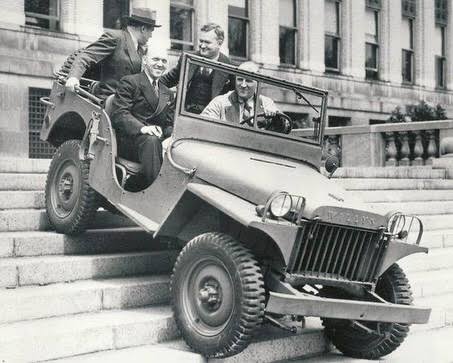
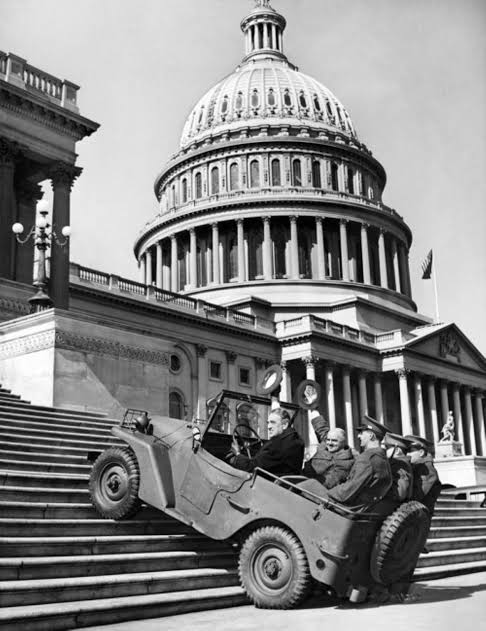
The moniker was cemented into the public lexicon in February 1941. Willys test driver Irving “Red” Hausmann drove a prototype Willys Quad up the steep stone steps of the US Capitol in Washington DC during a press demonstration. When syndicated journalist Katharine Hillyer asked Hausmann what on earth the machine was called, he casually replied, “It’s a Jeep.” The story ran in newspapers across the globe the following morning, and the name stuck forever.
The Mechanical Workhorse of World War II
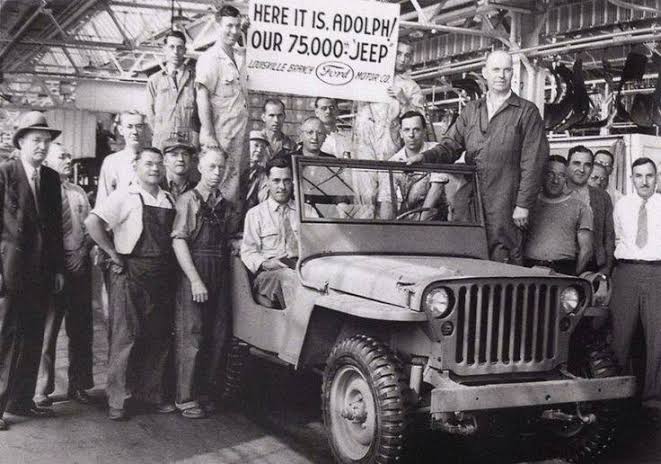
By the time the war concluded in 1945, nearly 650,000 standardised military quarter ton 4x4s had rolled off the assembly lines:
- Willys Overland (Willys MB): roughly 363,000 units.
- Ford Motor Company (Ford GPW): roughly 281,000 units.
In theatre, the vehicle redefined frontline reconnaissance, tactical transport, and deep wilderness operations. It served as the ultimate mechanical multi tool:
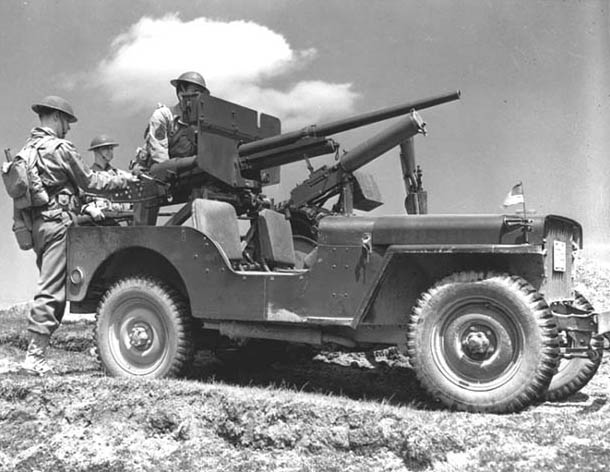
- Frontline Reconnaissance: Small enough to be concealed under cut bush, low enough to evade enemy spotters, and fast enough to extract patrol scouts out of hostile territory.
- Field Ambulance: Fitted with custom welded angle racks, it could transport two to three wounded soldiers on stretchers straight out of active frontline firefights to field hospitals.
- Artillery Tractor: It dragged 37 mm anti tank guns and ammunition trailers through swampy jungle and deep desert sands where heavier trucks bogged down.
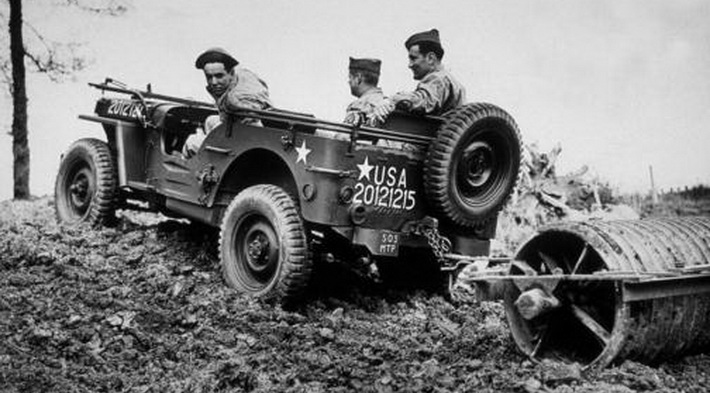
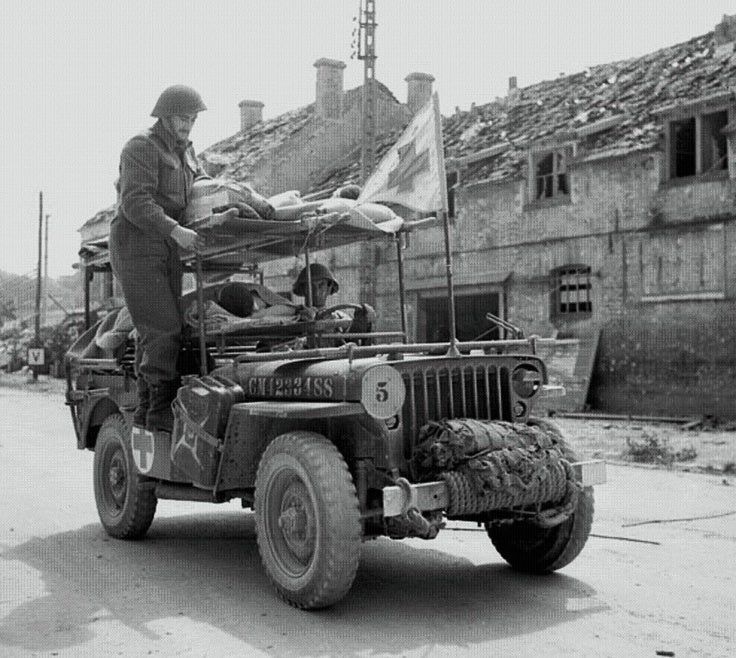
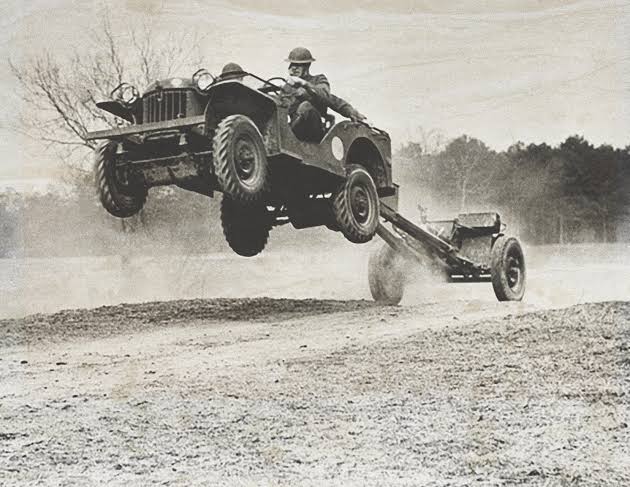
- Soldier’s Companion: Allied troops warmed tinned rations against the burning hot exhaust manifolds. In European operations, crews welded tall, vertical steel angle irons with sharpened, notched heads onto front bumpers to cut through decapitation tripwires strung across roads by retreating German units.
Supreme Allied Commander General Dwight D. Eisenhower later reflected that modern Allied victory in Europe rested on four mechanical workhorses: the Douglas C 47 Dakota transport plane, the bulldozer, the two and a half ton 6×6 truck, and the quarter ton Jeep.
The Legacy of the First 4×4
When the guns finally fell silent in 1945, the little vehicle’s journey was far from over. The contract that rescued Willys Overland from bankruptcy gave birth to an entirely new automotive market.

Willys quickly realised that soldiers returning from battle had developed an immense respect and affection for their faithful little workhorses. Adapting the platform for civilian life, Willys introduced the CJ (Civilian Jeep), lowering the gear ratios, fitting standard tailgates, and reducing the front grille from the nine slot military design to a seven slot stamped face to establish their own commercial trademark.
That single civilian model laid the blueprint for the modern global overland, recreational, and agricultural four wheel drive industry.
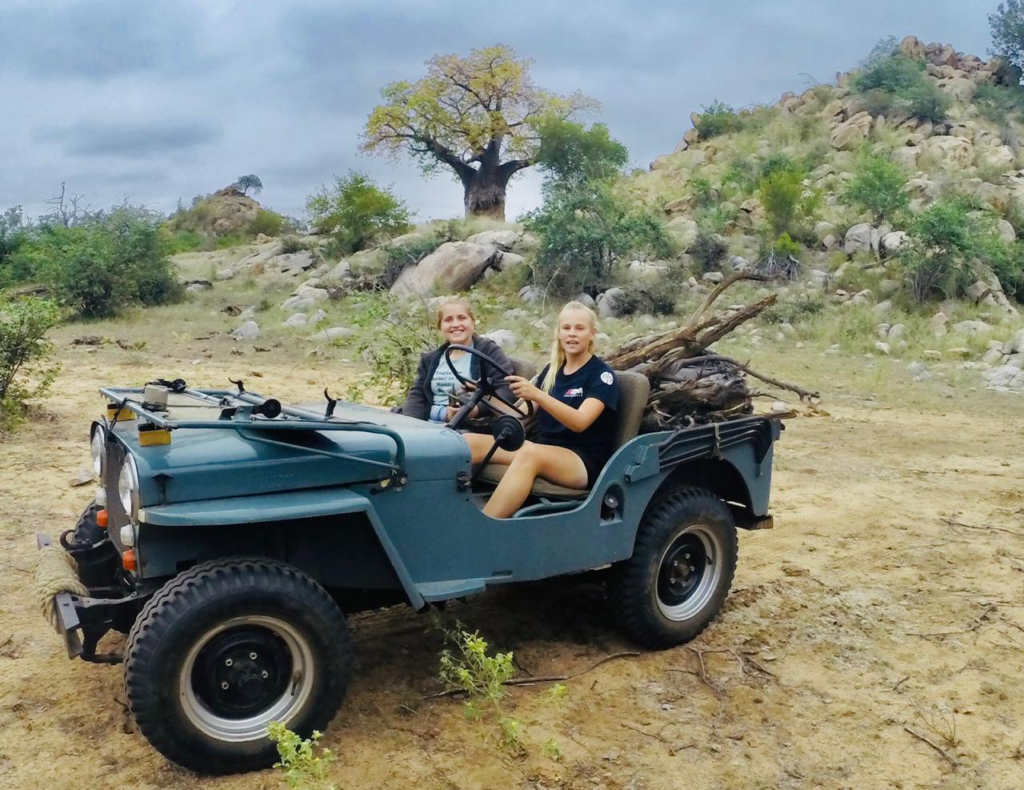
Every rugged track conquered across the vast southern African wilderness today, every modern 4×4 bakkie navigating deep river crossings, and every off road adventure caravan pulled through sandy tracks shares an unbroken mechanical bloodline with that desperate, rain soaked engineering race in 1940. It was an era where a bankrupt firm, a brilliant freelance designer, and a razor thin seven ounce margin changed cross country motoring forever.