When Toyota unveils a new Hilux, the world takes notice. Across Africa – and especially here in South Africa – the name carries more weight than any other. The Hilux isn’t just a bakkie; it’s a badge of honour, a trusted companion, and a workhorse that has shaped both urban and off-road landscapes. Its reputation for unbreakable reliability is carved into African motoring history.
So, when Toyota finally revealed its latest Hilux, expectations were sky-high. But as the dust settled, so did the excitement. Yes, it’s still robust, capable, and backed by the country’s strongest dealer network. Yes, it can still tow 3.5 tonnes and endure the harshest terrain. But for those who crave that visceral “I want one” reaction – the thrill of seeing something bold and new – this Hilux feels like a missed opportunity.
It’s not a bad bakkie; it’s simply a too familiar one.
The Tacoma tease: where’s the grit?

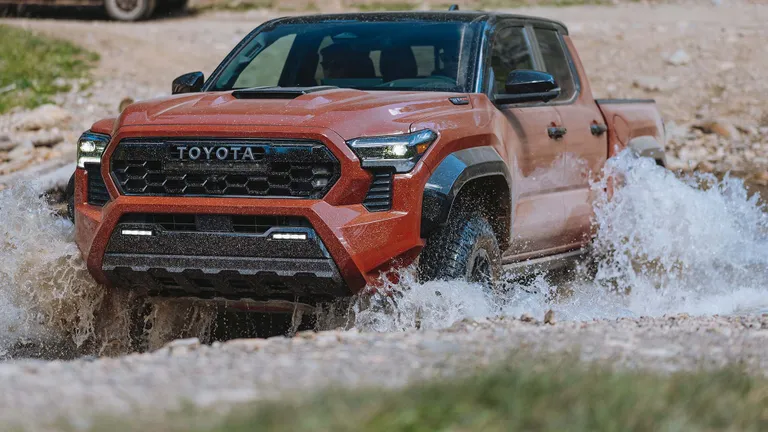
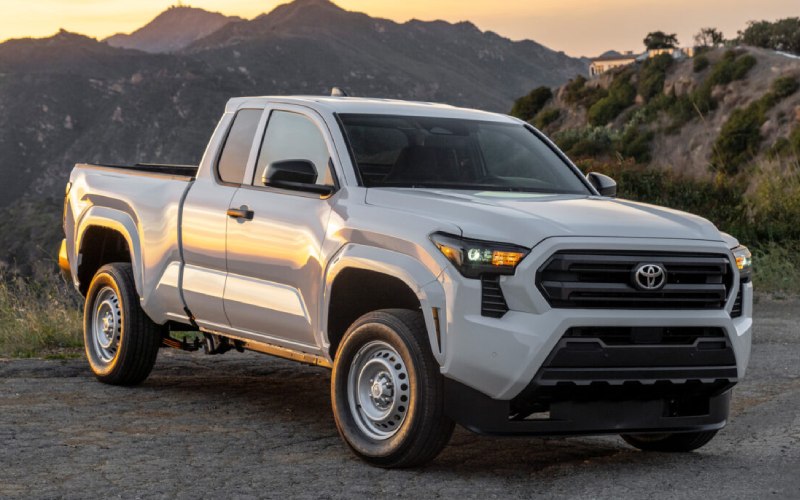
A major source of disappointment lies in Toyota’s decision to keep the Hilux visually and mechanically distinct from its American cousin, the Toyota Tacoma. The latest Tacoma is a beast – wide, muscular, and unapologetically aggressive. It screams off-road dominance the way the Hilux once did.

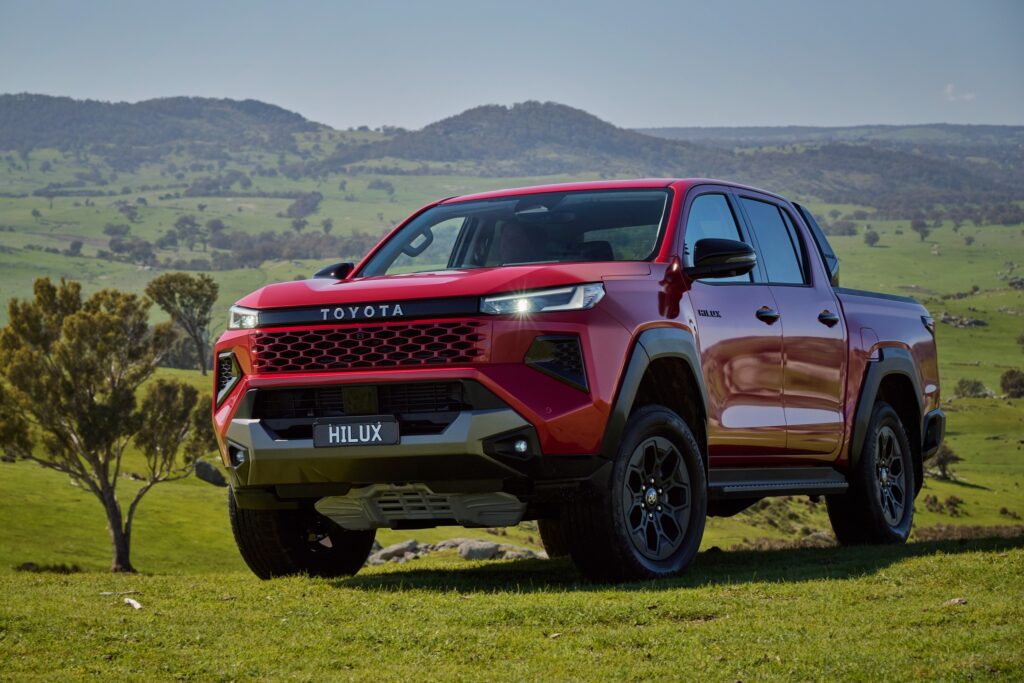
But the new Hilux? It’s tidy, modern, and… tame. Toyota’s designers clearly aimed for broader appeal, resulting in a front end that borrows from EV styling trends – complete with a large plastic panel where a grille used to be. It’s cleaner, sure, but also less distinctive.
In chasing a global design language, Toyota seems to have sacrificed the visual aggression that once defined the Hilux. What should have been a global warrior now feels more like a well-groomed executive bakkie – competent but cautious. The styling is neat, but it doesn’t punch through the crowd of increasingly similar looking bakkies.
A facelift masquerading as a new model

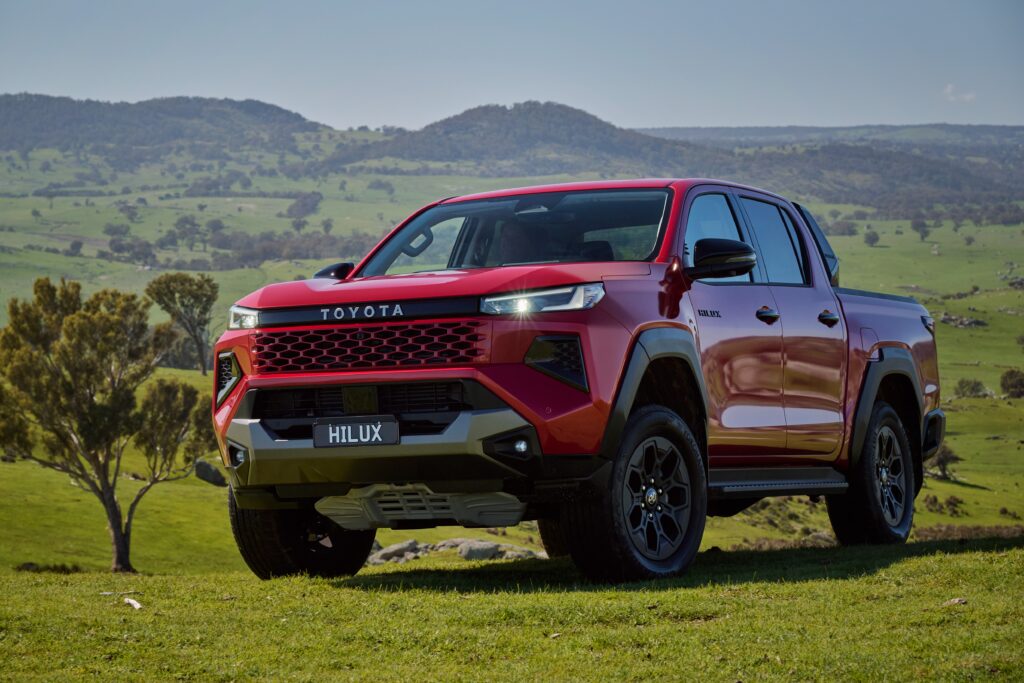
The restrained exterior makes sense once you look underneath. Despite being billed as the next evolution, the new Hilux is not a completely new vehicle – it’s an extensive facelift built on the same IMV ladder-frame platform as before.
This is the same chassis that underpins the Fortuner, and while it’s famously durable, it’s also ageing. The real next-generation step – the TNGA-F platform used in the Land Cruiser 300, Lexus GX, and new Tacoma – remains out of reach for the Hilux, at least for now.
This decision clearly reflects cost control rather than innovation. The cabin structure and frame are largely carried over, with refinements to track width and suspension derived from existing Rogue and GR-Sport variants. The result is incremental improvement, not transformation.
Meanwhile, rivals like the Ford Ranger and Volkswagen Amarok – developed from scratch – deliver wider bodies, stiffer chassis, and a more planted ride. In comparison, Toyota’s conservative engineering leaves the Hilux feeling slightly old-school. It’s still tough as nails, but on-road refinement and cabin sophistication now lag behind newer contenders.
Toyota essentially asked its engineers to refine a legend, not reinvent it – and that shows.
Reliable but reserved
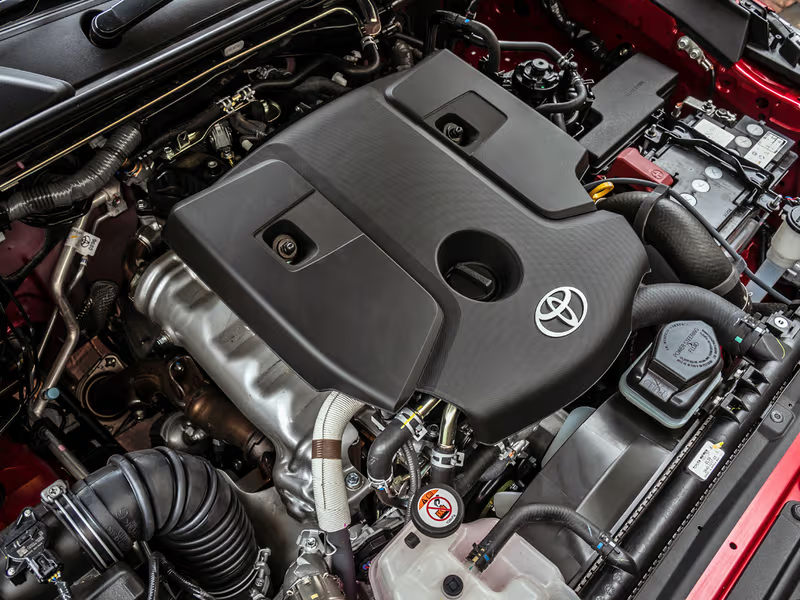
Under the bonnet, the familiar 2.8-litre GD-6 turbodiesel soldiers on, producing 150kW and 500Nm. It’s an engine South Africans know well – torquey, dependable, and happy to haul. Yet it’s hard to ignore that Toyota already tunes the same motor to 165kW and 550Nm in the Hilux GR-Sport. That performance bump clearly exists within reach, making the standard output feel artificially restrained.
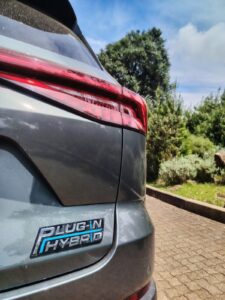
The more notable change is the introduction of Toyota’s new 48-volt mild-hybrid system, marketed as V-Active Technology. While the term “hybrid” might sound exciting, this is a light-touch system, not a full hybrid like the one found in the RAV4 or Corolla.
It offers a gentle torque boost, smoother restarts, and slightly better fuel economy – around seven percent, according to Toyota. But in real-world terms, it’s more about compliance than excitement. It exists to meet tightening emissions standards rather than deliver genuine performance or off-road gains.
For adventure drivers and overlanders, this tech is a footnote, not a headline. The GD-6 remains a great motor – but Toyota missed an opportunity to push boundaries with something genuinely new or electrified.
Function over fashion


Where the Hilux truly redeems itself is inside. The cabin redesign is thoughtful and refreshingly practical, particularly for those who spend their time beyond city limits.
While top-spec trims get upgraded materials and a larger infotainment screen, Toyota wisely resisted the urge to go fully digital. Physical switches for core functions – air conditioning, 4WD controls, and drive modes – remain front and centre.
In an era where many brands are sacrificing usability for sleek touchscreens, Toyota’s approach is a win for functionality. When you’re wearing gloves on a farm or bouncing across a corrugated trail, you don’t want to hunt through digital menus to adjust traction control or cabin temperature.
This tactile, user-focused interior is a reminder that Toyota still understands its core customers: people who value simplicity, durability, and practicality over gimmicks. It might not look as high-tech as the Ranger’s portrait screen or the Amarok’s polished cabin, but it’s arguably better suited to Africa’s realities.
Still king, but no crown jewel
The new Toyota Hilux remains a powerhouse in its own right. It’s durable, reliable, and backed by a vast service network – qualities that ensure it will continue to dominate South African sales, likely holding steady at around 3 500 units a month.
But for a nameplate that has long defined what a 4×4 bakkie should be, this iteration lacks the emotional spark enthusiasts were hoping for. It’s a safe bet, not a bold one.
Toyota’s global strategy clearly leans toward evolutionary upgrades rather than revolutionary leaps – prioritising cost efficiency and continuity over risk and innovation. In doing so, the company has ensured the Hilux remains an excellent all-rounder, but it has also dulled the excitement that once set it apart.
The new Hilux is still the most dependable bakkie you can buy – but dependability alone no longer wins hearts. In a market where the Ranger, Amarok, and even China’s new entrants are pushing the envelope in design and technology, Toyota’s conservatism risks turning its greatest strength – reliability – into its only defining feature.
The legend lives on, but the spark that once made it iconic has dimmed. Here’s hoping the next-generation Hilux, whenever it arrives, remembers that Africa’s favourite bakkie should do more than survive – it should inspire.