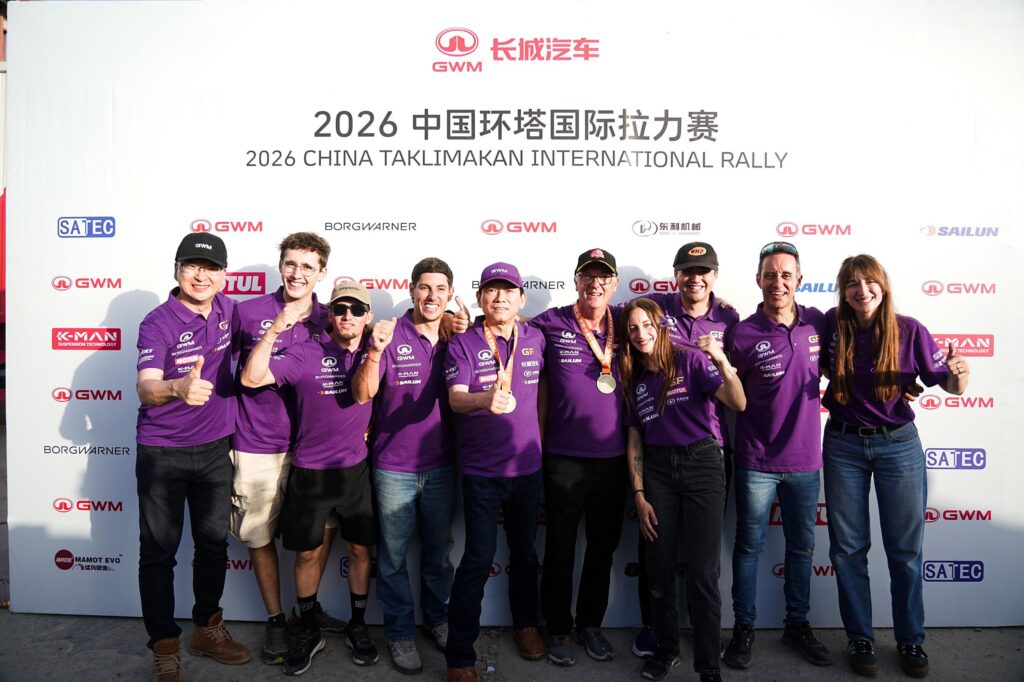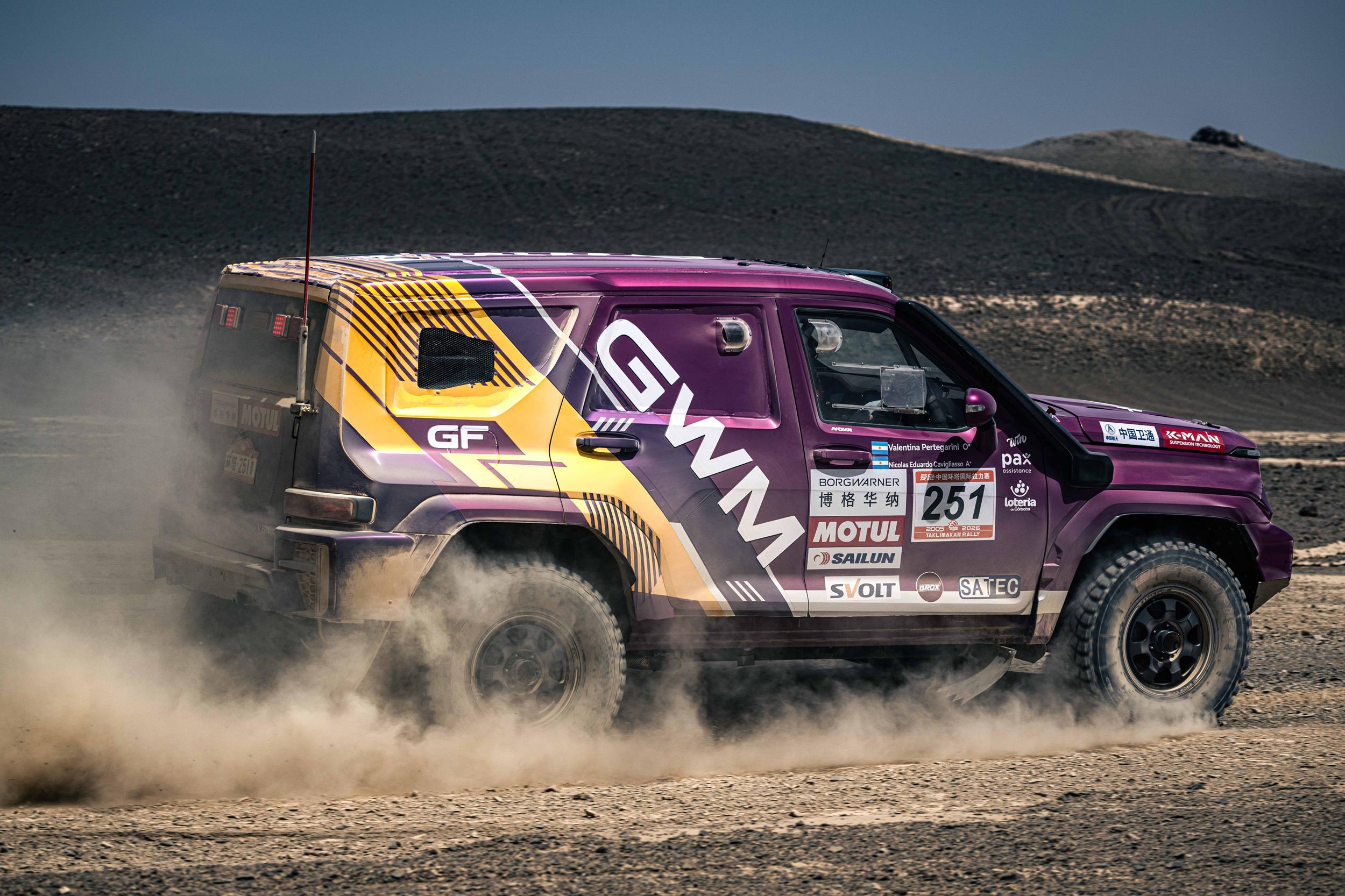
URUMQI / XINJIANG, June 2026 — When the dust finally settled on June 1, GWM had achieved something unprecedented at the 2026 Taklimakan Rally. More than simply reaching the finish line, the Chinese manufacturer completed a clean sweep of every T2 production category, claiming the T2.E New-Energy Manufacturers’ Cup, the T2.1 ICE Manufacturers’ Cup and the T2.3 Production Club Cup.
It was a grand slam that underscored not only outright speed, but exceptional durability and engineering consistency.
Across 13 special stages, the GWM TANK 700 Hi4-T secured 11 stage victories, while GWM-backed club entries also claimed 11 wins. Even more impressive, every factory-supported vehicle completed the event without a single mechanical retirement.
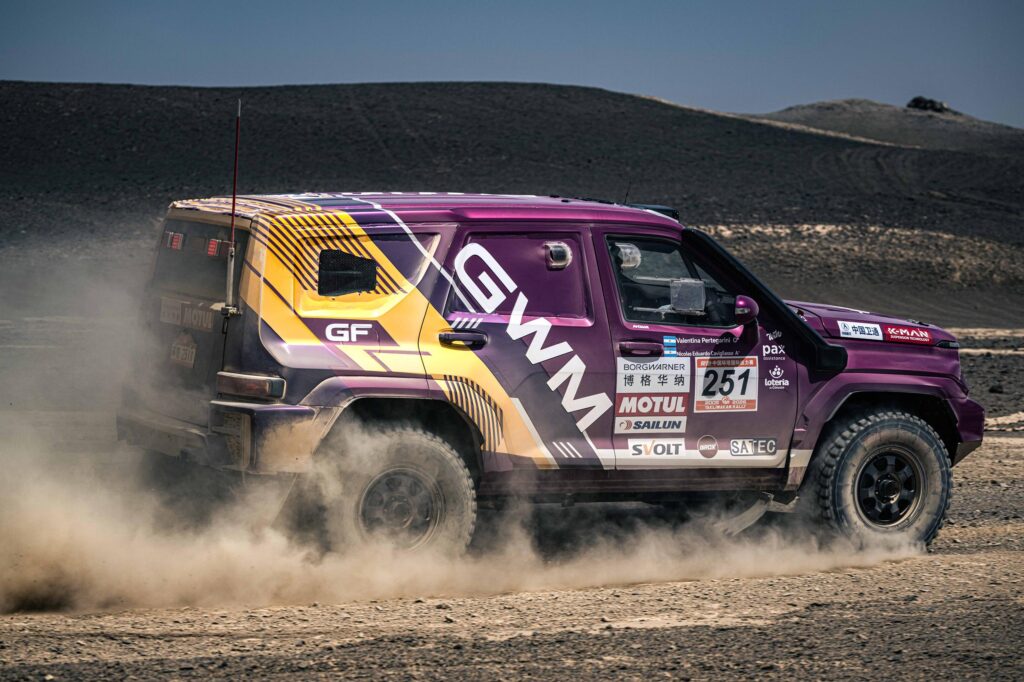
Conquering One of the World’s Toughest Rallies
The achievement becomes even more remarkable when considering the scale and brutality of the 2026 Taklimakan Rally.

Over 17 days, competitors covered 7,500 kilometres, including a record-breaking 3,400 kilometres of competitive special stages — the longest route in the rally’s history.
Stage 3 alone stretched for 468 kilometres, making it the longest individual stage in six years. The notorious SS5 and SS6 “Devil Double” stages have historically seen completion rates fall below 20 percent, while the Keriya River corridor of SS8 punished navigation mistakes with hours of lost time.
Meanwhile, the 353-kilometre N39 desert crossing of SS9 concealed deep soft sand and hidden drop-offs capable of trapping even experienced competitors.
These stages were designed to expose weaknesses and break vehicles. Many competitors failed to finish, while others crossed the line carrying battle scars. GWM’s vehicles did far more than survive — they dominated.
Production Engineering Proven in the Desert
Perhaps the most significant aspect of GWM’s success lies in what the victories represent.
Every GWM rally vehicle utilised the same production engine, transmission, chassis and drivetrain architecture found in showroom models. From the assembly line to the starting line, the engineering foundations remained unchanged.
The TANK 700 Hi4-T competition vehicles were modified strictly within FIA regulations. The original production chassis and body structure remained untouched, internal engine components were left unaltered and the core hardware was retained throughout the event.
In essence, the rally cars and production vehicles shared the same engineering backbone.
Thirteen stages. Three championships. Zero mechanical retirements.
That level of reliability does not happen by chance. It is the result of thousands of hours of development focused on cooling efficiency, torque management, suspension durability and overall system integration — all validated under some of the harshest conditions on earth.


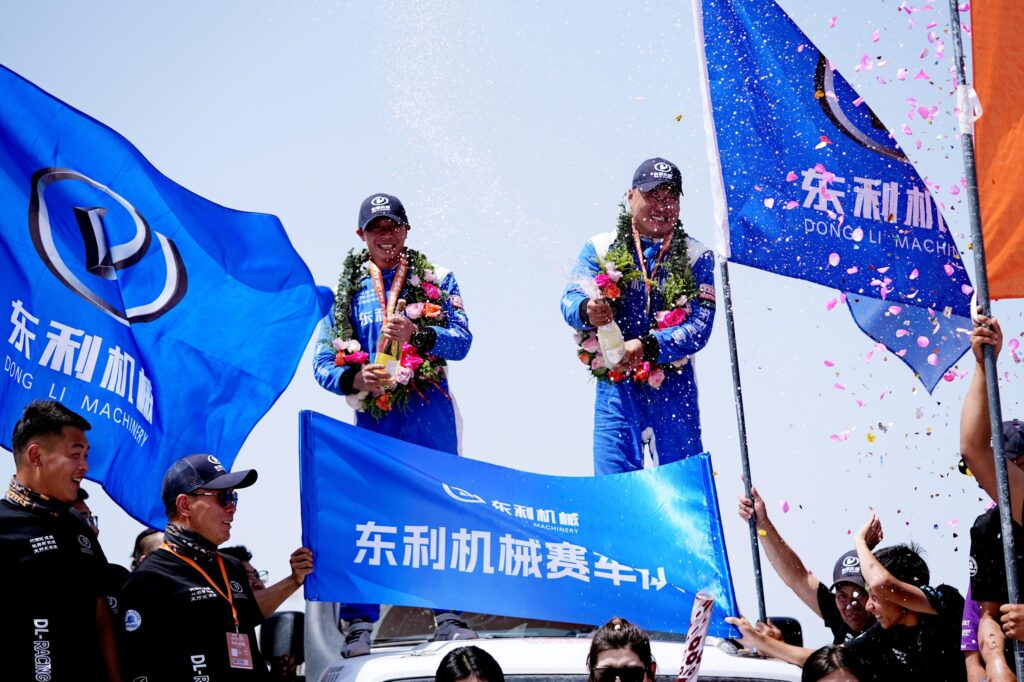
Strengthening China’s Off-Road Industry
This year’s campaign also highlighted a new collaborative approach.
GWM partnered with co-creation specialists K-MAN and Dongli, operating from a shared service environment with common technicians, parts inventories and race strategies.
The result was about more than race victories. It demonstrated how collaboration can accelerate innovation and lower barriers for the wider Chinese off-road industry.
Lessons learned in the Taklimakan desert are already feeding back into production vehicle development.
Global Talent Meets Local Champions
International stars, including Nicolas Cavigliasso and Pau Navarro, competed alongside leading Chinese drivers, sharing technical feedback, driving techniques and hard-earned experience throughout the rally.
The exchange of knowledge helped raise the performance level of every team involved and further strengthened GWM’s growing motorsport credentials.
At the finish line, GWM Vice President Liu Yanzhao welcomed competitors with traditional Atlas silk sashes, paying tribute not only to the drivers, but also to the navigators, mechanics and support crews whose efforts made the achievement possible.
From the Desert to the Showroom
For GWM, the 2026 Taklimakan Rally represents far more than a collection of trophies.
It serves as proof that the technologies, engineering principles and durability developed for production vehicles are capable of withstanding one of the most demanding environments in motorsport.
From the Taklimakan Desert to roads around the world, GWM’s historic clean sweep sends a clear message:
What survives the desert earns the right to lead the road ahead.