- The mandate of emission control and the South African context
1.1. The role of the diesel particulate filter (DPF): function and design
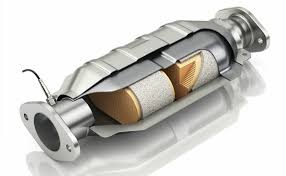
The diesel particulate filter (DPF) is a sophisticated component essential for compliance with modern global emission standards, installed in the exhaust systems of contemporary diesel vehicles. Its core function is to capture and store particulate matter (PM), commonly referred to as soot, produced during the diesel combustion process. Vehicle manufacturers implement these systems not by choice, but because they are strictly required to meet first-world emission laws. A properly functioning DPF system can capture up to 99% of particulate emissions, significantly reducing the harmful substances released into the atmosphere.

The necessity of the DPF is rooted in public health. Diesel particulate matter (DPM) is not merely soot; it is a complex mixture of pollutants, including very small carbon particles coated with numerous organic compounds. These ultra-fine particles, specifically PM2.5 and PM10, are highly detrimental to human health as they can deeply penetrate the lungs and bloodstream. Due to the presence of more than 40 cancer-causing substances absorbed onto these particles, the World Health Organization (WHO) and the International Agency for Research on Cancer (IARC) have classified DPM as a Group 1 carcinogen. The DPF is therefore a critical public-health mechanism.
1.2. The regeneration mechanism: passive, active and forced cycles

As the DPF traps soot, it inevitably fills up and requires clearing to maintain efficiency. This cleaning process is known as regeneration.
- Passive regeneration is the ideal, self-emptying process that occurs automatically under optimal driving conditions. This happens when a vehicle is driven at sustained motorway speeds, allowing the exhaust gas temperature (EGT) to naturally reach a level sufficient to oxidise the collected soot until only ash remains.
- Active regeneration is initiated by the engine control unit (ECU) when passive regeneration conditions are not met and the filter reaches a predetermined level of soot accumulation. During active regeneration, the ECU increases the exhaust gas temperature to an extreme level, often by injecting fuel into the post-combustion process (downstream of the cylinder) to heat the DPF to the necessary temperature (typically 550°C to 650°C) required to burn off the contents.
- Forced regeneration (or workshop regeneration) is a manual maintenance procedure. If passive or active regeneration cycles fail due to severe blockage, a qualified mechanic or main dealer must initiate a forced regeneration using specialised diagnostic tools that access the vehicle’s management system. This process runs the engine at a high RPM for a considerable duration to achieve the extreme EGT required to clear the blockage.

1.3. The South African systemic stress factors
The diesel particulate filter, while highly effective in environments where it is designed to operate, is subject to chronic stress within the South African operating environment, leading to a high rate of premature failure. The combination of local fuel quality and typical driving patterns creates a systemic problem, ensuring that DPF blockage is often an inevitability rather than a simple maintenance issue.
The challenge of fuel quality – The performance of DPFs and catalytic converters is intrinsically linked to fuel quality. Effective emission control relies on ultra-low sulphur diesel (ULSD), which typically contains 15 parts per million (ppm) or less of sulphur content. The generally poorer diesel quality available in South Africa means that higher-sulphur fuels are often used. Lower-quality fuels produce higher particulate levels, forcing the DPF to work much harder to capture the increased load of “dirty particles” compared to its design specification. This heightened workload accelerates the rate at which the filter clogs.
Driving habits as a failure mechanism – A frequent cause of DPF failure is short-trip, low-speed driving. In metropolitan areas, vehicles spend countless hours in traffic, preventing the engine from operating at the optimal temperatures required for passive regeneration. When the vehicle cannot sustain the necessary heat, active regeneration cycles are frequently incomplete or interrupted, leading to rapid soot accumulation.
Ash accumulation – Even when regeneration cycles are successful, they convert soot into inert ash. While soot is burned off, this permanent ash residue remains inside the filter structure, continuously reducing the filter’s functional volume. Over time, typically after 115 000km or more, this ash accumulation necessitates DPF replacement or comprehensive off-vehicle cleaning, irrespective of driving style. The stress imposed by suboptimal South African fuel and driving patterns means this replacement threshold is often reached sooner than in markets with cleaner fuel.
- Common DPF issues, maintenance solutions and cost analysis (ZAR)
2.1. Diagnosis of DPF failure and symptoms
When the DPF becomes severely restricted, the vehicle’s performance is immediately compromised. The initial symptom is often the illumination of the DPF warning light on the dashboard, signalling a need for regeneration or maintenance. This is often accompanied by the check-engine light.
As restriction increases, the engine management system activates a protective measure known as “limp mode,” resulting in a noticeable loss of power and sluggish performance to prevent catastrophic engine damage. Diagnostic tools typically reveal fault codes related to the filter, such as P2002 (diesel particulate filter efficiency below threshold) or P2463 (soot accumulation), providing technicians with clear evidence of the blockage.
2.2. Case study: high-risk South African vehicles
DPF issues are highly visible in the South African automotive community, especially among owners of popular double-cab bakkies and SUVs fitted with modern diesel engines. For instance, the Toyota 2.8 GD6 engine is frequently cited as requiring specific attention due to DPF issues, injector failures and other problems linked to its modern emission systems. For owners of such vehicles, proactive maintenance, quality fuel usage and regular highway driving for regeneration are essential for reliable operation.
2.3. DPF remediation solutions and comparative costs in ZAR
Forced regeneration (workshop intervention) – For a minor to moderate blockage, a mechanic can perform a forced regeneration procedure. This requires specialised tools to access the vehicle’s management system and command the engine to run the high-temperature cleaning cycle. While local pricing varies, international benchmarks suggest labour costs equivalent to several thousand Rand (an international reference of approximately $400 equates to roughly R7 500 depending on exchange rates and labour rates).
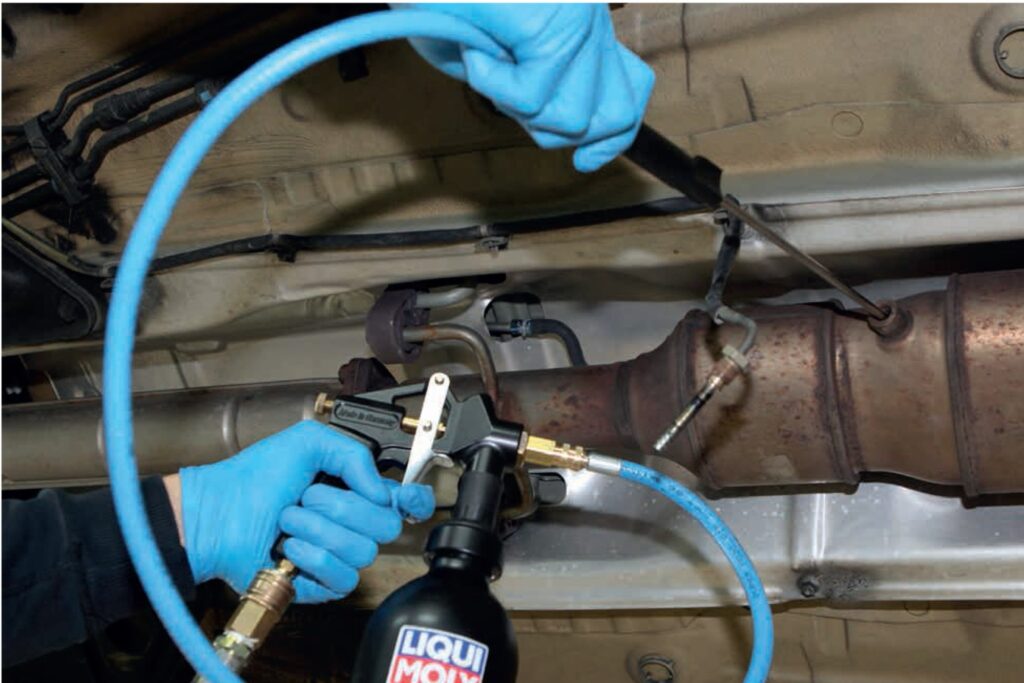
Professional DPF cleaning or restoration – When a blockage is too severe for forced regeneration, the DPF must be removed for professional cleaning. This off-vehicle process uses ultrasonic or thermal cleaning methods to restore the filter to a near-new condition. This option is highly cost-effective compared to replacement. Based on international pricing, professional cleaning typically ranges from $500 to $1 000. A reasonable estimated range for South Africa is approximately R5 000 to R12 000.
New DPF replacement – If the DPF is mechanically damaged, contaminated beyond cleaning or permanently filled with ash, replacement is necessary. In the local market, replacing a DPF can cost anywhere from R40 000 to R50 000, with some OEM units reaching as much as R100 000. Aftermarket units are more affordable, but quality varies and must be carefully assessed.
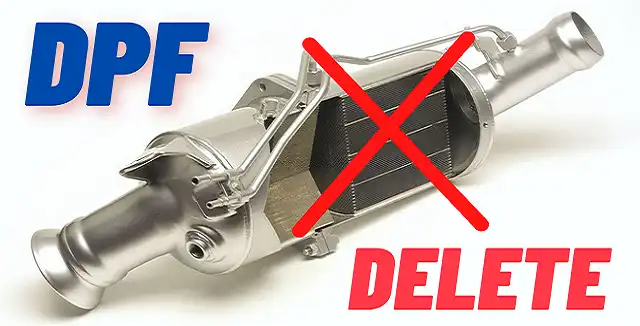
The extraordinarily high cost of OEM DPF replacement creates a compelling financial dilemma for South African owners, especially those with vehicles out of warranty. The capital expenditure required for replacement can represent a significant percentage of the vehicle’s market value. This substantial cost disparity, compared to the relatively low cost of illegal DPF deletion (R4 000–R6 000), pushes many owners toward unauthorised modification. This financial pressure is the primary factor fuelling the DPF deletion market.
- The DPF deletion dilemma: pros and cons analysis
3.1. Arguments for deletion (the ‘pros’)
The incentives for deletion are predominantly financial and mechanical:
- Significant cost avoidance
- Restored performance and reliability
- Engine tuning potential
- Marginal fuel-economy improvement
3.2. Arguments against deletion (the ‘cons’): mechanical and financial risks
The short-term savings are counterbalanced by severe mechanical, financial and legal liabilities.
Mechanical integrity and longevity – Improper deletion poses severe risks. If the physical filter material is not fully removed or the process is poorly executed, the engine can be severely damaged. Without the DPF, soot accumulates rapidly on internal components, increasing wear and potentially leading to major engine issues.
Warranty voidance and financial liability – DPF deletion is an unauthorised modification that universally voids the manufacturer’s warranty. Any subsequent engine or powertrain issue, even if seemingly unrelated, is likely to be rejected by the manufacturer.
Risks in the service market – Low-cost deletion services (R1 000–R2 500) often rely on cloned or unregulated diagnostic tools, which may cause the vehicle not to start after modification. In many of these cases, the filter is not physically removed, guaranteeing future engine damage.
- Legal and regulatory exposure in South Africa
4.1. Non-compliance with the National Road Traffic Act (NRTA)
Removing the DPF constitutes an unauthorised alteration to the vehicle’s emission-control system. The implications include:
- Potential unroadworthiness
- Possible discontinuation from service
4.2. Violation of the National Environmental Management: Air Quality Act (NEMAQA)
DPF removal results in significantly increased emissions of PM2.5 and PM10, both highly harmful and tightly regulated.
South Africa has formally acknowledged the severity of DPM exposure by introducing a legally enforceable occupational exposure limit (OEL) of 0.1 mg/m³ for elemental carbon in the mining sector from June 2025. This confirms official recognition of DPM as a measurable public-health risk and sets a strong precedent for stricter vehicle emissions monitoring in future.
4.3. Insurance claim risk and resale value
Insurance risk
Insurance contracts require full disclosure of material changes. Since DPF deletion alters the fundamental emissions characteristics of the vehicle, non-disclosure gives insurers powerful grounds to repudiate claims.
Resale value
A vehicle with a deleted DPF carries a stigma in the increasingly environmentally aware South African market. This can significantly reduce resale value.
- Risk assessment matrix and expert recommendations
5.1. Comprehensive risk assessment matrix for DPF deletion in SA
The matrix below summarizes the critical risks assumed by a South African vehicle owner who opts for DPF deletion, contrasting the immediate cost avoidance with the potentially catastrophic long-term liabilities.
Risk Assessment Matrix for DPF Deletion in South Africa
| Risk Category | Consequence of Deletion | Severity in SA Context | Mitigation via Deletion |
| Upfront Cost Avoidance | Avoids R40,000–R100,000 replacement fee. | High financial incentive. | Yes (R4,000–R6,000 deletion cost) |
| Legal/Compliance | Vehicle deemed unroadworthy; potential fines; vehicle “discontinued from service.” | High (Violation of NRTA and NEMAQA). | No |
| Financial/Warranty | Immediate warranty voidance; owner pays 100% of all future engine repairs. | Very High (Engine repairs are typically R50,000+). | No |
| Insurance | Risk of claim repudiation (total loss liability). | High (Exposes owner to total loss financial liability). | No |
| Health/Environmental | Wilful increase in output of carcinogenic PM2.5 (Group 1 carcinogen). | Extreme (Violates public health standards). | No |
5.2. Conclusions and expert recommendations
The analysis shows a clear conflict between the strict technical requirements of modern diesel-emission technology and the pressures of the South African operating environment. While the high failure rate and extreme replacement cost push many owners toward deletion, the long-term financial, legal and ethical risks far outweigh the short-term savings.
Recommendations for South African diesel-vehicle owners
- Prioritise preventative maintenance
- Choose professional cleaning
- Avoid unsafe deletion practices
- Uphold compliance