While its neighbor, the Makgadikgadi, is a stark white void, Nxai Pan National Park offers a softer, more rhythmic beauty. Part of the same ancient “super-lake” system, Nxai Pan is characterized by its wide-open fossil pans fringed by umbrella thorn acacias and mopane woodlands. It is a place of profound stillness, where the only sound is often the wind rustling through the tall grass.
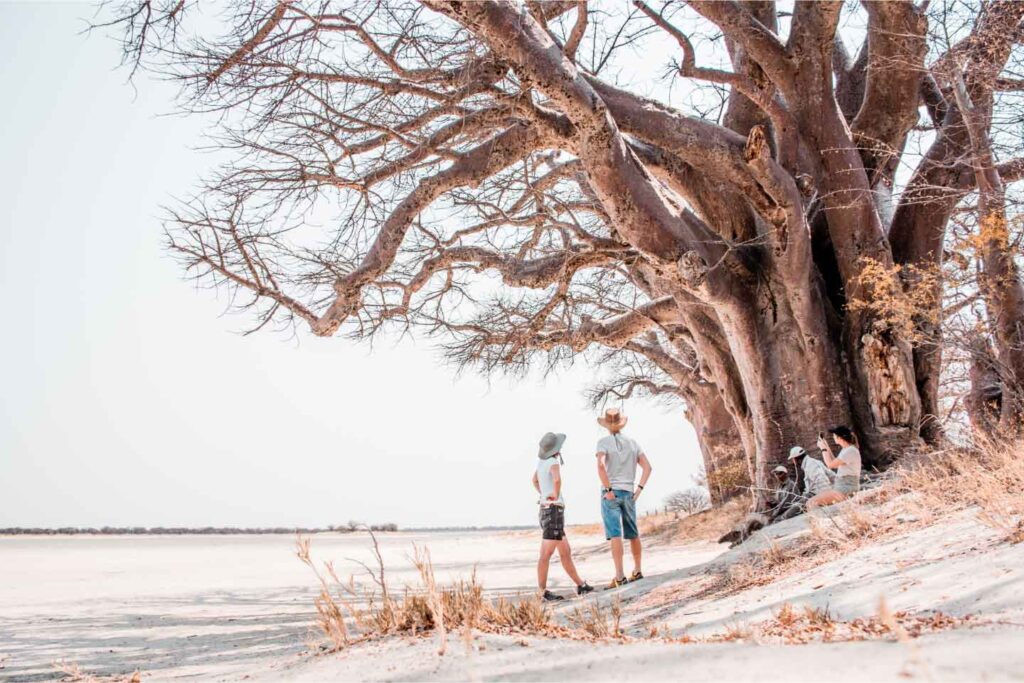
The park’s most iconic landmark is Baines’ Baobabs. These seven massive trees, famously painted by the explorer Thomas Baines in 1862, have stood virtually unchanged for over 160 years. To sit beneath these “Sleeping Sisters” as the sun dips below the salt crust is an essential overlanding rite of passage.
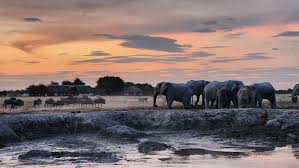
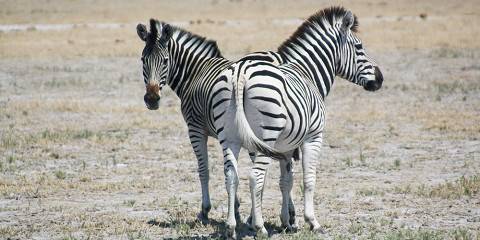
Wildlife here is seasonally spectacular. During the green season (December to March), Nxai Pan becomes the primary destination for Botswana’s longest land mammal migration. Thousands of zebras arrive to foal on the nutrient-rich grasses, followed closely by a high concentration of cheetahs-the park’s flat, open terrain is perfect for these speed specialists. In the dry months, the action shifts to the park’s permanent waterholes, where desert-adapted “ghost” elephants, covered in light-grey clay, gather in a steady, silent procession. For those seeking the raw, unhurried side of the Kalahari, Nxai Pan is an unmatched sanctuary.
Frequently Asked Questions (FAQ)

1. Is a 4×4 necessary for Nxai Pan?
Yes, a high-clearance 4×4 is non-negotiable. The entry track from the main Maun-Nata road is notorious for deep, heavy sand and corrugated sections that can test even the most experienced drivers.
2. When is the best time to visit?
Unlike many parks, Nxai Pan shines in the wet season (December–April) for the zebra migration and lush scenery. However, the dry season (June–October) is better for predator sightings at the waterholes.
3. Can I camp at Baines’ Baobabs?
Yes, there are three very basic, unfenced campsites at Baines’ Baobabs. There are no facilities (no water or toilets), so you must be 100% self-sufficient.
4. What are the park entry fees for 2026?
Daily fees for international visitors are BWP 190 (approx. £11) per person. SADC residents pay BWP 145, and Botswana citizens BWP 20. The vehicle fee is BWP 75 per day.
5. Are there shops or fuel in the park?
No. You must stock up on everything-fuel, food, and water-in Maun (136km away) or Nata before you arrive. There are no supplies inside the park gates.
6. Is the water in the park drinkable?
There is a standpipe at the South Camp, but the water is highly mineralised. We recommend carrying your own drinking water (at least 5 litres per person per day).
7. What wildlife can I see?
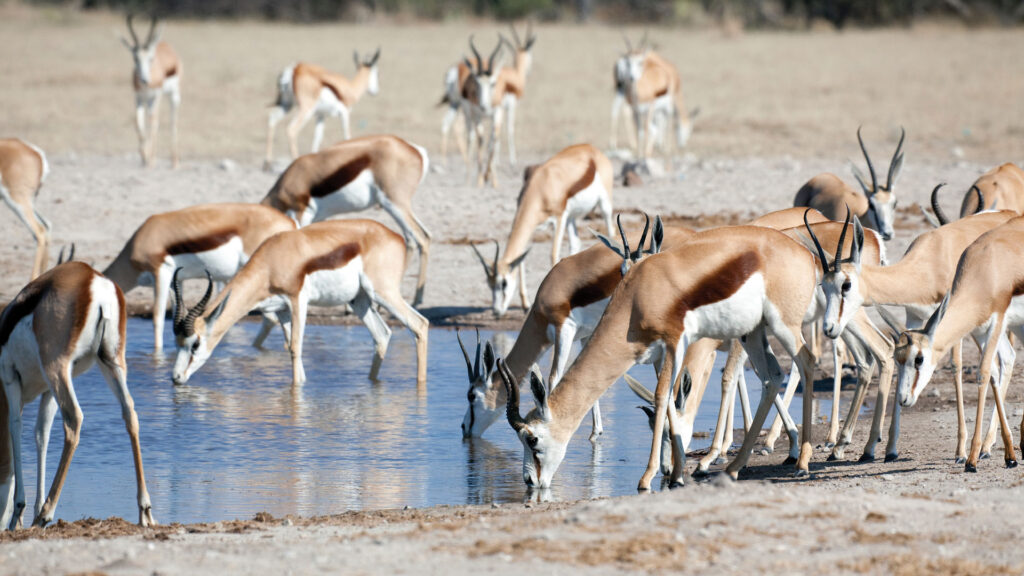
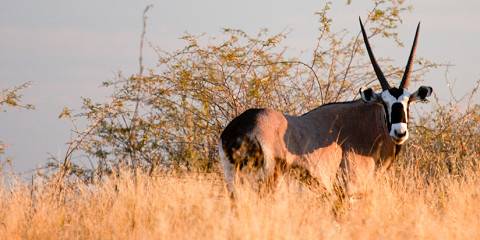
Expect large herds of zebra, springbok, and giraffe. It is one of the best places in Botswana for cheetah, along with lion, brown hyena, and the desert-adapted elephants.
8. Are the campsites fenced?
No. Both South Camp and the Baines’ Baobabs sites are completely unfenced. Wildlife, including lions and elephants, can and do walk through camp regularly.
9. Can I visit on a day trip?
It is possible from Gweta or as a long day from Maun, but because the road is so slow (1-2 hours for just the 35km entry track), an overnight stay is highly recommended.
10. Do I need to book in advance?
Yes. Campsites are limited and managed by a private operator (Xomae Group). During the migration season, they book out months in advance.
Accommodation & Contact Details
| Accommodation Type | Provider | Estimated Price (2026) | Contact Info |
| South Camp (Camping) | Xomae Group | ~£30 (BWP 430) pppn | xomaesites.com |
| Baines’ Baobabs (Wild Camping) | Xomae Group | ~£30 (BWP 430) pppn | xomaesites.com |
| Luxury Tented Lodge | Kwando Nxai Pan Camp | From ~$850 – $900 pppn | kwando.co.bw |